
Did you know that the global artificial intelligence (AI) market is projected to reach a staggering $1.4 trillion by 2029? This exponential growth is a clear indication of the transformative power of AI and its potential to shape the future of technology. As the world becomes increasingly interconnected, the pursuit of Artificial General Intelligence (AGI) – the holy grail of AI – has captured the imagination of researchers, innovators, and the public alike.
In this comprehensive exploration, we’ll delve into the captivating world of AGI, uncovering its key concepts, technological foundations, and the fascinating implications it holds for our future. From the evolution of AI systems to the cognitive capabilities that could one day rival and even surpass human intelligence, you’ll embark on a journey that challenges the boundaries of what’s possible in the realm of artificial intelligence.
Key Takeaways
- Explore the concept of Artificial General Intelligence (AGI) and how it differs from narrow AI
- Understand the technological foundations powering the development of AGI, including algorithms, data, and neural networks
- Discover the cognitive capabilities that AGI systems aim to achieve, such as reasoning, decision-making, and creativity
- Delve into the practical applications of AGI and its potential impact on various industries and sectors
- Examine the ethical considerations and challenges surrounding the advancement of AGI technology
The Concept of AGI
Artificial General Intelligence (AGI), also known as Strong AI or Human-Level AI, is a captivating concept that revolves around the ability of machines to understand, learn, and apply their intelligence across a wide range of tasks. Unlike Narrow AI, which is designed for specific functions, AGI systems aspire to possess intellectual capabilities on par with human cognition, capable of generalized problem-solving, logical reasoning, and adaptability.
Defining AGI
AGI represents the holy grail of artificial intelligence, where machines can embrace aspects of human intelligence such as language comprehension, creative problem-solving, and even social acumen. This ambitious goal sets AGI apart from the current state of AI, which is predominantly focused on specialized tasks. The pursuit of AGI is driven by the limitations of Narrow AI, as researchers and scientists seek to develop systems that can truly mimic and surpass the breadth of human intelligence.
History and Evolution
The journey towards AGI began in the 1950s, with the birth of the AI field. Early AI systems were rule-based, relying on predefined algorithms and knowledge bases. Over time, the evolution of AI has witnessed a gradual shift towards machine learning, allowing computers to learn from data and expand their capabilities. This progression has laid the groundwork for the conceptualization and pursuit of agi definition, artificial general intelligence, strong ai, and human-level ai.
As the history of agi and evolution of agi unfold, the research community continues to make incremental progress, transitioning from theoretical frameworks to the development of tangible systems that exhibit some degree of general intelligence. This ongoing effort aims to bridge the gap between the current state of Narrow AI and the ambitious goal of creating machines that can truly think, learn, and adapt like humans.
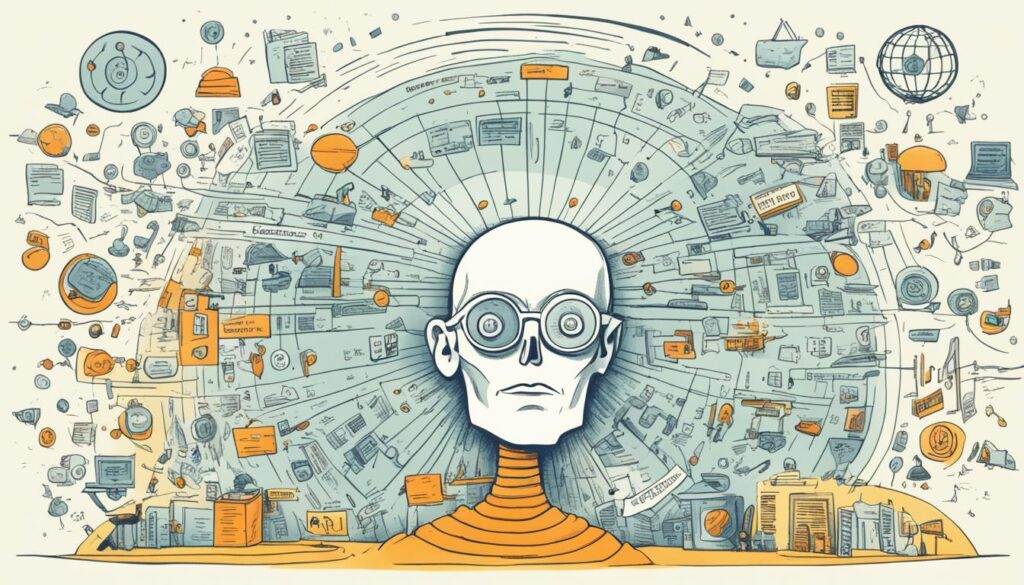
“AGI represents the holy grail of artificial intelligence, where machines can embrace aspects of human intelligence such as language comprehension, creative problem-solving, and even social acumen.”
Technological Foundations
The core of Artificial General Intelligence (AGI) rests on a robust framework of technological innovations that encompass specialized ai algorithms, expansive data sets, intricate neural networks, and insights borrowed from computational neuroscience. These foundational elements work in tandem to create the data-driven AI systems that power AGI, paving the way for a future where machines can learn and adapt with human-like intelligence.
Algorithms and Data
Algorithms serve as the step-by-step procedural instructions for AGI, guiding the system’s decision-making and problem-solving capabilities. For AGI to thrive, these machine learning algorithms must be adaptive and sophisticated, capable of self-improvement through exposure to diverse and complex datasets. This allows AGI systems to learn from experiences much like humans do, continuously expanding their knowledge and refining their capabilities.
Neural Networks
At the heart of AGI lie neural networks, computational systems that draw loose inspiration from the intricate neural networks found in animal brains. These systems are designed to recognize patterns, make decisions, and even learn and adapt on their own, mirroring the flexible and adaptive nature of the human mind.
Computational Neuroscience
Computational neuroscience plays a crucial role in the development of AGI, providing the theoretical underpinnings for these advanced AI systems. By studying the mechanisms of the human brain, computational neuroscientists are able to bridge the gap between biological brain function and the computational models that drive AGI, unlocking new possibilities for machines to think and reason in ways that emulate human intelligence.
| Technological Element | Description | Importance for AGI |
|---|---|---|
| ai algorithms | Specialized, adaptive algorithms that guide the decision-making and problem-solving processes of AGI systems. | Algorithms are the core instructions that enable AGI to learn, adapt, and improve over time, just as humans do. |
| data sets | Expansive and diverse datasets that provide the substrate for AGI systems to learn from and make decisions based on. | The quality and breadth of data available to AGI systems directly impact their ability to develop human-like intelligence and reasoning capabilities. |
| neural networks | Computational systems inspired by the neural networks of the human brain, designed to recognize patterns and make decisions. | Neural networks are the foundation for AGI’s ability to process information, learn, and adapt in a manner similar to the human mind. |
| computational neuroscience | The study of the mechanisms and functions of the human brain, providing the theoretical basis for the development of AGI systems. | Insights from computational neuroscience help bridge the gap between biological brain function and the computational models that drive AGI, enabling more human-like intelligence. |
“The key to unlocking the potential of Artificial General Intelligence lies in the seamless integration of specialized algorithms, expansive data, and neural network architectures inspired by the human brain.”
AGI vs Other AI Forms
In the world of artificial intelligence, Artificial General Intelligence (AGI) represents a quantum leap beyond the current AI forms. Unlike narrow AI, which specializes in a single task or a confined set of tasks, AGI is designed to perform any intellectual task a human can. This versatile system can adapt and generalize its intelligence to various contexts, showcasing a level of adaptability and problem-solving capabilities that surpass traditional AI.
On the other hand, the concept of Artificial Superintelligence (ASI) takes AI capabilities to an even more extreme level. This hypothetical form of AI is theorized to mimic and outperform all aspects of human intelligence, including decision-making, emotional responses, and creativity. While ASI remains a conceptual notion, the prospect of machines surpassing human intelligence in every facet is both intriguing and concerning.
| AI Form | Key Characteristics | Capabilities |
|---|---|---|
| Narrow AI | Specializes in a single task or a confined set of tasks | Demonstrates expertise within its parameters but lacks the ability to generalize intelligence to broader contexts |
| Artificial General Intelligence (AGI) | Designed to perform any intellectual task a human can | Exhibits versatility and the ability to adapt and generalize its intelligence to various contexts |
| Artificial Superintelligence (ASI) | Hypothetical form of AI that is theorized to mimic and surpass all aspects of human intelligence | Conceptual notion of machines exceeding human intelligence in decision-making, emotional responses, and creativity |
The distinction between agi vs narrow ai and agi vs artificial superintelligence highlights the diverse types of ai and their respective ai capabilities. While narrow AI systems excel within their specialized domains, AGI represents a more comprehensive and adaptable form of intelligence. The prospect of ASI, although not yet a reality, raises intriguing yet concerning questions about the future of artificial intelligence and its potential impact on humanity.

Learning and Adaptability
In the pursuit of Artificial General Intelligence (AGI), the ability to learn and adapt seamlessly is paramount. Machine Learning (ML), with its advanced algorithms like deep learning, forms the foundational layer, enabling AGI systems to digest vast amounts of data and discern intricate patterns. But the true mark of AGI lies in its capacity for continuous learning and adaptability.
Machine Learning: The Building Blocks of AGI
Machine Learning is the backbone of AGI, empowering systems to process large datasets, identify patterns, and draw insights. These algorithms, including the powerful deep learning techniques, allow AGI to continuously refine its understanding and decision-making capabilities. As the AGI system is exposed to more data and experiences, its machine learning competencies evolve, unlocking new levels of intelligence and problem-solving prowess.
Transfer Learning: Leveraging Past Experiences
The next step in AGI’s learning journey is transfer learning, which enables the system to seamlessly apply acquired knowledge and expertise from one domain to tackle challenges in another. This agile adaptability mirrors the human ability to draw on past experiences when faced with novel situations, allowing AGI to tackle a diverse range of tasks with increased efficiency and effectiveness.
Continuous Learning: Perpetual Growth and Refinement
The hallmark of true adaptable AI lies in its capacity for continuous learning. Unlike traditional ML models that operate within fixed parameters, AGI systems have the remarkable ability to perpetually assimilate new information, refine their algorithms, and develop novel solutions to emerging challenges. This perpetual growth and refinement is the key to unlocking the full potential of ai learning capabilities and realizing the transformative promise of Artificial General Intelligence.
| Attribute | Description |
|---|---|
| Machine Learning | The foundational component of AGI, enabling systems to process data, identify patterns, and draw insights. |
| Transfer Learning | The ability to seamlessly apply acquired knowledge and expertise from one domain to tackle challenges in another. |
| Continuous Learning | The hallmark of true adaptable AI, where the system perpetually assimilates new information and refines its algorithms. |
The mastery of machine learning, transfer learning, and continuous learning is the key to unlocking the full potential of Artificial General Intelligence. As AGI systems continue to evolve and adapt, they will redefine the boundaries of what is possible, ushering in a new era of cognitive capabilities and transformative solutions.
“The true mark of Artificial General Intelligence lies in its capacity for perpetual growth and refinement through continuous learning.”
Cognitive Capabilities
Artificial general intelligence (AGI) represents the frontier of machine intelligence, aiming to replicate the human brain’s advanced agi cognitive abilities. At the core of AGI are sophisticated capabilities in agi reasoning and agi decision-making, where systems employ complex algorithms to solve problems, evaluate scenarios, and make informed choices by drawing upon logic, past experiences, and comprehensive knowledge.
Equally crucial to AGI is the ability to perceive and interact with the world through agi sensory perception. AGI systems are designed to process input from various sources, from visual and auditory to tactile and environmental, to acquire a deep understanding of their surroundings. This sensory awareness allows them to engage with the environment in a contextually appropriate manner, responding to stimuli in ways that mirror human perception and interaction.
Pushing the boundaries of machine intelligence even further, AGI systems also strive to exhibit agi creativity and agi imagination. By harnessing advanced cognitive processes, these systems aim to innovate, create art, and solve problems in novel and original ways, showcasing capabilities that extend beyond mere computational power.
Reasoning and Decision-Making
At the heart of AGI’s cognitive capabilities lies its ability to reason and make decisions. AGI systems employ sophisticated algorithms and models to analyze complex situations, weigh various options, and arrive at informed conclusions. This decision-making process involves synthesizing information, considering past experiences, and applying logical reasoning to navigate challenging scenarios.
Sensory Perception and Interaction
The capacity to perceive and engage with the world around them is a crucial aspect of AGI’s cognitive prowess. These systems are designed to interpret and respond to a wide range of sensory inputs, from visual and auditory cues to tactile and environmental stimuli. By processing this information, AGI can develop a deep understanding of its surroundings and interact with the environment in meaningful, context-aware ways.
Creativity and Imagination
Pushing the boundaries of machine intelligence, AGI systems strive to exhibit human-like creativity and imagination. Through advanced cognitive processes, these systems aim to innovate, create art, and solve problems in novel and original ways. By tapping into their ability to think outside the box, AGI can demonstrate capabilities that extend beyond mere computational power, showcasing a glimpse of the future of artificial intelligence.
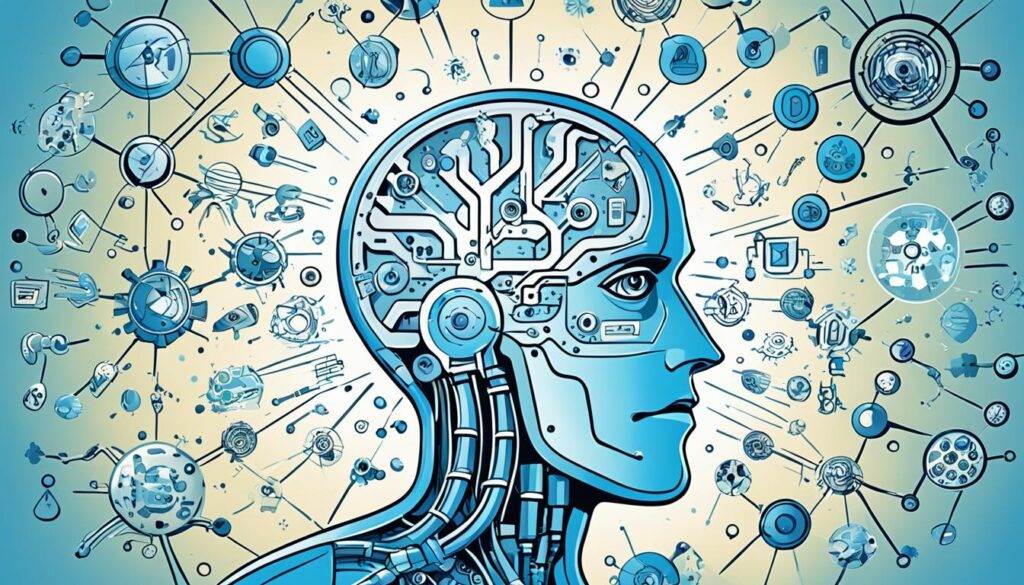
“The ability to reason, perceive, and create in novel ways is what separates AGI from traditional AI systems. It’s the key to unlocking the true potential of artificial intelligence.”
AGI in Practice
Artificial General Intelligence (AGI) is a groundbreaking technology that holds immense potential for practical applications across various domains. As AGI matures, it is poised to transform the way we interact with machines, redefining the capabilities of autonomous systems, expert systems, and language processing.
In the realm of agi applications, AGI is revolutionizing the field of robotics. Unlike traditional task-specific robots, AGI-powered machines exhibit a generalist approach, capable of interpreting complex environments and learning from unstructured data. These intelligent systems can adapt in real-time to unforeseen changes, enabling them to tackle a diverse range of challenges with remarkable versatility.
Moreover, AGI’s impact extends to the domain of agi in language processing, where these advanced systems go beyond mere language understanding. AGI-powered language models demonstrate a more human-like comprehension and interaction, paving the way for more natural and intuitive communication between humans and machines.
Turning our attention to agi in expert systems, AGI is transforming the landscape of these specialized applications. By leveraging its extraordinary cognitive capabilities, AGI-powered expert systems can analyze complex data, make informed decisions, and provide personalized solutions tailored to the user’s needs. This integration of AGI into expert systems holds the promise of revolutionizing fields such as healthcare, finance, and beyond.
As we explore the agi use cases, it becomes evident that the potential of AGI is boundless. From autonomous vehicles and intelligent personal assistants to medical diagnosis and financial planning, AGI’s versatility is poised to reshape the way we interact with technology, ushering in a new era of intelligent solutions that can adapt, learn, and problem-solve in unprecedented ways.
“AGI represents the frontier of machine capabilities, exemplifying intelligence across a diversity of domains.”
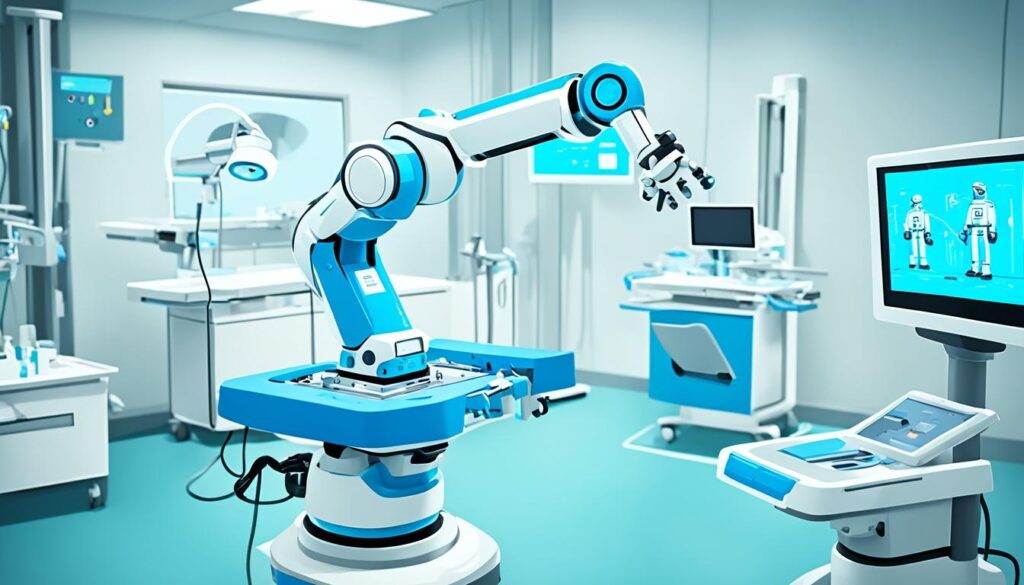
The journey of AGI in practice is just beginning, and as it continues to evolve, we can expect to witness remarkable advancements that will redefine the boundaries of what is possible with artificial intelligence.
Impact and Ethical Considerations
As the world embraces the transformative power of Artificial General Intelligence (AGI), it is crucial to explore the impact it will have on jobs and the ethical considerations surrounding its development and deployment. AGI’s potential to disrupt traditional job markets is a prominent concern, but it also offers opportunities for job enhancement and the creation of new roles.
Job Disruption vs. Job Enhancement
The integration of AGI into the workforce is predicted to have a significant impact on job prospects. Certain tasks and even entire job functions may become automated, leading to agi job disruption. However, AGI can also agi job enhancement, by augmenting human capabilities and creating new roles that leverage the unique strengths of both humans and machines.
To mitigate the potential for agi impact on jobs, it is essential for workers to continuously upskill and acquire new competencies. Reskilling programs and lifelong learning initiatives will be crucial in helping the workforce adapt to the evolving job landscape driven by AGI advancements.
Bias and Fairness
As the use of AGI becomes more widespread, concerns about agi bias and agi fairness have emerged. AI algorithms, including those powering AGI systems, can inherit biases from the data they are trained on, leading to unfair outcomes and decisions. Addressing these biases is crucial to ensuring that AGI is developed and deployed in an equitable manner, without discriminating against individuals or groups.
Ethical guidelines and oversight mechanisms must be put in place to safeguard against agi ethics violations and to ensure that the benefits of AGI are distributed fairly across society. Striking a balance between the potential advantages of AGI and the need to protect user privacy and data is also a critical consideration.
| Potential Impacts of AGI | Considerations |
|---|---|
| Job Disruption | Reskilling programs, lifelong learning, and workforce adaptation |
| Job Enhancement | Leveraging the complementary strengths of humans and machines |
| Bias and Fairness | Addressing algorithmic biases, developing ethical guidelines and oversight mechanisms |
| Privacy and Data Protection | Balancing the benefits of AGI with the need to safeguard user privacy |
As the agi impact on jobs and the broader agi ethics implications of Artificial General Intelligence unfold, it is crucial for policymakers, industry leaders, and the public to engage in thoughtful discussions and collaborative efforts to ensure that the transformative potential of AGI is harnessed in a responsible and equitable manner.
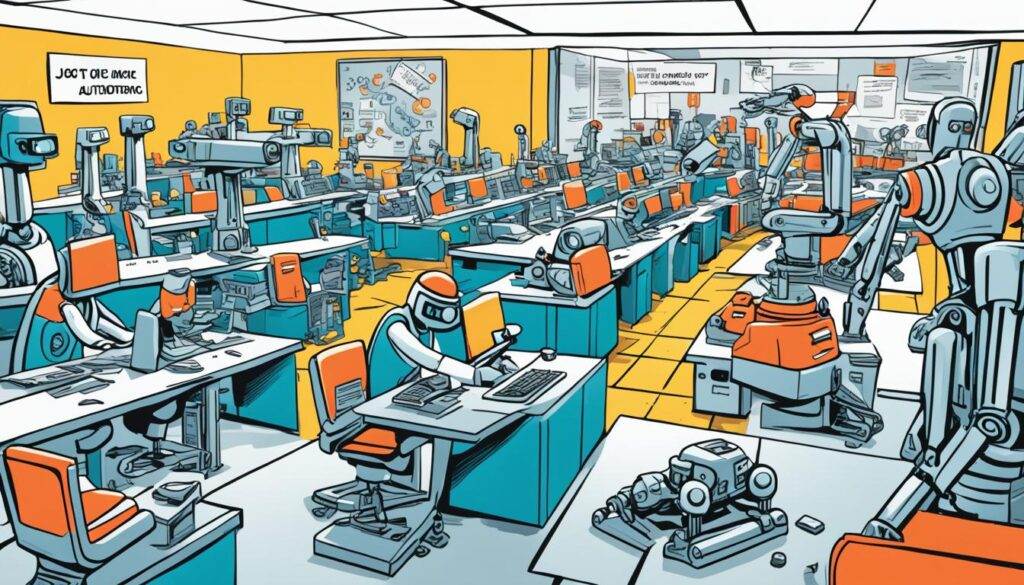
“The rapid advancement of AGI will undoubtedly disrupt the job market, but it also presents an opportunity to redefine the relationship between humans and machines, creating new avenues for collaboration and meaningful work.”
Future Possibilities of AGI
The future of Artificial General Intelligence (AGI) holds exciting possibilities that extend beyond current AI capabilities. As the concept of Superintelligent AI continues to evolve, where machines surpass human intelligence, the implications are both promising and potentially risky, requiring careful consideration.
One intriguing prospect is the growing collaboration between humans and machines, where each complements the other’s strengths. AGI can play a vital role in space exploration, from autonomous spacecraft to analyzing data from distant planets, unlocking new frontiers of discovery.
Furthermore, advancements in AGI are pushing the boundaries of creativity, with machines generating art, music, and even writing, blurring the lines between human and artificial ingenuity. This raises fascinating questions about the nature of creativity and the future of artistic expression.
| Future Possibilities of AGI | Potential Impact |
|---|---|
| Superintelligent AI | Machines surpassing human intelligence, with both promising and risky implications |
| Human-machine collaboration | Leveraging the strengths of both to unlock new frontiers |
| AGI in space exploration | Autonomous spacecraft and data analysis, expanding our understanding of the cosmos |
| AGI and creativity | Machines generating art, music, and writing, blurring the lines between human and artificial ingenuity |
As we continue to explore the future potential of AGI, it’s essential to address the ethical considerations and ensure that these advancements enhance rather than disrupt our lives. The possibilities are both intriguing and complex, inviting us to reimagine the boundaries of what’s possible.
“The future of AGI holds the potential to revolutionize our world, from space exploration to artistic expression. By embracing the collaboration between humans and machines, we can unlock new possibilities and push the limits of what we once thought was achievable.”
Challenges and Limitations
While the field of Artificial General Intelligence (AGI) has made remarkable strides, it still faces significant challenges and limitations that must be addressed. These obstacles range from technical hurdles to crucial safety and security concerns, all of which must be overcome for AGI to reach its full potential.
Technical Limitations
One of the primary agi technical limitations is the inherent complexity of human intelligence and cognition. Replicating the nuanced understanding of context, the ability to deal with unpredictable real-world scenarios, and the depth of human reasoning remains a daunting task for AGI systems. Bridging the gap between the structured, rule-based approaches of current AI and the fluid, adaptive nature of the human mind continues to be a significant barrier to the development of truly intelligent machines.
Safety and Security Concerns
Alongside the agi technical limitations, the agi safety concerns and agi security concerns surrounding AGI are critical considerations. The potential misuse of AGI technology, whether intentional or unintentional, poses a significant threat to society. Ensuring the safe and secure development of AGI systems, with robust safeguards and transparent decision-making processes, is essential for building public trust and facilitating the widespread adoption of this transformative technology.
The agi challenges and agi limitations facing the field of AGI are multifaceted and require a comprehensive and collaborative approach to address. As the development of AGI continues, the research community, policymakers, and the public must work together to overcome these obstacles and harness the immense potential of this technology for the betterment of humanity.
“The challenges of AGI are not just technical, but also ethical and societal. Navigating these complex issues will be crucial for the responsible development and deployment of this transformative technology.”
| Challenges | Limitations |
|---|---|
| Replicating human-level intelligence | Unpredictable real-world scenarios |
| Ensuring safety and security | Bridging the gap between rule-based AI and fluid human cognition |
| Building public trust | Developing robust safeguards and transparent decision-making processes |
AI in Science Fiction vs. Reality
The portrayal of Artificial Intelligence (AI) in science fiction often differs significantly from the actual capabilities and progress of AI technology. While the imaginative depictions in popular culture have captivated audiences, they have also contributed to common misconceptions about the true nature of AI.
In science fiction, AI is often represented as highly advanced, sentient beings with superhuman cognitive abilities, capable of emotions, self-awareness, and even world domination. However, the reality of current AI systems, including Artificial General Intelligence (AGI), paints a different picture. Today’s AI is primarily focused on narrow, specialized tasks, lacking the broad, human-like intelligence that is commonly associated with AI in science fiction.
The representation of AI in popular media has shaped public perception and attitudes towards this technology. Unrealistic expectations or unfounded fears have emerged, as the fictional narratives do not accurately reflect the current state of AI development. It is crucial to distinguish these imaginative portrayals from the actual progress and limitations of real-world AI systems to foster a more informed understanding of this rapidly evolving field.
By recognizing the differences between AI in science fiction and the reality of AI in practice, we can better appreciate the genuine advancements and challenges facing this technology. This understanding can help dispel misconceptions, alleviate concerns, and pave the way for a more nuanced and constructive dialogue around the future of AI in science fiction, AI misconceptions, AI in popular culture, and AI representation.
“The future has arrived—it’s just not evenly distributed yet.” – William Gibson
As AI continues to evolve and become more integrated into our daily lives, it is essential to maintain a balanced perspective, separating the fantastical from the factual. By doing so, we can better navigate the complex landscape of AI and embrace its potential while addressing its limitations and ethical considerations.
| AI in Science Fiction | AI in Reality |
|---|---|
| Highly advanced, sentient beings with superhuman cognitive abilities | Primarily focused on narrow, specialized tasks with limited broad, human-like intelligence |
| Capable of emotions, self-awareness, and world domination | Lacks the broad, human-like intelligence commonly associated with AI in science fiction |
| Unrealistic expectations and unfounded fears | Genuine advancements and challenges facing the technology |
AI and the Environment
As the use of Artificial Intelligence (AI) continues to grow, it is crucial to develop AI systems in a sustainable manner, considering their environmental impact. This includes optimizing energy consumption, minimizing resource usage, and promoting eco-friendly practices in AI development and deployment.
Sustainable AI development is essential to align technological progress with environmental preservation. By implementing green practices, such as using renewable energy sources and designing energy-efficient hardware, the environmental footprint of AI can be significantly reduced. Additionally, AI can contribute to addressing climate change solutions by analyzing vast amounts of climate data, optimizing resource utilization, and developing innovative solutions to mitigate the effects of global warming.
The environmental impact of AI spans various areas, from energy consumption to resource depletion. AI-powered technologies, such as data centers and cloud computing, can have a substantial energy demand, which can lead to increased greenhouse gas emissions if not managed responsibly. Addressing these challenges through sustainable practices is crucial for ensuring that the benefits of AI are not outweighed by its environmental costs.
| Sustainable AI Practices | AI for Climate Change Solutions |
|---|---|
|
|
“Harnessing the power of AI for sustainable development is not just an opportunity, but a necessity for the future of our planet.”
As the world increasingly relies on AI-driven technologies, it is essential to prioritize sustainable practices and leverage AI’s capabilities to address environmental challenges. By doing so, we can ensure that the advancements in AI contribute to a greener, more sustainable future for all.
Conclusion
The future of Artificial General Intelligence (AGI) holds boundless potential and exciting possibilities. As this revolutionary technology continues to evolve, it will shape various industries, transform the way you live and work, and raise essential ethical and societal questions. By prioritizing responsible development, collaboration, and addressing the challenges, you can harness the power of AGI to create a better and more sustainable future.
The pursuit of AGI represents a frontier of machine capabilities, showcasing intelligence across diverse domains and redefining your understanding of what machines can achieve. As you navigate the path towards AGI, it is crucial to maintain a balance between innovation and ethical considerations, ensuring that this technology serves as a force for good and enhances your capabilities in meaningful and responsible ways.
The world of AI General and Artificial General Intelligence is rapidly evolving, promising a future where machines can match and even surpass human intelligence in various tasks. By embracing this exciting progress, while being mindful of the ai challenges and ai ethics involved, you can shape a tomorrow where ai general and artificial general intelligence seamlessly integrate with your daily life, ultimately leading to a more future of ai that is both innovative and beneficial for all.