
Did you know that 47% of teachers in the United States say they have incorporated AI-powered technologies into their classrooms? The integration of Artificial Intelligence (AI) in education is rapidly transforming the learning experience for millions of students across the country. As traditional education methods often fail to address individual learning styles and paces, advancements in AI offer dynamic, data-driven solutions to revolutionize the K-12 learning landscape.
AI holds enormous promise for enhancing education by enabling personalized learning, delivering AI-powered classroom applications, supporting school counseling, catering to students with special needs, and revolutionizing learning analytics. By leveraging AI-driven technologies like intelligent tutoring systems, natural language processing, and machine learning algorithms, educators can now create adaptive learning environments that cater to the unique needs of each student, fostering engagement, understanding, and retention.
Key Takeaways
- AI-powered technologies are rapidly transforming the K-12 learning experience, with 47% of teachers incorporating these technologies in their classrooms.
- Advancements in AI offer dynamic, data-driven solutions to address the limitations of traditional education methods, such as lack of personalization and declining student attention.
- AI enables personalized learning, delivers AI-powered classroom applications, supports school counseling, caters to students with special needs, and revolutionizes learning analytics.
- AI-driven technologies like intelligent tutoring systems, natural language processing, and machine learning algorithms create adaptive learning environments that cater to the unique needs of each student.
- The integration of AI in education promises to enhance engagement, understanding, and retention among students, revolutionizing the learning experience.
Personalized Learning Journey
In the ever-evolving landscape of education, personalized learning powered by artificial intelligence (AI) has emerged as a transformative force. AI-driven adaptive learning platforms are revolutionizing the way students engage with educational content, tailoring their learning experiences to their unique needs and preferences.
By analyzing vast troves of student performance data, AI-powered systems can identify each learner’s strengths, weaknesses, and learning styles. This data-driven approach enables the delivery of personalized recommendations and targeted instructional content, empowering students to progress at their own pace and achieve greater subject mastery.
According to a recent study by McKinsey, schools that have implemented personalized learning through AI have witnessed a remarkable 30% improvement in student performance compared to traditional classroom settings. This remarkable statistic underscores the power of AI in enhancing the learning experience and fostering deeper engagement, understanding, and retention among students.
Personalized Recommendations and Learning Plans
AI-driven personalized learning platforms analyze a wealth of student data, including test scores, learning habits, and engagement levels, to generate tailored recommendations and learning plans. These personalized insights guide students towards the most effective study strategies, relevant educational content, and optimal pacing, ensuring that each learner’s unique needs are met.
| Feature | Benefit |
|---|---|
| Adaptive Content Delivery | AI adjusts the difficulty, pace, and presentation of instructional materials based on individual student performance and preferences. |
| Personalized Recommendations | AI provides students with customized suggestions for learning resources, practice exercises, and enrichment activities. |
| Continuous Progress Monitoring | AI tracks student progress, identifies knowledge gaps, and adjusts the learning experience accordingly. |
By harnessing the power of AI, personalized learning journeys enable students to thrive, fostering a deeper understanding of the subject matter and a heightened sense of engagement and motivation.

“Personalized learning empowers students to take ownership of their educational journey, unlocking their full potential.”
AI-Powered Applications For Classrooms
In the ever-evolving world of education, AI-powered applications are revolutionizing the classroom experience. From intelligent tutoring systems to digital assistants, educational games, and automated grading solutions, these innovative tools are transforming the way students learn and teachers instruct.
Intelligent Tutoring Systems (ITS)
Intelligent tutoring systems harness the power of AI to provide personalized learning experiences. By analyzing student data, these systems can diagnose strengths and weaknesses, delivering targeted instruction and practice exercises tailored to each student’s needs. This approach not only enhances engagement but also boosts understanding and retention of the subject matter.
Digital Assistants in the Classroom
Digital assistants like Siri or Alexa, equipped with natural language processing (NLP) capabilities, can serve as valuable classroom companions. These AI-powered tools can help students with tasks such as finding definitions, answering questions, and accessing educational content, freeing up valuable instructional time for teachers.
AI-Powered Educational Games
Innovative educational games powered by AI create immersive learning experiences that captivate students. These games adapt to individual skill levels, offering challenges and feedback that keep learners engaged and motivated. By blending entertainment with education, AI-driven games can significantly improve knowledge retention and foster a love for learning.
Intelligent Textbooks
Textbooks are also evolving with the integration of AI technology. Intelligent textbooks can provide customized content, interactive features, and personalized recommendations based on student performance. This level of personalization enhances the learning process, ensuring that students receive the support they need to succeed.
Automated Grading Systems
AI-based automated grading systems can save teachers time and increase efficiency. These applications can quickly assess student work, provide feedback, and even identify areas for improvement, allowing educators to focus more on teaching and less on administrative tasks.
As AI-powered applications continue to proliferate in the classroom, the learning experience is becoming more personalized, engaging, and effective. By embracing these innovative technologies, educators can unlock new possibilities for student success and prepare learners for the challenges of the 21st century.
ai in education
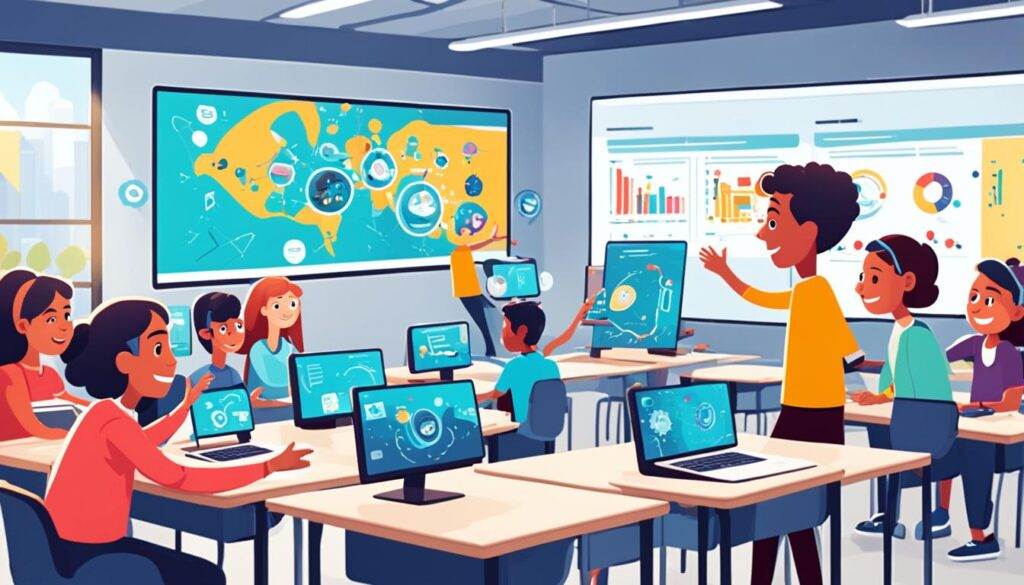
The integration of artificial intelligence (AI) in education is transforming the way students learn and teachers deliver information. As digital technology becomes more widespread and AI tools become increasingly accessible, the educational landscape is evolving at a rapid pace. From personalized learning experiences to improved learning outcomes, AI is fundamentally changing the future of education by revolutionizing the learning experience.
One of the key ways AI is impacting education is through personalized learning. AI-powered systems can analyze student data, adapt instructional content, and offer tailored recommendations, ensuring each student receives a learning journey tailored to their unique needs, abilities, and preferences. This approach enhances engagement, understanding, and retention, ultimately leading to more successful educational outcomes.
Moreover, AI-powered applications are revolutionizing classroom dynamics. Intelligent tutoring systems, digital assistants, educational games, and automated grading systems are just a few examples of how AI is reshaping the learning experience. These AI-driven tools not only streamline educational processes but also foster a more interactive and engaging environment for both students and teachers.
“AI in education is not about replacing teachers, but about empowering them to deliver more personalized and effective instruction.”
As the adoption of AI in education continues to grow, it’s clear that the future of learning will be significantly influenced by this transformative technology. By harnessing the power of AI, educators can create more dynamic and adaptive learning environments that cater to the diverse needs of students, ultimately preparing them for the challenges and opportunities of the 21st century.
AI In School Counseling
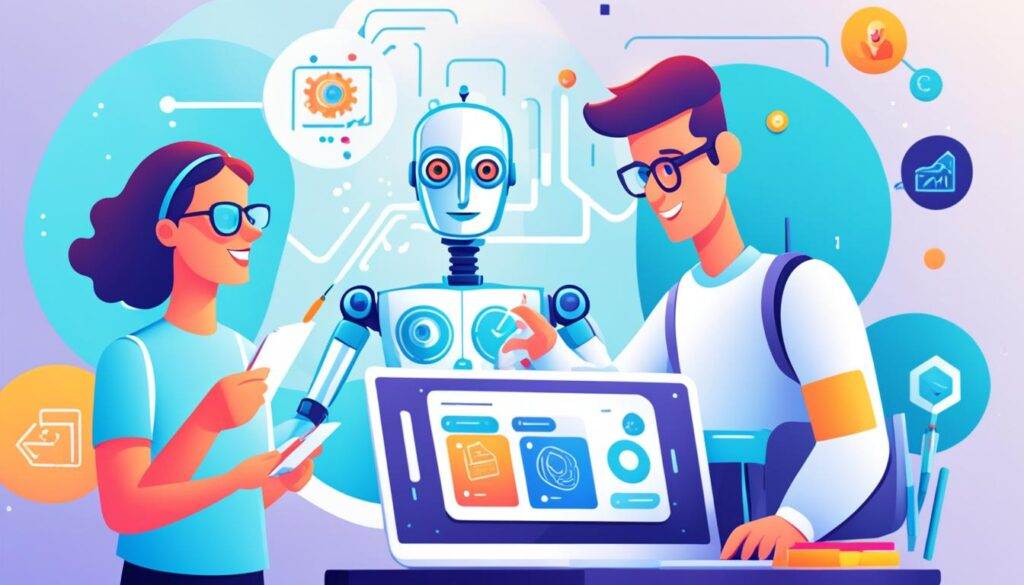
In an era where mental health and career preparedness are paramount, AI-powered tools are revolutionizing the role of school counselors. From AI chatbots that provide immediate support for student concerns to emotional distress detection systems that identify signs of emotional turmoil, these intelligent technologies are transforming the way counselors interact with and support their students.
AI Chatbots: Accessible Support for Students
AI chatbots, powered by natural language processing (NLP), are emerging as valuable assets in school counseling. These virtual assistants can address basic student inquiries, offer emotional support, and guide them through common challenges, all while ensuring immediate access to professional help. By handling routine tasks, AI chatbots free up counselors to focus on more complex, personalized interventions, enhancing the overall quality of support provided to students.
Emotional Distress Detection: Proactive Intervention
Recognizing the critical importance of student mental health, AI-driven emotional distress detection systems analyze student communications, from written assignments to social media posts, to identify signs of emotional distress or suicidal ideation. This allows counselors to proactively intervene, providing the necessary support and resources to students in need, potentially preventing tragic outcomes.
AI-Powered Career Counseling
AI-based career counseling tools are transforming the way students explore their future paths. By analyzing student data on interests, skills, and goals, these intelligent systems can recommend personalized career options and educational opportunities, particularly benefiting students from underserved communities who may have limited access to comprehensive career guidance.
As AI continues to evolve, the integration of these technologies into school counseling is poised to improve student well-being, academic performance, and future preparedness, ensuring that every student has the support they need to thrive.
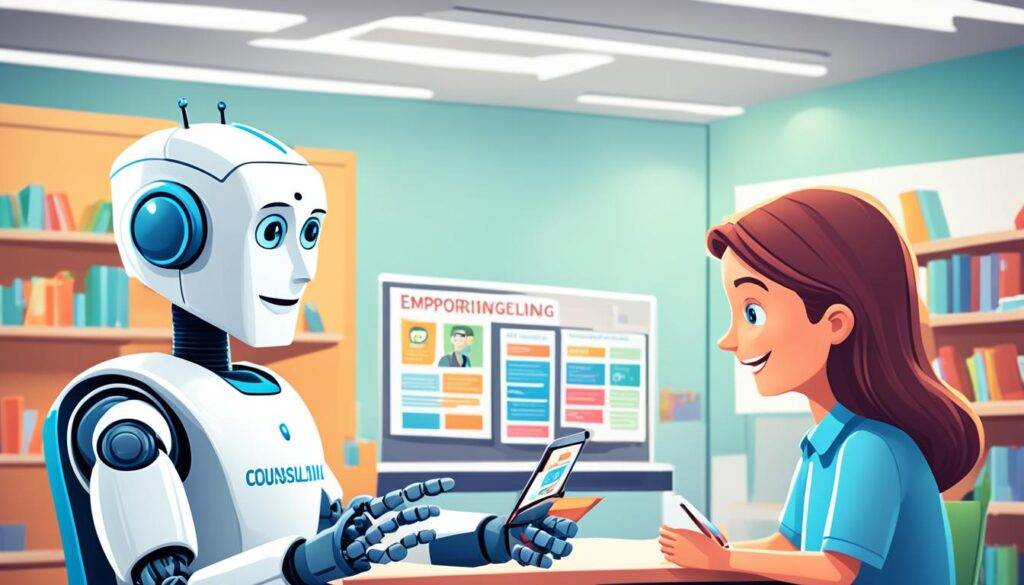
“AI-powered tools in school counseling are not about replacing human experts, but rather empowering them to provide more personalized, proactive, and accessible support for students.” – Dr. Emma Walters, Educational Technology Specialist
AI For Students With Special Educational Needs
In the realm of education, AI technologies are transforming the learning experience for students with diverse needs. From text-to-speech (TTS) solutions to advanced speech recognition, AI-powered assistive tools are creating more inclusive and accessible learning environments. These innovative technologies cater to the unique requirements of students, empowering them to thrive academically and reach their full potential.
Personalized Learning for All
AI-driven educational applications leverage student data to provide personalized instruction and support. For instance, intelligent tutoring systems can adjust lesson plans, content, and pacing to accommodate students with special educational needs, such as those with dyslexia or visual impairments. By analyzing individual learning patterns, these systems deliver tailored experiences that enhance engagement, understanding, and retention.
Furthermore, AI-enhanced assistive wearables like smart glasses and hearing aids can revolutionize the learning environment for students with physical or sensory disabilities. These devices use speech recognition and noise-cancelling technology to improve accessibility, allowing learners to fully participate in classroom activities and access educational materials with greater ease.
“AI is empowering students with special needs to overcome barriers and unlock their true potential in the classroom.”
The integration of ai for special education, text-to-speech, speech recognition, and assistive wearables is paving the way for more inclusive learning experiences. By leveraging these advanced technologies, educators can create personalized learning pathways that cater to the diverse needs of their students, ensuring that every learner has the opportunity to thrive and succeed.
AI In Learning Analytics
In the era of digital transformation, AI in learning analytics is revolutionizing the way educators collect, measure, analyze, and report data about students and their interactions with educational material. This comprehensive approach empowers teachers with valuable insights into student performance and educational backgrounds, enabling them to make informed decisions about teaching strategies.
With access to robust learning analytics, educators can identify learning difficulties more effectively and offer targeted support to students. AI-powered tools also utilize video footage to assess student engagement, providing valuable feedback for teacher training programs and instructional improvement.
Educational data mining and AI in learning analytics work hand-in-hand to uncover patterns and trends in student performance data. By analyzing this data, educators can gain a deeper understanding of their students’ strengths, weaknesses, and learning preferences, ultimately tailoring the educational experience to meet individual needs.
The integration of AI in learning analytics has the potential to revolutionize the way we approach education. By harnessing the power of data and AI, educators can make more informed decisions, personalize learning experiences, and drive continuous improvement in student outcomes.
| Benefits of AI in Learning Analytics | Challenges of AI in Learning Analytics |
|---|---|
|
|
As the education landscape continues to evolve, the integration of AI in learning analytics holds immense promise for transforming the way we approach teaching and learning. By harnessing the power of data and AI, educators can unlock new opportunities to personalize the educational experience and drive student success.

“The future of education lies in the intersection of technology and personalized learning. AI-powered analytics is the key to unlocking this potential and empowering educators to make a lasting impact on student outcomes.”
Challenges Of AI Integration In K-12 Education
As the promise of AI-powered solutions captivates the education sector, integrating this transformative technology into K-12 classrooms faces several crucial challenges that must be addressed for equitable and successful implementation.
Bridging the Digital Divide
One of the primary hurdles is the persistent digital divide, where not all students have equal access to the necessary technology and reliable internet connections. This disparity can exacerbate educational inequities if AI-driven tools become the norm in the classroom. To tackle this issue, education leaders and policymakers must develop low-bandwidth AI applications and offer offline learning options, ensuring that the benefits of AI-powered education reach all students, regardless of their socioeconomic backgrounds.
Addressing Stakeholder Resistance
Another significant challenge lies in addressing the concerns and resistance from various stakeholders, including educators, parents, and community members. Educators may worry about data privacy and the potential for algorithmic bias in AI-based systems. Allaying these concerns requires collaboration with policymakers and technology developers to create ethical frameworks and guidelines that prioritize student privacy and fair, unbiased AI integration.
| Challenges | Solutions |
|---|---|
| Digital Divide |
|
| Stakeholder Resistance |
|
By addressing these challenges head-on and implementing strategic solutions, education leaders can pave the way for the equitable and responsible integration of AI in K-12 education, unlocking its transformative potential for students and educators alike.
“Integrating AI in education requires a holistic approach that addresses the digital divide and alleviates stakeholder concerns about data privacy and algorithmic bias.”
Interactive Learning Environments
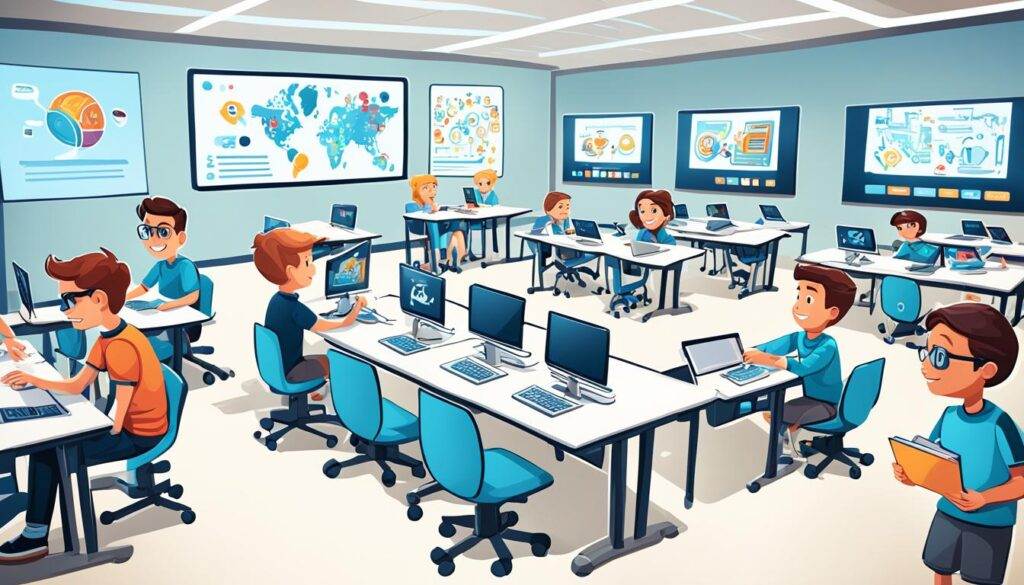
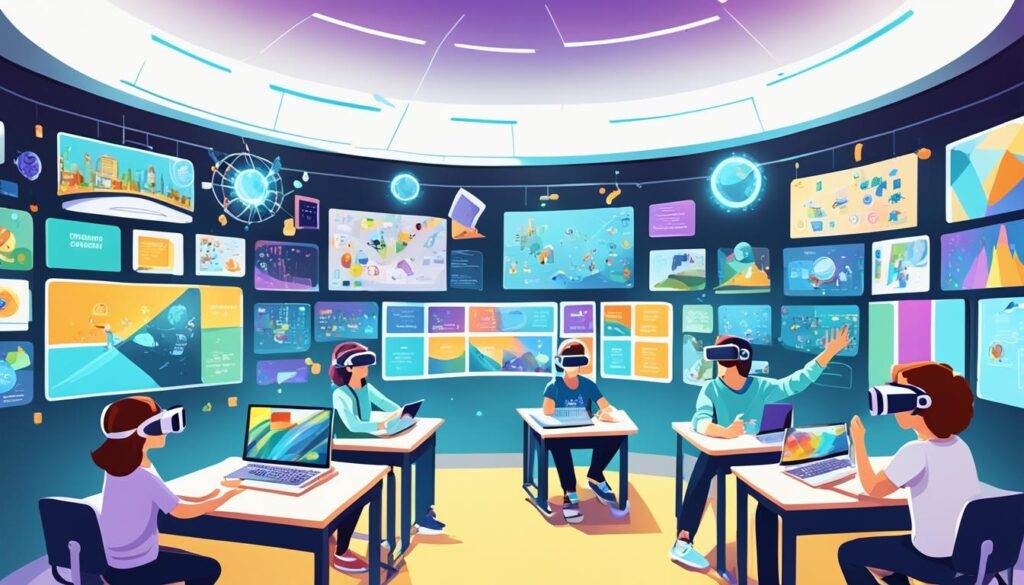
In today’s digital age, artificial intelligence (AI) is transforming the way students learn and engage with educational content. One of the most exciting advancements in this field is the creation of interactive learning environments, where virtual reality (VR) and augmented reality (AR) technologies play a crucial role.
Imagine transporting yourself to ancient Rome, exploring the Colosseum or standing in the middle of a historic battle. With VR, students can immerse themselves in interactive learning experiences that bring history to life. Similarly, AR allows students to overlay digital information onto the physical world, enabling them to visualize complex scientific concepts or even dissect a virtual frog without the need for physical specimens.
These interactive learning environments have been shown to significantly increase student engagement and knowledge retention. In fact, studies have found that VR-based learning can result in up to 75% learning retention, second only to the powerful technique of learning by teaching someone else.
“VR experiences can result in 75% learning retention, second only to learning by teaching someone else.”
The integration of AI further enhances these immersive learning experiences. Intelligent tutoring systems can analyze student performance and provide personalized feedback, while virtual assistants can answer questions and guide students through the learning process. Additionally, AI-powered educational games and simulations can adapt to individual learning styles, ensuring that each student receives the tailored support they need to succeed.
As the interactive learning environments powered by AI continue to evolve, the possibilities for transformative education are endless. From virtual field trips to interactive laboratory experiments, these technologies are poised to revolutionize the way students learn and engage with the world around them.
Chatbots and Virtual Tutors
In the ever-evolving landscape of education, AI chatbots and virtual tutors are emerging as powerful tools that are transforming the learning experience. Equipped with advanced natural language processing capabilities, these AI-powered educational assistants are providing invaluable support to both students and teachers.
Imagine a scenario where a student is struggling with a complex math problem. Instead of waiting for the next class or seeking out a teacher, they can simply engage with an AI chatbot that can analyze the problem, provide step-by-step guidance, and even offer personalized feedback. These chatbots are designed to understand natural language, interpret the student’s queries, and deliver tailored responses that address their specific needs.
Beyond providing real-time academic support, virtual tutors powered by intelligent tutoring systems can also facilitate peer-to-peer collaboration and group learning. These AI-driven platforms can facilitate discussions, monitor participation, and offer insights to help students learn from one another effectively.
The impact of these AI-powered educational tools is undeniable. Studies have found that students who received intelligent tutoring outperformed control students on posttests in 92% of the cases, demonstrating the significant potential of AI-powered tutoring systems to enhance learning outcomes.
As the educational landscape continues to evolve, the integration of AI chatbots and virtual tutors is poised to become increasingly prevalent, offering personalized assistance and support to students around the clock, ensuring that they can thrive in their academic journeys.
“The integration of AI-powered educational assistants is transforming the way students learn, offering personalized support and enhancing academic outcomes.”
By leveraging the power of natural language processing and intelligent tutoring systems, these AI-driven technologies are revolutionizing the educational experience, empowering students to unlock their full potential and achieve greater success.
Ethical Considerations
As the adoption of artificial intelligence (AI) continues to transform the educational landscape, it is crucial to address the ethical considerations that arise. The integration of ethical considerations of ai in education, data privacy, algorithmic bias, and the responsible use of ai are paramount in ensuring that AI-powered tools and technologies benefit students, educators, and the education system as a whole.
One of the primary concerns regarding the use of AI in education is the protection of student data privacy. AI-driven systems often collect and analyze vast amounts of student data, from academic performance to behavioral patterns. Ensuring the secure storage, handling, and access to this sensitive information is crucial to maintaining trust and preserving the privacy rights of students. Transparent data governance policies and robust data protection measures must be in place to safeguard student privacy.
Another critical issue is the potential for algorithmic bias inherent in AI systems. These systems can perpetuate and amplify existing societal biases, leading to unfair or discriminatory outcomes for students. Educators and policymakers must work closely with AI developers to identify and mitigate such biases, ensuring that AI-powered tools and applications promote equitable and inclusive learning experiences.
“The responsible development and deployment of AI in education is not just a technological challenge, but a moral imperative.”
Furthermore, the integration of AI in education raises concerns about the displacement of human teachers and the potential diminishment of the human element in teaching and learning. While AI-powered tools can enhance and streamline certain educational tasks, it is essential to maintain a balance between the advantages of AI and the irreplaceable role of human educators in nurturing emotional, social, and cognitive development.
To address these ethical considerations, educators, policymakers, and technology developers must collaborate to establish robust ethical frameworks and guidelines for the responsible use of ai in education. These frameworks should prioritize student privacy, mitigate algorithmic bias, and ensure that AI-powered tools complement and enhance the role of human teachers, rather than replace them.
By embracing the transformative potential of AI while addressing its ethical implications, the education sector can unlock the full benefits of this technology while safeguarding the well-being and rights of students, educators, and the broader educational community.
Conclusion
The impact of AI on education is profound and multifaceted, offering opportunities to transform the learning experience, enhance learning outcomes, and stimulate innovation in teaching practice. By leveraging the power of AI, you can create more personalized, engaging, and inclusive learning environments that enable students to thrive in the digital age.
However, it is crucial that you approach the integration of AI in education thoughtfully and ethically, keeping in mind its potential impacts and challenges. Only through careful planning and collaboration will you be able to harness the full potential of AI to revolutionize education and ensure a future where AI and human teachers work in harmony to provide the best possible learning experiences for all students.
As you move forward, remember that the conclusion of this article on AI in education is not just a summary, but a call to action. The future of learning is in your hands, and by embracing the transformative power of AI, you can unlock new possibilities and create a more equitable and empowered educational landscape for students in Indonesia and beyond.
FAQ
How does AI transform education into a personalized learning journey?
What are some of the AI-powered classroom applications that enhance the learning experience?
How can AI support school counselors and improve student outcomes?
How can AI support students with special educational needs?
How does AI revolutionize learning analytics?
What are the challenges and ethical considerations in integrating AI in K-12 education?
How do immersive technologies like virtual reality and augmented reality enhance the learning experience?
How do AI-powered educational assistants support students and teachers?
Source Links
- AI In K-12 Education: Empowering Educators, Transforming Learning – https://elearningindustry.com/ai-in-k-12-education-empowering-educators-transforming-learning
- How AI is Impacting Education: Transforming the Learning Experience – https://www.linkedin.com/pulse/how-ai-impacting-education-transforming-learning-experience-fayrix-2bhsf
- How AI is Revolutionising Education in Schools – https://www.manchester.global/blogs/artificial-intelligence-in-education-transforming-schools