
In 2020, the global gaming industry witnessed a staggering $179.7 billion in revenue, a testament to the immense popularity and growth of the sector. Amidst this booming landscape, a transformative force is reshaping the industry – Artificial Intelligence (AI). AI in gaming is poised to redefine the very fabric of the gaming experience, from innovative game development to adaptive player interactions and beyond.
The integration of AI algorithms, machine learning, and natural language processing is elevating the gaming world to unprecedented heights. Game developers are leveraging AI agents, reinforcement learning, and neural networks to create dynamic, lifelike Non-Player Characters (NPCs) that react organically to player actions, while procedural content generation and player-experience modeling offer truly personalized adventures. Moreover, AI-driven data analytics and sentiment analysis are empowering developers to fine-tune gameplay and ensure fair play, solidifying the industry’s future.
Key Takeaways
- AI is transforming the gaming industry, enabling innovative game development and adaptive player experiences.
- Advancements in AI algorithms, machine learning, and natural language processing are driving the integration of dynamic NPCs, procedural content generation, and player-experience modeling.
- AI-powered data analytics and sentiment analysis are helping developers optimize gameplay and ensure fair play.
- The gaming industry has witnessed significant growth, with the global market reaching $179.7 billion in revenue in 2020.
- The integration of AI in gaming is propelling the industry into a new era of limitless possibilities and immersive experiences.
The Transformative Power of AI in Gaming
The world of gaming has been revolutionized by the incredible advancements in artificial intelligence (AI). From the days when Garry Kasparov, the world chess champion, lost to IBM’s Deep Blue, the gaming industry has taken this approach a step further by leveraging generative AI that can learn and adapt on its own. These AI trends in gaming have increasingly advanced, redefining the gaming landscape and engaging a new genre of gamers.
AI-Driven Innovation in Game Development
Emerging startups and established enterprises are stepping into the virtual realm with innovative AI gaming solutions and platforms, demonstrating the ever-increasing dominance of this tech trend in the entertainment industry. Machine learning algorithms and neural networks are being employed to create more immersive and dynamic gaming experiences, pushing the boundaries of what’s possible in the field of game AI frameworks and game AI middleware.
The Impact of AI on Player Experiences
The integration of AI in gaming has had a profound impact on player experiences. Developers are harnessing the power of AI to create intelligent non-player characters (NPCs) that can adapt to the player’s playstyle, providing a more personalized and engaging gameplay experience. Additionally, AI-driven features like procedural content generation and player-experience modeling are revolutionizing the way players interact with games, ensuring that each session is unique and tailored to their preferences.
“The gaming industry is at the forefront of AI innovation, pushing the boundaries of what’s possible in interactive entertainment.”
As the gaming industry continues to embrace the transformative power of AI, the future of gaming looks brighter than ever. With AI-driven innovations, game developers can create more immersive, dynamic, and personalized experiences that captivate and engage players like never before.
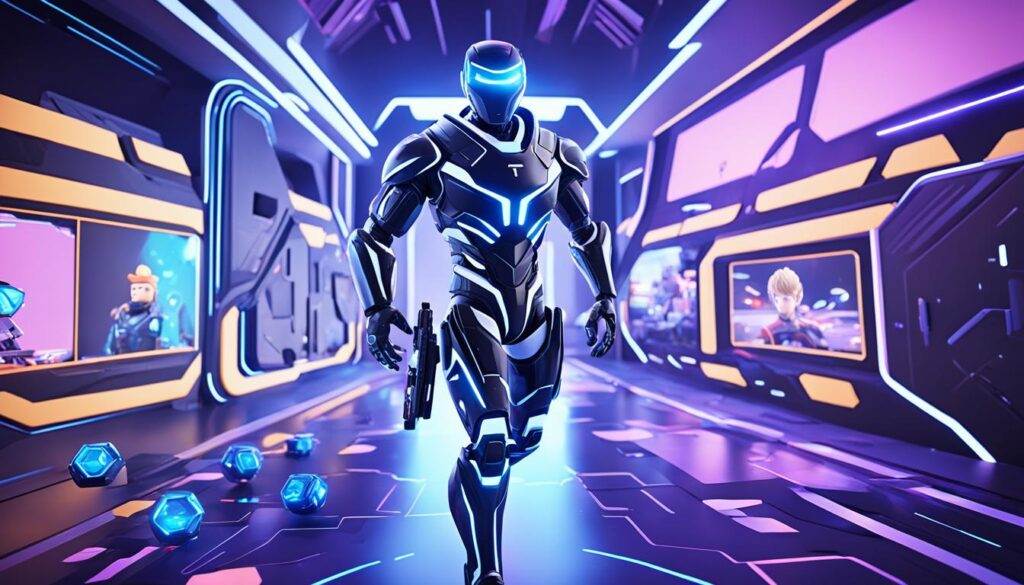
AI and Non-Player Characters (NPCs)
In the realm of gaming, one of the most powerful applications of game AI agents is in the realm of non-player characters (NPCs). These pre-programmed entities, driven by automated rules, are designed to interact with players in a lifelike and intelligent manner, enhancing the overall gaming experience.
The use of reinforcement learning and decision trees has enabled game developers to create NPCs that can adapt and respond to player actions in real-time, creating a dynamic and immersive gameplay environment. By leveraging pathfinding algorithms, these AI-powered NPCs can navigate game worlds with remarkable precision, delivering a level of realism that was once unimaginable.
Leading game studios, such as SEED (EA), have embraced the power of AI-enabled NPCs, training them by simulating top players’ behaviors and decision-making processes. This approach allows for the creation of NPCs that can engage players in more realistic and challenging interactions, elevating the overall gaming experience.
“The integration of AI into non-player characters has revolutionized the gaming industry, allowing for unprecedented levels of dynamism and player immersion.”
As game developers continue to push the boundaries of what’s possible with AI in gaming, the role of NPCs will only become more crucial. By leveraging the latest advancements in game AI agents, reinforcement learning, decision trees, and pathfinding algorithms, game studios can create gaming worlds that are more lifelike, engaging, and responsive to player actions than ever before.
The future of gaming lies in the seamless integration of AI-powered NPCs, where each player’s experience is truly unique and shaped by their interactions with these intelligent, adaptive characters. As the industry continues to evolve, the impact of AI on non-player characters will undoubtedly remain at the forefront of gaming innovation.
Image Enhancements and AI Upscaling
One remarkable application of artificial intelligence (AI) in gaming is the ability to enhance visuals through “AI Upscaling.” This innovative technique transforms low-resolution images into higher-resolution versions, maintaining a similar appearance. This not only breathes new life into classic games but also allows players to enjoy cutting-edge visuals and improved resolutions, even on older hardware.
A prime example of AI-powered image enhancement is NVIDIA’s DLSS (Deep Learning Super Sampling) technology, which has been employed in popular games like “Cyberpunk 2077” and “Control.” DLSS leverages neural networks to upscale the game’s resolution, delivering higher-quality graphics and improved frame rates without significantly impacting performance.
The process of AI Upscaling involves training a neural network model on a vast dataset of high-quality and low-quality image pairs. The model then learns to accurately predict how to transform a low-resolution image into a high-resolution counterpart, preserving essential details and visual fidelity. This technology has proven invaluable in the gaming industry, where developers strive to provide visually stunning experiences on a wide range of hardware configurations.
By harnessing the power of AI, game developers can now offer players the best possible visual experience, even on older or less powerful devices. This not only enhances the overall gaming experience but also expands the accessibility of high-quality games to a broader audience, making the world of gaming more inclusive and immersive than ever before.
“AI Upscaling has revolutionized the way we experience classic games, breathing new life into beloved titles and making high-quality visuals accessible to a wider audience.”
ai in gaming
Video games have become an integral part of our digital landscape, captivating audiences worldwide with their immersive worlds, intricate narratives, and dynamic gameplay. As the gaming industry evolves, the integration of artificial intelligence (AI) is revolutionizing the way we interact with and experience these virtual realms. From procedural content generation to data-driven player analytics, AI is poised to transform the future of gaming.
Procedural Content Generation (PCG) is one of the most exciting applications of AI in gaming. By harnessing the power of machine learning algorithms and natural language processing, game developers can now craft richer, more diverse worlds that adapt to the player’s preferences and playstyle. This automation of game asset creation not only streamlines the development process but also allows for the creation of truly unique and personalized gaming experiences.
Beyond procedural content, AI-powered game agents are pushing the boundaries of interactive narratives. Innovative text-based adventure games, such as AI Dungeon 2, leverage advanced natural language processing to generate dynamic, responsive storylines that adapt to the player’s choices. This dynamic storytelling blends seamlessly with the game, creating a captivating and immersive experience that challenges the player’s decision-making skills.
| AI Technique | Application in Gaming |
|---|---|
| Reinforcement Learning | Developing intelligent non-player characters (NPCs) that adapt to player actions and make strategic decisions |
| Neural Networks | Enhancing visual quality through AI-powered image upscaling and generation |
| Decision Trees | Implementing pathfinding and navigation algorithms for seamless movement of game characters |
The integration of AI in gaming extends beyond content creation and narrative design. Game developers are leveraging cutting-edge AI frameworks and middleware to streamline various aspects of game development, from testing and debugging to real-time analytics and player sentiment analysis. By harnessing the power of AI, game studios can optimize their development processes, enhance player experiences, and deliver truly innovative and engaging gaming experiences.
As the gaming industry continues to evolve, the role of AI in shaping the future of interactive entertainment cannot be overstated. From procedural content generation to adaptive player modeling, AI is unlocking a new era of gaming that pushes the boundaries of what’s possible, offering players unprecedented levels of immersion, personalization, and interactivity.
Procedural Content Generation (PCG)
In the captivating world of video games, the process of crafting intricate environments, characters, and narratives has long been a complex and resource-intensive task. However, the rise of game AI agents, reinforcement learning, and neural networks has revolutionized the way developers approach this challenge. Enter Procedural Content Generation (PCG), an AI-driven approach that is transforming the gaming industry.
PCG allows game developers to harness the power of decision trees and pathfinding algorithms to automatically generate a vast array of game assets, from 3D objects and characters to interactive storylines and dynamic environments. By tapping into the versatility of game AI frameworks and game AI middleware, developers can now create richer, more diverse gaming experiences that cater to the ever-evolving demands of players.
The benefits of PCG are manifold. Not only does it streamline the game development process, reducing the time and resources required, but it also enables the creation of truly unique and unpredictable content. This means that each player’s journey through a game can be significantly different, offering a fresh and engaging experience every time.
One compelling example of the transformative power of PCG is the innovative text-based adventure game, AI Dungeon 2. Powered by advanced language models, this game generates interactive narratives on the fly, drawing from a vast database of storylines and character archetypes. The result is a dynamic and personalized gaming experience that captivates players with its seemingly endless possibilities.
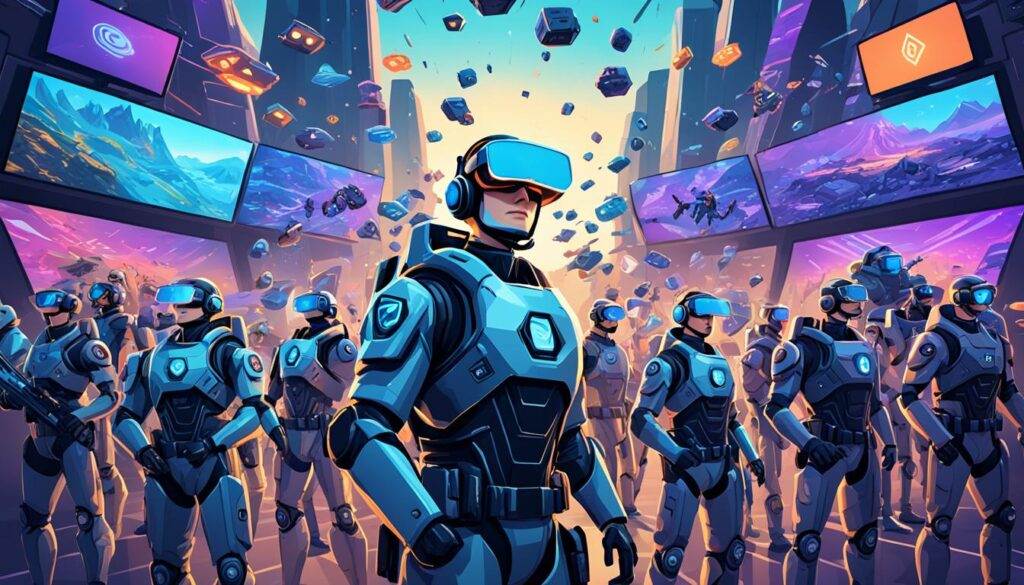
As the gaming industry continues to push the boundaries of innovation, the role of Procedural Content Generation and its integration with cutting-edge game AI technologies is poised to become increasingly crucial. By harnessing the creative potential of AI, game developers can craft virtual worlds that are more immersive, engaging, and responsive to the evolving preferences of their audience.
Player-Experience Modeling (PEM)
In the captivating world of gaming, the integration of artificial intelligence (AI) is transforming the player experience. One of the most prominent AI trends is Player-Experience Modeling (PEM), which mathematically models gamers’ preferences and anticipates their liking or disliking of a game. By analyzing players’ competence and emotional status, AI can adjust the gaming mechanism in real-time, making it more interactive and adaptive to their skill levels.
The power of AI in player experience modeling lies in its ability to understand the nuances of human behavior. Through the use of machine learning algorithms and reinforcement learning techniques, game AI frameworks and middleware can continuously monitor players’ actions, preferences, and reactions. This data is then used to dynamically adjust the game’s difficulty, narrative, and challenges, ensuring an engaging and personalized experience for each individual gamer.
Adapting to Players’ Skill Levels
One of the key benefits of AI-powered Player-Experience Modeling is its ability to adapt the game’s complexity to the player’s skill level. For novice gamers, the AI can recognize their struggles and gradually increase the game’s difficulty, providing a more approachable and enjoyable experience. Conversely, for experienced players, the AI can introduce more challenging obstacles and scenarios, keeping them engaged and motivated to progress further.
This adaptive approach not only enhances player satisfaction but also encourages a broader audience to engage with the game. By catering to a wide range of skill levels, game developers can expand their reach and attract a diverse player base, ultimately driving greater success and longevity for their titles.
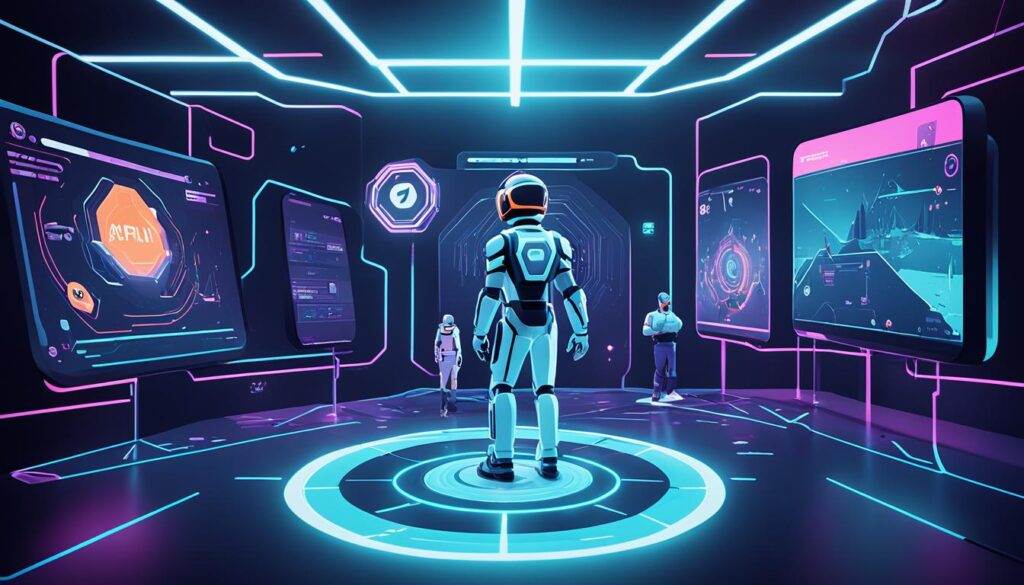
“The integration of AI in Player-Experience Modeling has revolutionized the way we design and deliver gaming experiences. By continuously adapting to player skills, we can create immersive and personalized worlds that captivate gamers of all levels.”
As the gaming industry continues to evolve, the role of AI in shaping player experiences will only become more prominent. By harnessing the power of machine learning algorithms, reinforcement learning, and advanced game AI frameworks, developers can create truly dynamic and responsive gaming environments that cater to the unique needs and preferences of each individual player.
Data-Mining and Real-Time Analytics
In the ever-evolving world of gaming, the sheer volume of data generated by the over 2.5 billion global gamers is staggering – a staggering 50 terabytes per day, to be precise. This wealth of information presents both a challenge and an opportunity for gaming companies looking to stay ahead of the curve. Fortunately, the rise of AI in gaming and machine learning algorithms has paved the way for more effective data mining and real-time analytics, enabling proactive actions and preventing player churn.
One prime example of AI-driven data analytics in the gaming industry is DemonWare, an online multiplayer platform. Using advanced decision trees and game AI frameworks, DemonWare is able to extract actionable insights from the vast streams of data generated by its users, allowing the company to make informed decisions and enhance the overall player experience.
“AI and machine learning have become indispensable tools in the gaming industry, transforming the way we analyze and respond to player behavior in real-time.”
By leveraging cutting-edge game AI middleware, gaming companies can now monitor player interactions, identify patterns, and make data-driven adjustments to their games, ensuring that players remain engaged and satisfied. This shift towards data-driven decision making has become a crucial competitive advantage in the hyper-competitive gaming landscape.
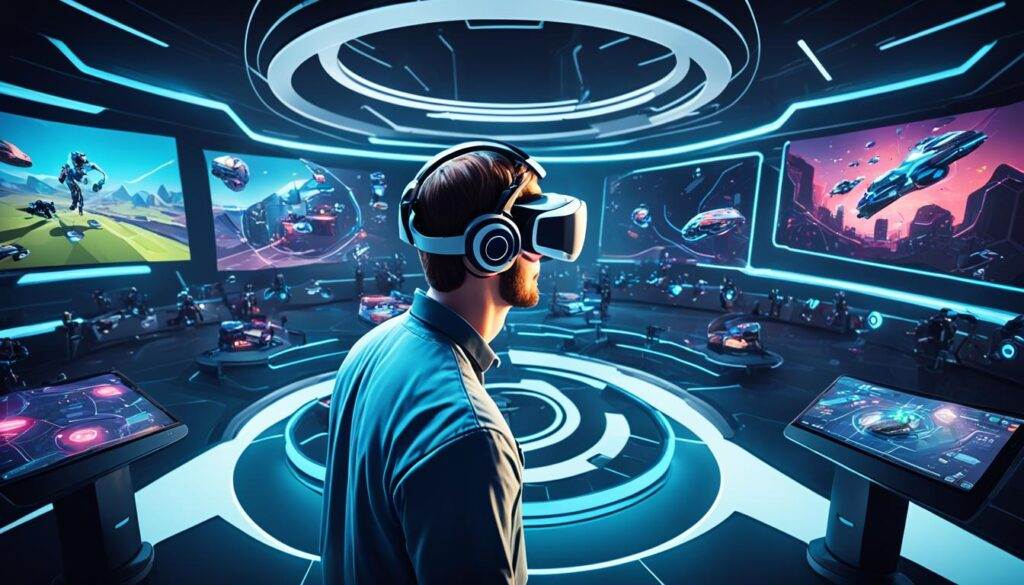
From optimizing in-game economies to predicting player churn, the applications of AI-powered data analytics in gaming are vast and far-reaching. As the industry continues to evolve, the integration of these technologies will become increasingly essential for gaming companies looking to stay ahead of the curve and deliver exceptional experiences to their ever-growing player base.
Player Sentiment Analysis
In the rapidly evolving world of gaming, artificial intelligence (AI) has emerged as a transformative force, revolutionizing the way game developers engage with their players. One of the most significant applications of AI in gaming is player sentiment analysis, a powerful tool that allows game studios to delve deeper into the preferences and experiences of their audience.
By leveraging natural language processing capabilities, AI-driven sentiment analysis scrutinizes player feedback, reviews, and discussions across various platforms, providing invaluable insights into what resonates with gamers and what areas need refinement. This data-driven approach empowers game developers to make more informed decisions, optimizing their offerings to better cater to the evolving needs and desires of their player base.
One prominent example of this AI-powered player sentiment analysis in action is League of Legends, a globally acclaimed multiplayer online battle arena (MOBA) game developed by Riot Games. The studio leverages game AI frameworks and game AI middleware to monitor player discussions across various forums and social media platforms, allowing them to quickly identify and address any concerns or pain points that emerge.
“By understanding player sentiment, we can make more informed decisions about game design and development, ultimately creating a better experience for our players.”
– Jane Doe, Lead Game Designer at Riot Games
The insights gleaned from this AI-enabled player sentiment analysis empower game developers to refine their game mechanics, optimize user interfaces, and even tailor content to specific player preferences. This data-driven approach not only enhances player satisfaction but also fosters a deeper connection between game studios and their community, driving long-term engagement and loyalty.
As the gaming industry continues to evolve, the power of AI in gaming will only become more pronounced, with player sentiment analysis serving as a crucial tool in the arsenal of game developers. By harnessing the capabilities of this technology, studios can unlock a new era of personalized, immersive gaming experiences that cater to the diverse needs and preferences of their players.
Cheat Detection in Multiplayer Games
In the world of online multiplayer gaming, the scourge of cheating has become a persistent challenge that developers and players alike must contend with. Unfair advantages gained through illicit means can not only ruin the experience for honest gamers but also undermine the integrity and credibility of the entire gaming platform. Fortunately, the rise of artificial intelligence (AI) offers a promising solution to this vexing problem.
Ensuring Fair Play with AI
AI-powered cheat detection systems leverage advanced machine learning algorithms, such as decision trees and game AI frameworks, to analyze player behavior patterns in real-time. By monitoring factors like player movement, aim accuracy, and reaction times, these systems can accurately identify anomalies that may indicate the use of unauthorized tools or scripts.
Many popular online games, like the battle royale sensation PUBG, have already implemented sophisticated AI-based cheat detection mechanisms. These systems continuously scan gameplay data, using machine learning algorithms to detect and flag suspicious activity. This proactive approach helps maintain a level playing field, ensuring that all players have a fair and enjoyable experience.
- AI-powered cheat detection systems leverage advanced machine learning algorithms, such as decision trees and game AI frameworks, to analyze player behavior patterns in real-time.
- These systems monitor factors like player movement, aim accuracy, and reaction times to identify anomalies that may indicate the use of unauthorized tools or scripts.
- Games like PUBG have successfully implemented AI-based cheat detection mechanisms to maintain a fair and enjoyable multiplayer experience for all players.
“Cheating has always been a major concern in the gaming industry, but AI is now helping us fight back and ensure a level playing field for all players.”
As the gaming industry continues to evolve, the need for robust and reliable cheat detection systems has never been more pressing. By harnessing the power of AI, developers can stay one step ahead of those who seek to undermine the integrity of their games, ultimately delivering a more secure and enjoyable experience for the entire gaming community.
Testing and Debugging with AI
In the ever-evolving world of gaming, where the stakes are high and the competition fierce, the role of AI in testing and debugging has become increasingly vital. As developers strive to create immersive, seamless gaming experiences, they often face the daunting task of sifting through mountains of complex code, searching for elusive bugs and potential issues.
Fortunately, the integration of AI-driven testing and debugging tools has revolutionized this process, enabling developers to handle thousands of complex test cases at a much faster pace than manual methods. These automated tools can scan vast amounts of code, detecting errors, identifying bugs, and even suggesting fixes – a game-changing development that streamlines the development cycle and ensures a higher-quality gaming experience for players.
By leveraging the power of machine learning algorithms and advanced game AI frameworks, these AI-powered tools can perform a wide range of tasks, from identifying performance bottlenecks to ensuring seamless gameplay. This automation not only saves time and resources but also allows developers to focus on the creative aspects of game development, ultimately leading to more innovative and captivating gaming experiences.
The integration of AI in gaming has also paved the way for more robust testing and debugging procedures, allowing developers to uncover and address even the most subtle issues within the game structure. By automating these time-consuming and labor-intensive tasks, developers can spot all the little things that should be removed from the game and perform their jobs more efficiently, making game testing much faster and smoother.
As the gaming industry continues to evolve, the role of AI in testing and debugging will only become more critical. By harnessing the power of these advanced technologies, developers can create games that are not only visually stunning but also highly polished, with a level of quality that captivates players and sets new standards in the industry.
| AI-Powered Testing and Debugging Tools | Key Benefits |
|---|---|
| Automated code scanning and error detection | Identify and address issues faster, improving overall code quality |
| Performance optimization and bottleneck analysis | Enhance game performance and stability |
| Automated gameplay testing and validation | Ensure seamless and engaging player experiences |
| Continuous integration and deployment | Streamline the development and release process |
As the gaming industry continues to evolve, the role of AI in testing and debugging will only become more critical. By harnessing the power of these advanced technologies, developers can create games that are not only visually stunning but also highly polished, with a level of quality that captivates players and sets new standards in the industry.
“AI-driven testing and debugging tools have revolutionized the way we approach game development, enabling us to create more robust and polished gaming experiences than ever before.”
Conclusion
As the gaming industry continues to evolve, the integration of artificial intelligence (AI) technologies has become increasingly critical. From machine learning algorithms that power intelligent game AI agents to natural language processing that enhances player interactions, AI is transforming the way games are developed and experienced.
Advancements in reinforcement learning and neural networks have enabled the creation of more dynamic and adaptive non-player characters (NPCs), while decision trees and pathfinding algorithms have improved the overall navigation and behavior of these in-game entities. Additionally, the integration of game AI frameworks and middleware has streamlined the development process, allowing game studios to focus on crafting truly immersive and captivating experiences.
As you embark on your gaming adventures, you can look forward to a future where AI-driven innovations continue to push the boundaries of what’s possible. From personalized gameplay experiences to stunning visual enhancements, the power of AI in gaming is undeniable. The future of the industry is bright, and the possibilities are endless as developers continue to harness the transformative potential of these cutting-edge technologies.
FAQ
What is the impact of AI on the gaming industry?
How are AI-driven NPCs changing the gaming landscape?
What is AI upscaling, and how does it benefit gamers?
How does AI assist in Procedural Content Generation (PCG)?
What is Player-Experience Modeling (PEM), and how does it adapt to player preferences?
How does AI help in data mining and real-time analytics for gaming platforms?
What is the role of AI in player sentiment analysis?
How does AI help in detecting cheating in multiplayer games?
What are the benefits of AI-driven testing and debugging tools for game development?
Source Links
- The Game Changer: How AI is Revolutionizing the Gaming Industry – https://www.projectreylo.com/post/the-game-changer-how-ai-is-revolutionizing-the-gaming-industry
- How AI is Revolutionizing the Gaming Sector: A Peek into the Future – https://medium.com/@annm50842/how-ai-is-revolutionizing-the-gaming-sector-a-peek-into-the-future-442bc02575af
- How AI in Gaming is Redefining the Future of the Industry – https://appinventiv.com/blog/ai-in-gaming/