
Did you know that AI is already playing a critical role in revolutionizing the healthcare industry? Recent studies have shown that AI-powered applications can accurately diagnose diseases, optimize treatment plans, and streamline administrative tasks – all while enhancing the overall patient experience. As an Indonesian healthcare professional, you’re likely curious about how this cutting-edge technology can benefit your practice and the patients you serve.
In this comprehensive article, we’ll explore the extraordinary potential of AI in healthcare, delving into key technologies, use cases, and the transformative impact it’s having on the industry. From accelerating drug discovery to improving medical imaging analysis, the applications of AI are truly boundless. Prepare to be amazed as we uncover how this innovative field is redefining the future of patient care.
Key Takeaways
- AI is revolutionizing the healthcare industry with its ability to enhance disease diagnosis, treatment planning, and administrative efficiency.
- AI encompasses diverse technologies like machine learning, deep learning, and natural language processing that add intelligence to healthcare applications.
- The COVID-19 pandemic has highlighted the critical need for healthcare systems to leverage data-driven insights and AI-powered solutions.
- AI-powered applications can accurately diagnose diseases, optimize treatment plans, and streamline administrative tasks.
- The transformative potential of AI in healthcare is boundless, from accelerating drug discovery to improving medical imaging analysis.
The Potential of AI in Healthcare
Artificial intelligence (AI) represents a remarkable opportunity to transform the healthcare industry. From machine learning (ML) algorithms that can enhance decision-making to deep learning (DL) models capable of processing vast amounts of medical data, AI technologies are poised to streamline workflows, boost diagnostic accuracy, and personalize patient care. Natural language processing (NLP), another key AI subfield, enables computers to understand and interpret human language, which is crucial for analyzing clinical notes and addressing patient queries.
Key AI Technologies in Healthcare
The healthcare sector is embracing AI in various ways, leveraging cutting-edge technologies to drive innovation and improve patient outcomes. Here are some of the key AI applications in the medical field:
- Machine Learning: ML algorithms can learn from data to make more informed healthcare decisions, optimizing treatment plans and identifying high-risk patients for proactive intervention.
- Deep Learning: DL models, powered by neural networks, can analyze vast troves of medical images, sensor data, and clinical notes to assist in early disease detection and diagnosis.
- Natural Language Processing: NLP enables computers to understand and interpret human language, facilitating the analysis of electronic health records, patient queries, and clinical documentation to improve care coordination and patient engagement.
These AI-powered technologies have the potential to revolutionize the healthcare industry, streamlining workflows, enhancing diagnostic accuracy, and personalized patient care. As the adoption of AI in healthcare continues to grow, we can expect to see even more remarkable advancements that will transform the way we approach medical treatment and disease management.
“AI has the power to unlock new insights, drive efficiencies, and ultimately improve patient outcomes in ways we’ve never seen before.”
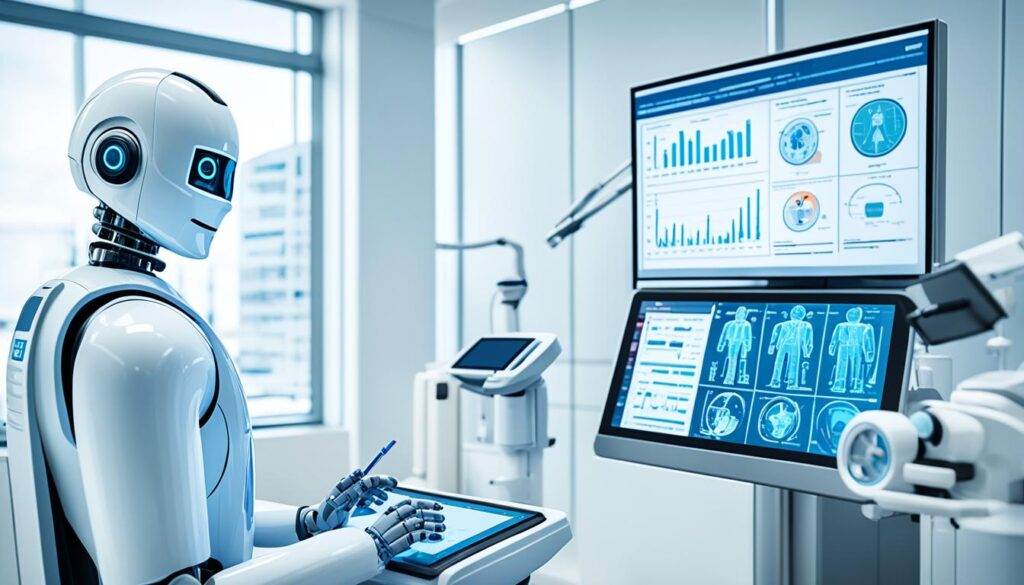
| AI Technology | Healthcare Application | Potential Impact |
|---|---|---|
| Machine Learning | Clinical decision support, risk prediction, and personalized treatment planning | Improved diagnostic accuracy, optimized treatment strategies, and reduced medical errors |
| Deep Learning | Medical image analysis, disease detection, and drug discovery | Early identification of diseases, accelerated drug development, and enhanced diagnostic capabilities |
| Natural Language Processing | Electronic health record analysis, virtual assistant chatbots, and patient engagement | Streamlined clinical documentation, improved care coordination, and enhanced patient-provider communication |
AI in Diagnosis and Treatment Planning
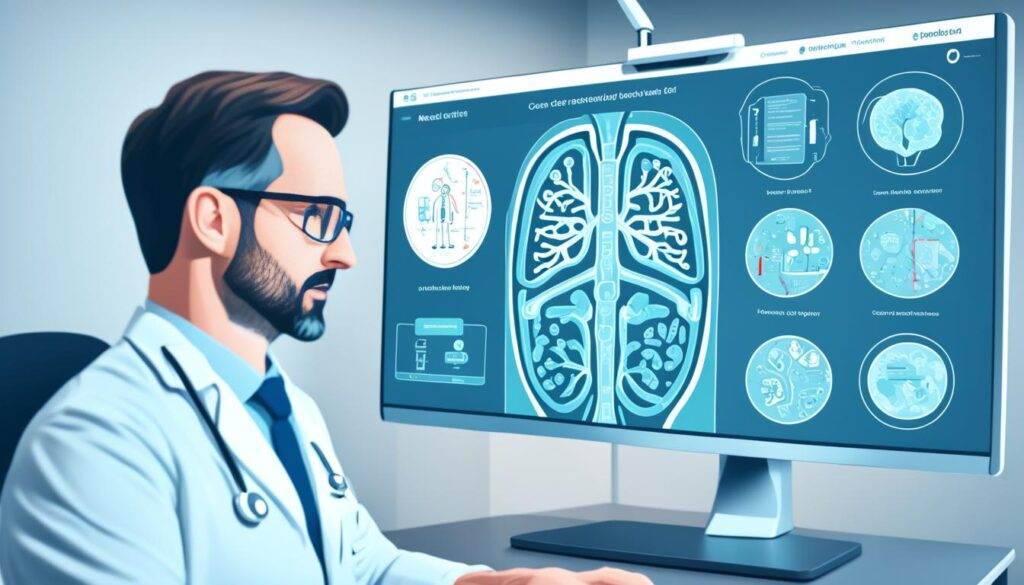
In the rapidly advancing field of healthcare, artificial intelligence (AI) is revolutionizing the way we approach diagnosis and treatment planning. AI-powered systems excel at analyzing complex diagnostic data, such as medical images, genetic information, and patient records, to identify patterns and detect diseases more accurately and swiftly than traditional methods.
One remarkable example is the application of AI algorithms in dermatology, which have demonstrated the ability to distinguish between benign and malignant skin lesions with remarkable accuracy, aiding in the early detection of skin cancer. By leveraging the power of intelligent disease detection, healthcare providers can now identify potentially life-threatening conditions at their earliest stages, significantly improving patient outcomes.
Moreover, AI is enabling the customization of patient care through the analysis of individual health data. By recommending personalized treatment plans, AI algorithms can help optimize outcomes and minimize side effects, leading to a more personalized healthcare with ai. This personalized approach not only enhances the effectiveness of treatments but also empowers patients to take a more active role in their own healthcare journeys.
From ai in diagnosis to ai treatment planning, the integration of AI in healthcare is transforming the way we approach medical decision-making. By harnessing the power of data-driven insights, healthcare professionals can make more informed decisions, leading to improved patient care and better overall health outcomes.
“AI in healthcare is not about replacing human expertise, but rather augmenting it to deliver more accurate and personalized care.”
As the healthcare industry continues to embrace the transformative potential of AI, the future of diagnosis and treatment planning holds immense promise. By leveraging the synergy between human expertise and intelligent technology, the healthcare sector is poised to enter a new era of ai in diagnosis and ai treatment planning, ultimately improving the lives of patients worldwide.
Accelerating Drug Discovery
In the realm of healthcare, the integration of artificial intelligence (AI) is revolutionizing the drug discovery process. AI-powered pharmaceutical research is streamlining the identification of promising drug candidates, refining the design of new therapies, and optimizing clinical trial processes. This transformative technology is paving the way for more efficient and effective drug discovery.
At the heart of this breakthrough is the ability of AI algorithms to analyze vast datasets, extract valuable insights, and predict the behavior of various compounds. Through predictive drug modeling and computational drug design, AI can simulate the interactions between drugs and target molecules, accelerating the search for potential treatments.
By processing large volumes of biological and chemical data, AI can rapidly identify ai drug discovery opportunities that would have otherwise been overlooked. This advanced analytical capability allows researchers to explore a wider range of drug candidates, increasing the chances of success in the drug development pipeline.
Moreover, AI-powered ai-powered pharmaceutical research can optimize the clinical trial process, reducing the time and costs associated with bringing new drugs to market. Through predictive modeling and simulation, researchers can refine their trial designs, anticipate potential challenges, and make more informed decisions, ultimately accelerating the journey from discovery to patient care.
| Key AI Technologies in Drug Discovery | Benefits |
|---|---|
| Predictive drug modeling | Simulates drug-target interactions to identify promising candidates |
| Computational drug design | Optimizes the molecular structure of drug compounds |
| Automated data analysis | Processes large datasets to uncover hidden patterns and insights |
| Clinical trial optimization | Improves the efficiency and success rate of drug testing |
As the healthcare industry continues to embrace the power of AI, the future of drug discovery holds immense promise. By leveraging these transformative technologies, researchers can accelerate the development of life-saving treatments and improve patient outcomes across a wide range of therapeutic areas.

Predictive Analytics and Forecasting
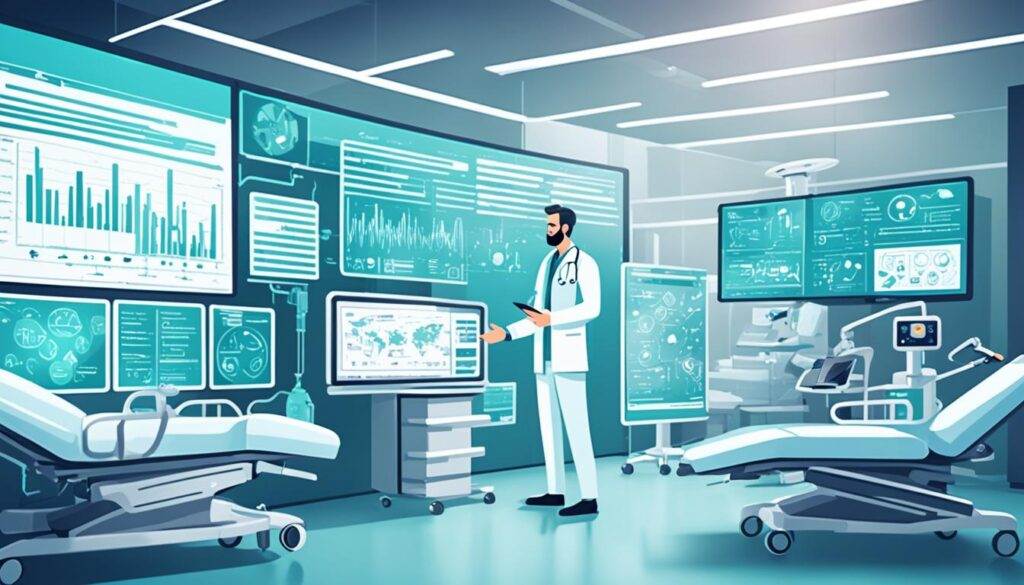
In the rapidly evolving landscape of healthcare, the integration of ai predictive analytics has become a game-changer. By harnessing the power of artificial intelligence, healthcare providers can now forecast critical trends and patient outcomes with unprecedented accuracy. This transformative technology is paving the way for proactive, personalized, and cost-effective patient care.
One of the most remarkable applications of ai predictive analytics healthcare is its ability to predict disease outbreaks and epidemiological events. By analyzing massive datasets, AI-powered algorithms can identify patterns and early warning signs, enabling healthcare systems to prepare for potential public health crises. This disease outbreak prediction capability is invaluable in a world where global pandemics can emerge with alarming frequency.
Beyond disease forecasting, ai-powered epidemiological modeling also allows for the accurate prediction of individual patient risks and outcomes. By processing data from electronic health records, diagnostic tests, and even wearable devices, AI can identify risk factors and forecast the likely progression of chronic conditions or acute illnesses. This patient risk forecasting empowers healthcare professionals to tailor treatment plans, allocate resources more effectively, and implement preventive measures that enhance patient outcomes and reduce long-term healthcare costs.
“The integration of predictive analytics in healthcare is transforming the way we approach patient care. By harnessing the power of AI, we can anticipate and address healthcare challenges with greater precision and efficiency.”
As the healthcare industry continues to embrace the transformative potential of ai predictive analytics, the future of patient care becomes increasingly proactive, personalized, and cost-effective. By leveraging these innovative technologies, healthcare providers can make more informed decisions, optimize resource allocation, and ultimately deliver better health outcomes for individuals and communities alike.
Robotic Surgery and Virtual Assistants
In the ever-evolving landscape of healthcare, ai robotic surgery and AI-powered virtual assistants are revolutionizing patient care. These cutting-edge technologies are not only enhancing precision and control during medical procedures but also redefining how patients engage with their healthcare providers.
The integration of ai-powered surgical guidance systems into robotic surgery has transformed the way complex medical procedures are performed. These AI-driven systems can analyze vast amounts of pre-operative data, including medical records and imaging scans, to provide real-time guidance to surgeons. This technological advancement leads to enhanced precision, reduced recovery time, and lower risks of post-operative complications for patients.
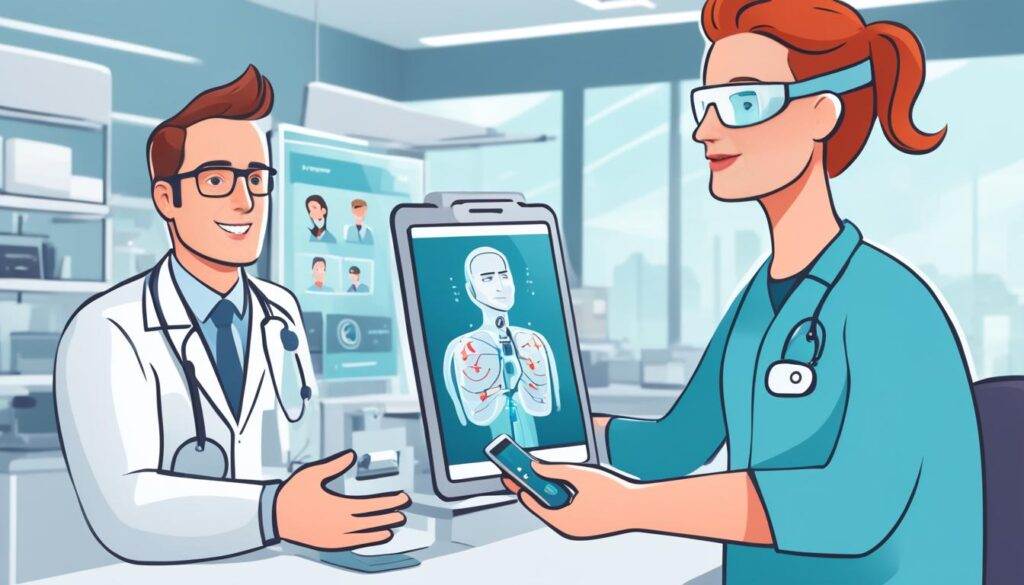
Alongside the advancements in robotic surgery, virtual healthcare assistants and intelligent patient support chatbots are transforming the patient experience. These AI-powered tools can handle a wide range of tasks, from scheduling appointments and providing medication reminders to answering general health queries and offering emotional support. By automating these administrative and support functions, healthcare providers can focus more on delivering personalized and efficient care, ultimately enhancing the overall patient journey.
“AI-powered technologies in healthcare are not only improving clinical outcomes but also revolutionizing the way patients interact with their healthcare providers.”
As the healthcare industry continues to embrace the power of artificial intelligence, the future of patient care is becoming increasingly connected, personalized, and efficient. The integration of ai robotic surgery, ai-powered surgical guidance, virtual healthcare assistants, and intelligent patient support chatbots is paving the way for a new era of healthcare delivery, where technology and human expertise work seamlessly together to deliver superior patient outcomes.
ai in healthcare: Streamlining Administrative Tasks
In the ever-evolving healthcare landscape, the integration of ai healthcare administration has become a game-changer, revolutionizing the way administrative tasks are handled. By harnessing the power of artificial intelligence (AI), healthcare organizations can now streamline a multitude of administrative processes, freeing up valuable time and resources for clinicians to focus on what truly matters – providing exceptional patient care.
One of the key areas where ai medical billing and coding is making a significant impact is in the realm of patient data management. AI-powered systems can automate the tedious task of data entry, reducing the risk of human error and ensuring accurate records. This not only enhances the efficiency of administrative workflows but also improves the overall quality of patient information, ultimately leading to better-informed clinical decisions.
Furthermore, ai data management has transformed the insurance claim processing landscape. AI algorithms can quickly and accurately analyze and process insurance claims, expediting reimbursements and minimizing the administrative burden on healthcare staff. This ai-powered workflow optimization not only streamlines the billing process but also improves the patient experience by reducing the time and effort required to resolve insurance-related matters.
The benefits of incorporating AI in healthcare administration extend far beyond the realm of data management and billing. AI-powered virtual assistants can now handle a wide range of administrative tasks, from scheduling appointments and managing patient communications to generating detailed reports and analytics. This innovative approach to ai healthcare administration allows healthcare professionals to devote more time to patient interactions, fostering stronger relationships and improving overall patient satisfaction.
“AI is not just a tool, but a transformative force that is reshaping the healthcare industry from the ground up.”
As the healthcare industry continues to evolve, the adoption of AI-powered solutions will only accelerate. By embracing the power of ai medical billing and coding, ai data management, and ai-powered workflow optimization, healthcare organizations can unlock new levels of efficiency, productivity, and ultimately, enhanced patient care.

Clinical Trials and Remote Patient Monitoring
In the rapidly evolving landscape of healthcare, artificial intelligence (AI) is revolutionizing the way clinical trials are conducted and how patient care is delivered. From enhancing patient recruitment to optimizing trial design, AI is transforming the future of clinical research and remote patient monitoring.
Clinical Trial Optimization
AI-powered patient recruitment is one of the most significant advancements in clinical trials. By analyzing vast amounts of data, AI algorithms can identify the most suitable candidates for a study, ensuring a diverse and representative participant pool. This not only accelerates the trial process but also improves the chances of success, leading to the development of more effective treatments.
Moreover, AI can help researchers design and execute clinical trials with greater efficiency. By drawing insights from historical data and current medical trends, AI can predict the likelihood of a trial’s success, guiding researchers in refining trial protocols and selecting the most promising research sites. This optimization process streamlines the entire clinical trial lifecycle, ultimately accelerating the delivery of new therapies to patients in need.
Wearable Devices and Remote Monitoring
The integration of AI-enabled wearable devices has revolutionized remote patient monitoring. These advanced devices continuously track a patient’s vital signs, activity levels, and other health metrics, providing healthcare professionals with real-time data. By leveraging predictive healthcare analytics, AI can identify early warning signs of deteriorating health conditions, allowing for timely interventions and improved patient outcomes.
Remote patient monitoring powered by AI not only enhances chronic disease management but also expands access to healthcare services beyond traditional clinical settings. Patients can now receive personalized care and monitoring from the comfort of their own homes, reducing the burden on healthcare systems and improving overall patient satisfaction.
| AI in Clinical Trials | AI in Remote Patient Monitoring |
|---|---|
|
|
As the healthcare industry continues to embrace the power of AI, the future of clinical trials and remote patient monitoring looks brighter than ever. By harnessing the capabilities of this transformative technology, healthcare providers can deliver more personalized and efficient care, ultimately improving patient outcomes and revolutionizing the way we approach healthcare.
AI in Medical Imaging and Mental Health
The realm of healthcare is undergoing a remarkable transformation, thanks to the remarkable advancements in artificial intelligence (AI) technology. One of the areas where AI is making a profound impact is in medical imaging and mental health applications.
Medical Imaging Analysis
AI algorithms are revolutionizing the way medical professionals analyze and interpret medical images, such as CT scans, MRI scans, and pathology slides. These AI-powered solutions can identify subtle patterns and anomalies that may be easily missed by the human eye, leading to earlier and more accurate diagnoses of conditions like tumors, strokes, and other life-threatening diseases. This AI-enabled medical imaging analysis is a game-changer, empowering healthcare providers to deliver more personalized and effective patient care.
Mental Health Applications
In the realm of mental health, AI is also making significant strides. Innovative AI tools are now capable of performing sentiment analysis and behavior prediction, monitoring patient speech patterns, social media activity, and other data points to identify potential mental health issues. These AI-powered applications can provide personalized support and early intervention, promoting better mental well-being for patients.
The integration of AI in medical imaging and mental health is revolutionizing the healthcare industry, facilitating earlier disease detection and personalized support for patients. As these AI-powered technologies continue to evolve, we can look forward to a future where healthcare becomes more efficient, effective, and tailored to the individual needs of each patient.
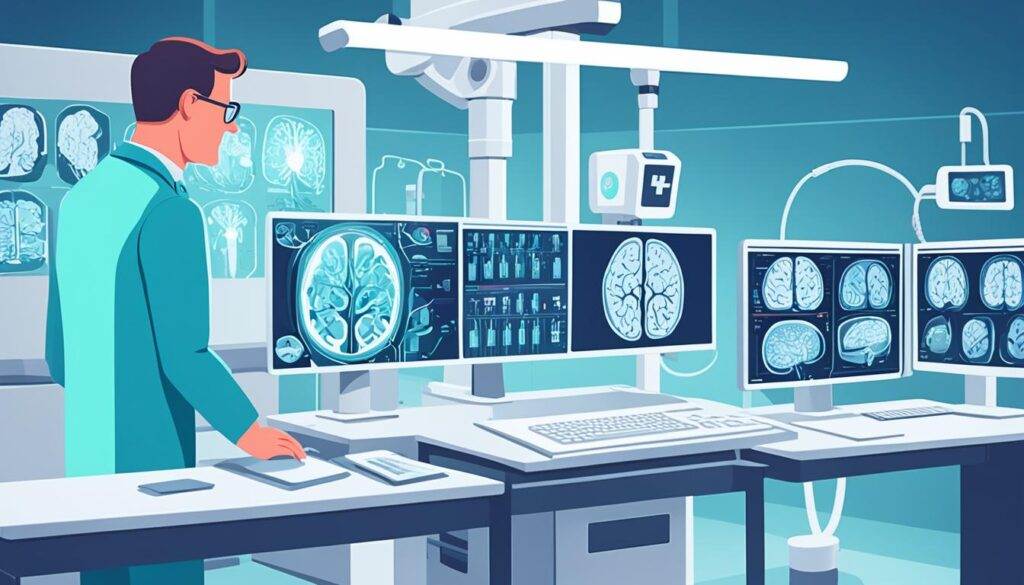
“AI is transforming the way we approach healthcare, empowering us to provide more accurate diagnoses and personalized support for our patients.”
Conclusion
The integration of AI in healthcare has the power to revolutionize patient care, transforming the way we approach medical diagnosis, treatment, and administrative tasks. As the future of AI-powered healthcare unfolds, it’s crucial to embrace this technological advancement responsibly and ethically. By harnessing the capabilities of AI, healthcare organizations can unlock new frontiers in medical research, personalized treatment, and preventive care, ultimately improving health outcomes for all.
However, the implementation of AI in healthcare must prioritize patient well-being and promote equitable access to care. Healthcare providers, technology developers, and policymakers must collaborate to address the potential challenges and ethical considerations, such as data privacy, bias, and accessibility. By working together to ensure the responsible and ethical use of AI, the industry can unleash the full potential of this transformative technology and reshape the healthcare landscape for the betterment of patients in Indonesia and beyond.
The future of AI in healthcare holds immense promise, and by embracing this technological revolution with a steadfast commitment to patient-centric practices and ethical principles, the healthcare industry can propel itself into a new era of innovation and improved patient outcomes. The journey ahead may present obstacles, but with a collaborative and forward-thinking approach, the healthcare sector can harness the power of AI to create a more accessible, efficient, and personalized healthcare experience for all.
FAQ
What are the key AI technologies transforming healthcare?
How can AI-powered systems enhance diagnostic accuracy and personalize patient care?
How is AI transforming the drug discovery process?
What are the benefits of AI’s predictive analytics capabilities in healthcare?
How is AI transforming healthcare delivery through robotic surgery and virtual assistants?
How can AI streamline administrative tasks in healthcare settings?
How does AI enhance clinical trials and remote patient monitoring?
How is AI transforming medical imaging and mental health applications?
Source Links
- Artificial intelligence in healthcare: transforming the practice of medicine – https://www.ncbi.nlm.nih.gov/pmc/articles/PMC8285156/
- AI in Healthcare – Transforming Patient Care with Technology – Yellow.ai – https://yellow.ai/blog/artificial-intelligence-in-healthcare/
- It’s forecast that the global healthcare AI market will be worth almost $188 billion by 2030 – https://www.weforum.org/agenda/2024/01/how-ai-can-transform-patient-care-and-treatment/