
Did you know that the global robotics market is expected to reach a staggering $74.1 billion by 2026? This exponential growth is being fueled by the seamless integration of artificial intelligence (AI) and robotics, transforming the way industries operate. As you delve into this article, you’ll discover how this dynamic duo is revolutionizing automation across various sectors, from manufacturing and healthcare to service and hospitality.
Key Takeaways
- AI and robotics are converging to create intelligent, autonomous systems that are transforming industries worldwide.
- Advancements in machine learning algorithms, computer vision, and natural language processing are enabling robots to make smarter decisions and interact more seamlessly with humans.
- The synergy between AI and robotics is driving innovations in manufacturing, transportation, healthcare, and service sectors, leading to increased efficiency, productivity, and safety.
- Ethical considerations and challenges, such as job displacement and safety concerns, must be addressed as AI-powered robotics become more prevalent.
- Harnessing the potential of AI in robotics can unlock human potential and revolutionize the way we live and work.
Understanding AI and Robotics
In the captivating world of technology, the convergence of artificial intelligence (AI) and robotics has unlocked a realm of possibilities that is shaping the future of automation. While AI focuses on replicating human cognitive capabilities, robotics delves into the physical manifestation of these intelligent systems, creating a symbiotic relationship that is transforming industries and revolutionizing the way we live and work.
Artificial Intelligence: Cognitive Capabilities
At the heart of AI lies a fascinating array of machine learning algorithms and natural language processing techniques that enable computers to perceive, learn, and make decisions in a manner akin to the human mind. From computer vision that can identify and analyze visual data to sophisticated problem-solving and decision-making capabilities, AI is pushing the boundaries of what was once thought possible.
- Machine learning algorithms that adapt and improve through experience
- Natural language processing for seamless human-computer interaction
- Computer vision for intelligent interpretation of visual information
- Cognitive capabilities that mimic human problem-solving and decision-making
Robotics: Physical Manifestation
While AI focuses on the cognitive aspects, robotics brings these intelligent systems to life through physical embodiment. Robots, ranging from industrial automation to humanoid assistants, are designed to perform a wide array of tasks with precision, speed, and endurance, often surpassing human capabilities.
- Industrial robots for efficient manufacturing and assembly
- Collaborative robots (cobots) that work alongside humans
- Humanoid robots for personal assistance and service tasks
- Autonomous systems that navigate and operate without direct human control
By integrating AI’s cognitive prowess with the physical capabilities of robotics, a new frontier of automation is being explored, transforming industries, enhancing productivity, and paving the way for a future where humans and machines coexist in seamless harmony.

“The integration of AI and robotics allows for the creation of sophisticated systems that can sense their surroundings, make intelligent decisions, and execute actions with minimal human intervention.”
The Synergy of AI and Robotics
The intersection of artificial intelligence (AI) and robotics is ushering in a transformative era of automation and efficiency. By seamlessly integrating AI’s cognitive capabilities with the physical manifestation of robotics, businesses can unlock unprecedented levels of productivity, flexibility, and precision across a wide range of industries.
At the heart of this synergy lies the ability of AI algorithms to enhance the decision-making and cognitive processing of robotic systems. Through machine learning and natural language processing, AI-powered robots can interpret complex data, make informed decisions, and adapt to changing environments with remarkable agility. This intelligent automation is driving the future of manufacturing, healthcare, and beyond.
One prime example of this AI-robotics collaboration is the rise of collaborative robots (cobots). These intelligent machines work seamlessly alongside human workers, complementing their skills and enhancing overall efficiency. By leveraging AI-powered vision, navigation, and safety systems, cobots can perform tedious or hazardous tasks with pinpoint accuracy, while freeing up human employees to focus on higher-level, creative work.
| Key Benefits of AI-Robotics Synergy | Impact on Industries |
|---|---|
|
|
As the synergy between AI and robotics continues to evolve, businesses across industries are poised to reap the rewards of this powerful combination. From streamlining manufacturing processes to revolutionizing healthcare delivery, the integration of cognitive intelligence and physical automation is transforming the way we approach complex challenges and unlock human potential.
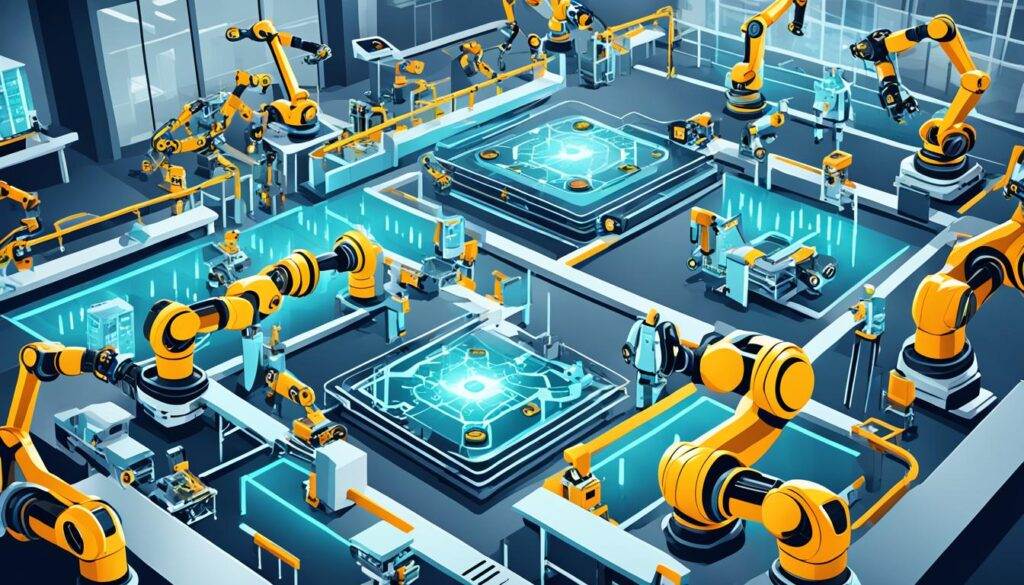
“The future is already here – it’s just not very evenly distributed.”
– William Gibson
Applications in Manufacturing
The manufacturing industry is at the forefront of the integration between AI and robotics. AI-enabled advanced robotic systems, including collaborative robots (cobots), are capable of performing a wide range of tasks, from welding and assembly to packing and quality assurance. These cobots work alongside human workers, enhancing productivity, accuracy, and safety.
In addition to cobots, the integration of predictive maintenance techniques powered by AI is transforming the manufacturing landscape. By analyzing equipment data, AI can predict and prevent potential failures, optimizing production processes and reducing costly downtime. This innovative approach to manufacturing automation is revolutionizing the way factories operate, driving efficiency and profitability.
Collaborative Robots (Cobots)
Collaborative robots, or cobots, are designed to work in close proximity with human workers, complementing their skills and abilities. These advanced industrial robotics systems are programmed to perform tasks with precision and speed, while maintaining a high level of safety. Cobots can be quickly reprogrammed to adapt to changing production needs, making them a versatile solution for a wide range of manufacturing applications.
Predictive Maintenance with AI
AI-powered predictive maintenance techniques are revolutionizing the way manufacturers approach equipment maintenance. By collecting and analyzing vast amounts of data from sensors and other sources, AI algorithms can identify patterns and predict when equipment is likely to fail. This allows manufacturers to proactively schedule maintenance, reducing the risk of unexpected breakdowns and minimizing production downtime.
| Benefits of AI-Powered Predictive Maintenance | Benefits of Collaborative Robots (Cobots) |
|---|---|
|
|
The integration of AI and robotics in the manufacturing sector is driving a new era of manufacturing automation, where advanced technologies work in harmony with human workers to optimize production, reduce costs, and enhance overall competitiveness.
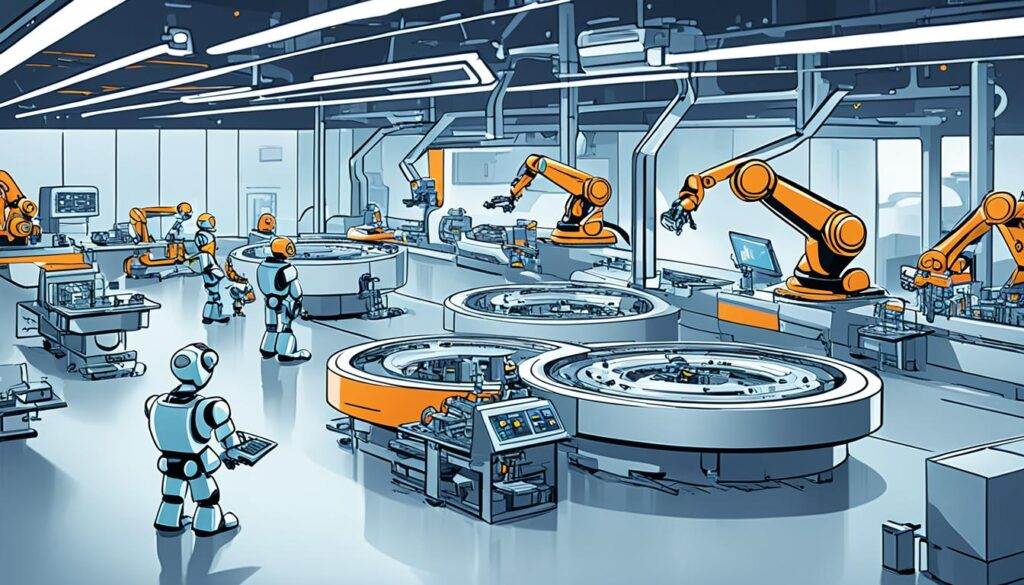
“AI and robotics are transforming the way we manufacture products, making our processes more efficient, reliable, and responsive to customer demands.”
ai in robotics
In the ever-evolving world of technology, the synergy between artificial intelligence (AI) and robotics is reshaping the landscape of automation. These two powerful forces are working in tandem to create a future where intelligent robots equipped with machine learning capabilities can tackle complex tasks with unprecedented precision and adaptability.
AI has become a crucial component in the advancement of robotics, enabling robots to exhibit more intelligent and autonomous behaviors. Machine learning algorithms, computer vision, and natural language processing allow robots to sense their surroundings, make decisions, and interact with humans and their environments in increasingly sophisticated ways. The integration of AI into robotic systems is transforming industries by enhancing precision, adaptability, and problem-solving capabilities, ultimately driving the future of automation.
One key aspect of the AI-powered robotics revolution is the emergence of collaborative robots (cobots). These intelligent machines are designed to work alongside human workers, complementing their skills and enhancing productivity. Cobots leverage AI-driven sensors, vision systems, and decision-making algorithms to safely navigate work environments, collaborate on tasks, and adapt to changing conditions, all while prioritizing human safety and well-being.
Another area where AI in robotics is making a significant impact is predictive maintenance. By integrating AI-powered analytics and data-driven insights, robotic systems can now anticipate and prevent potential breakdowns, optimizing equipment performance and reducing costly downtime. This advancement not only enhances efficiency but also contributes to the overall sustainability and reliability of automated manufacturing processes.
| Capability | AI-Powered Robotics | Traditional Robotics |
|---|---|---|
| Adaptability | High | Low |
| Decision-Making | Intelligent and Autonomous | Programmed and Limited |
| Human-Robot Interaction | Seamless and Collaborative | Rigid and Segregated |
| Predictive Maintenance | Advanced and Data-Driven | Reactive and Scheduled |
As the integration of AI in robotics continues to evolve, the future of automation holds immense promise. By leveraging the combined power of artificial intelligence and robotic technology, industries can unlock new levels of efficiency, productivity, and innovation, paving the way for a more intelligent and automated future.
“The future of robotics is in the hands of AI. By seamlessly integrating these two technologies, we can create a world where intelligent machines work hand-in-hand with humans to push the boundaries of what’s possible.”
Autonomous Vehicles
The transportation sector is undergoing a transformative shift, driven by the convergence of artificial intelligence (AI) and robotics. Autonomous vehicles, including self-driving cars, trucks, and drones, are at the forefront of this revolution. These vehicles utilize advanced AI algorithms to navigate their environment, make real-time decisions, and provide safer and more efficient transportation solutions.
At the heart of autonomous vehicles are the AI-powered systems that enable them to sense their surroundings, analyze data, and respond accordingly. By integrating sensors, computer vision, and machine learning, these vehicles can detect obstacles, read traffic signals, and adapt their driving behaviors to the road conditions, all without human intervention. This automation not only enhances safety by reducing the risk of human error but also has the potential to revolutionize logistics, ease traffic congestion, and improve overall transportation efficiency.
| Feature | Autonomous Vehicles | Traditional Vehicles |
|---|---|---|
| Driving Automation | Fully autonomous | Requires human driver |
| Accident Prevention | Sophisticated sensors and AI-powered decision making | Relies on human judgement and reaction time |
| Fuel Efficiency | Optimized driving patterns and route planning | Dependent on driver behavior |
| Traffic Management | Seamless coordination and intelligent routing | Susceptible to human-caused congestion |
The advent of autonomous vehicles is transforming the transportation landscape, ushering in a new era of transportation automation. As this technology continues to evolve, we can expect to see even more innovative applications and solutions that will shape the future of mobility.
“Autonomous vehicles represent the next frontier in transportation, where technology and innovation converge to revolutionize the way we move from one place to another.”

Healthcare and Surgery
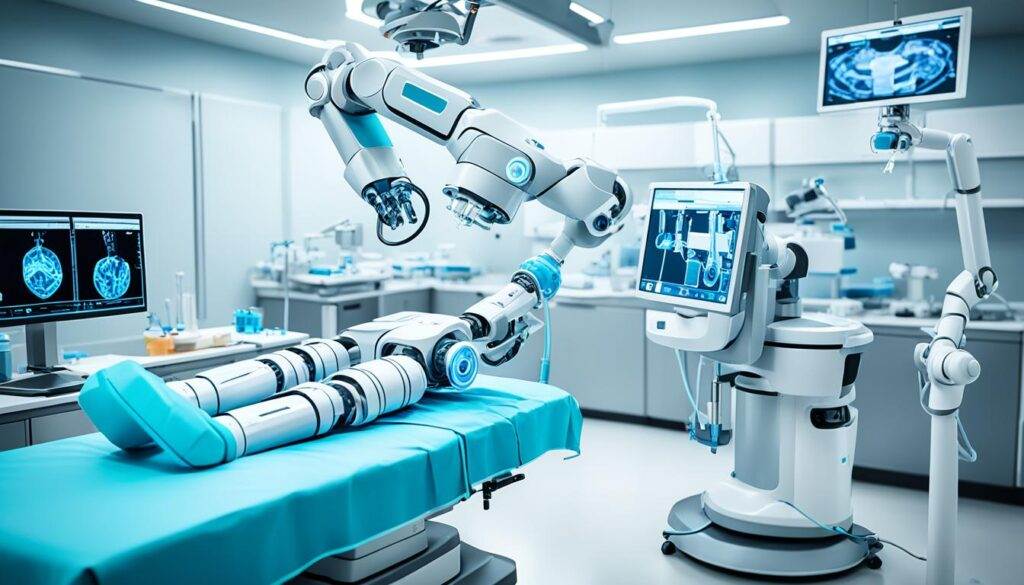
In the realm of healthcare, AI-powered robotics are revolutionizing medical procedures and patient care. Surgical robots, equipped with advanced AI algorithms, are assisting surgeons in performing complex operations with unparalleled precision and accuracy. These cutting-edge healthcare robotics are transforming the way surgery is conducted, enhancing patient outcomes and driving the future of surgical robots.
Surgical Robotics
The integration of AI and robotics in the surgical field has yielded remarkable advancements. Robotic surgical systems, such as the da Vinci Surgical System, utilize AI in healthcare to enhance the surgeon’s dexterity, vision, and decision-making capabilities. These systems provide a magnified, three-dimensional view of the surgical site, allowing for minimally invasive procedures with greater control and flexibility. By leveraging the power of AI, these surgical robots can autonomously execute certain tasks, freeing up the surgeon to focus on the most critical aspects of the operation.
AI-Powered Diagnostics
Alongside advancements in surgical robotics, AI-enabled medical diagnostics are revolutionizing the healthcare industry. AI-powered diagnostic tools can analyze medical images, such as X-rays, CT scans, and MRI scans, with remarkable accuracy. These systems can detect abnormalities, identify potential health issues, and assist healthcare professionals in making more informed treatment decisions. By leveraging the power of AI in healthcare, patients can receive faster and more accurate diagnoses, leading to improved outcomes and personalized care.
The synergy of AI and robotics in healthcare is not limited to the surgical suite. Robotic systems also play a crucial role in telemedicine, enabling remote consultations and even remote surgery in underserved or hard-to-reach areas. This technological advancement has the potential to increase access to quality healthcare, especially in regions with limited medical resources.
“The integration of AI and robotics in healthcare is transforming the way we approach medical procedures and patient care. The future of healthcare is being shaped by these innovations, leading to enhanced precision, accuracy, and personalized treatment for patients.”
As the healthcare industry continues to evolve, the collaboration between AI in healthcare and surgical robots will undoubtedly play a pivotal role in shaping the future of medical care. From complex surgeries to comprehensive diagnostics, this powerful synergy is poised to redefine the landscape of healthcare, delivering better outcomes and improving the overall well-being of patients worldwide.
Service and Hospitality Transformation
The service and hospitality industries are undergoing a remarkable transformation, thanks to the integration of AI and robotics. Robotic assistants and chatbots are revolutionizing the way businesses interact with their customers, streamlining operations, and enhancing overall customer satisfaction.
Robotic Assistants and Chatbots
In the hospitality sector, robotic assistants and concierge robots are becoming increasingly common. These intelligent machines can perform a variety of tasks, from greeting guests and providing information to delivering room service and handling luggage. AI-powered chatbots, on the other hand, are transforming the customer service experience by offering personalized recommendations, answering inquiries, and even handling booking processes.
Autonomous delivery robots are also making their mark in the service industry, particularly in restaurants and warehouses. These robots can efficiently transport goods and supplies, reducing the workload on human staff and improving the overall operational efficiency.
| Feature | Robotic Assistants | Chatbots |
|---|---|---|
| Interaction | Physical interaction with guests | Virtual interaction through text or voice |
| Tasks | Greeting, information sharing, luggage handling, room service delivery | Answering inquiries, making recommendations, booking assistance |
| Impact | Improved customer experience and operational efficiency | Enhanced customer satisfaction and streamlined processes |
The integration of service robotics and hospitality automation solutions, such as chatbots and robotic assistants, is reshaping the way businesses in the service and hospitality industries interact with their customers. These innovations are not only enhancing the customer experience but also driving operational efficiency and cost savings for businesses.
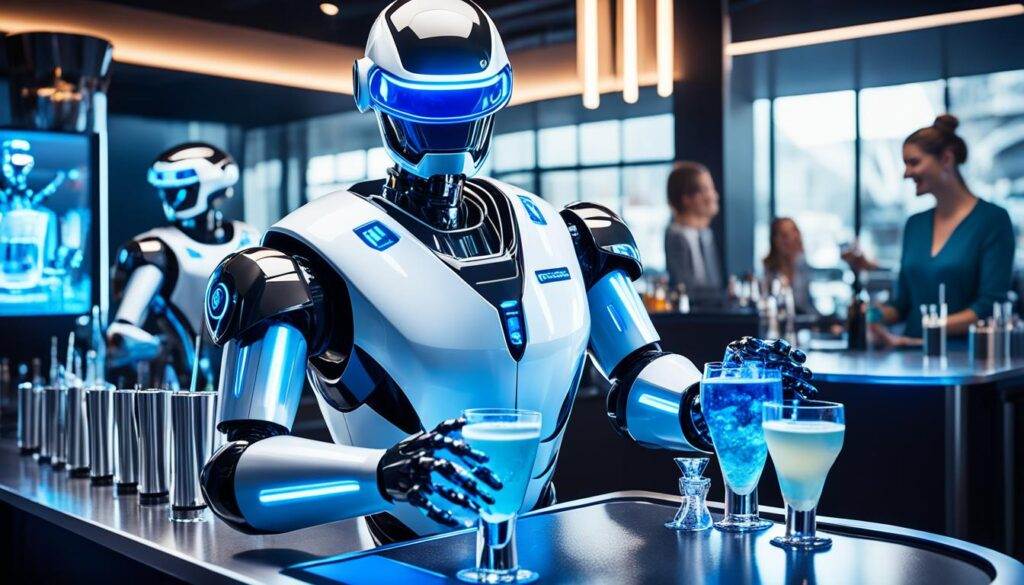
“Robotic assistants and chatbots are revolutionizing the service and hospitality industries, offering a more personalized and efficient customer experience.”
Ethical Considerations and Challenges
As the field of AI and robotics continues to evolve, it is crucial to address the ethical implications and potential challenges that come with these advancements. From concerns about job displacement and workforce impact to safety and reliability issues, the responsible development and deployment of autonomous systems are paramount.
Job Displacement and Workforce Impact
One of the primary concerns surrounding the rise of AI and robotics is the potential impact on employment. As automation becomes more prevalent, many fear that a significant number of jobs will be displaced, leaving workers uncertain about their future. This raises important questions about the need for retraining, education, and social safety nets to support those affected by these technological changes.
Safety and Reliability Concerns
Another key consideration is the safety and reliability of AI-powered robotic systems, particularly in critical applications such as healthcare and transportation. Ensuring the robust performance and trustworthiness of these systems is essential to prevent potential accidents or malfunctions that could put human lives at risk. Addressing issues of algorithmic bias, data privacy, and transparency in the decision-making process are crucial steps in building public trust and confidence in AI and robotics.
“As AI and robotics become more ubiquitous, it’s imperative that we prioritize ethical considerations and address the challenges head-on. Only then can we truly harness the transformative potential of these technologies while mitigating their risks.”
The integration of AI ethics and robot ethics into the design and deployment of these systems is a pressing need. By proactively addressing concerns around job automation, safety concerns, and reliability, we can pave the way for a future where the benefits of AI and robotics are fully realized while safeguarding the well-being of individuals and society as a whole.
Unleashing Human Potential
In the age of human-robot collaboration, the fusion of artificial intelligence and robotics has unlocked unprecedented opportunities to augment human capabilities and unleash our full potential. While advanced technologies automate routine tasks, they also create new avenues for innovation and entrepreneurship to thrive.
By working in tandem with intelligent machines, humans can focus on higher-level responsibilities that demand creativity, critical thinking, and empathy – attributes that AI systems currently struggle to replicate. This symbiotic relationship between man and machine allows us to harness the best of both worlds, driving productivity, problem-solving, and strategic decision-making to new heights.
Consider the example of a factory floor where collaborative robots (cobots) handle the physically demanding or repetitive work, freeing up human workers to oversee operations, identify optimization opportunities, and implement innovative solutions. This collaboration not only boosts overall efficiency but also stimulates human ingenuity, as employees can devote their cognitive resources to more fulfilling and impactful tasks.
Similarly, in the healthcare industry, surgical robots equipped with AI-powered precision and dexterity work in tandem with skilled surgeons, enhancing their capabilities and enabling them to perform complex procedures with greater accuracy and safety. This human-robot synergy not only improves patient outcomes but also empowers surgeons to push the boundaries of medical innovation.
“The true promise of AI and robotics lies in their ability to augment and empower human potential, rather than replace it. By working side by side, we can unlock new frontiers of productivity, creativity, and entrepreneurship.”
As we embrace the transformative power of human-robot collaboration, the future holds boundless opportunities for individuals and businesses to unleash their full potential. By leveraging automation to complement and enhance human skills, we can free ourselves from the shackles of mundane tasks and channel our energy into pioneering new ideas, solving complex challenges, and driving groundbreaking advancements that shape the world of tomorrow.
Conclusion
The future of automation is being shaped by the powerful synergy between AI and robotics. As these technologies continue to evolve, they are revolutionizing industries and transforming the way we work, travel, and live. By harnessing the cognitive capabilities of AI and the physical manifestation of robotics, businesses and organizations can achieve unprecedented levels of efficiency, productivity, and innovation.
However, it is crucial for stakeholders to address the ethical considerations and challenges associated with these technologies. From job displacement and workforce impact to safety and reliability concerns, the responsible and ethical integration of AI and robotics into society is essential. As the future of automation unfolds, it is our collective responsibility to ensure that these advancements empower and enhance human potential, ushering in a new era of technological progress and societal transformation.
In Indonesia and beyond, the future of automation holds immense promise. By embracing the power of AI and robotics, you can unlock new opportunities, drive innovation, and shape the trajectory of your industry. The time is now to explore the possibilities and harness the transformative potential of these technologies to create a better, more efficient, and more sustainable future.
FAQ
What is the synergy between AI and robotics?
How is AI transforming the manufacturing industry?
How are AI and robotics shaping the transportation sector?
What are the applications of AI-powered robotics in the healthcare industry?
How are AI and robotics transforming the service and hospitality industries?
What are the ethical considerations and challenges associated with AI and robotics?
How can AI and robotics enhance human potential?
Source Links
- Unveiling the Power of AI and Robotics Article – https://mataiblogs.com/ai-and-robotics-shaping-the-future
- Robotics and AI: Exploring the Future of Automation – https://www.linkedin.com/pulse/robotics-ai-exploring-future-automation-prakhar-jain-kah3f
- AI and Robotics: Shaping the Future of Automation – https://providentiatech.ai/blog/ai-and-robotics-shaping-the-future-of-automation/