
What if you could unlock growth for your company using tools most competitors haven’t even discovered yet?
The business landscape is shifting faster than ever. New technology emerges almost daily. This creates amazing chances to get ahead. It also brings tough challenges to keep up.
Navigating this change alone can feel overwhelming. That’s where a trusted guide makes all the difference. The right partnership turns confusion into a clear plan for success.
Looking at the future, one thing is certain. Companies that adapt will thrive. Those that don’t risk falling behind. The time to act is today, not tomorrow.
This guide will show you a proven path forward. You’ll learn how strategic insight transforms raw technology into real business results. We’ll explore a method built on practical experience and forward thinking.
Key Takeaways
- The pace of technological change creates both major opportunities and significant challenges for modern businesses.
- Strategic guidance is essential to navigate the complex digital landscape effectively and avoid costly mistakes.
- Implementing the right tools at the right time can provide a serious competitive advantage in your market.
- A clear, customized plan turns overwhelming technological options into a straightforward growth strategy.
- Proactive adaptation today is the most reliable way to ensure business success and resilience tomorrow.
- Expert methodology focuses on practical outcomes like increased efficiency, innovation, and revenue growth.
Meet Your Guide: Dee Ferdinand
Navigating complex business landscapes requires more than just knowledge—it demands proven experience. The right consultant doesn’t just follow trends. They help you build a strategy that lasts.
Who is Dee Ferdinand?
Dee Ferdinand stands as a leading authority in digital strategy consulting. With over seventeen years in the field, his background is both deep and diverse. This lengthy career provides a perspective that newer advisors simply cannot match.
His work spans the globe, assisting companies at every stage. He helps fresh startups find their footing. He also guides established industry leaders through modern transformations. This range of experience means he understands your unique position.
Beyond consulting, he is a sought-after speaker and strategic mentor. He shares insights on digital advancement with audiences worldwide. This role as an educator highlights his commitment to the broader business community.
Bridging Strategy, Marketing, and AI
What makes this guide truly unique is his integrated approach. He operates at the crossroads of business strategy, marketing, and intelligent tools. This blend is rare and incredibly valuable for growth.
Many specialists understand one area in depth. He connects traditional marketing wisdom with the latest technological solutions. This creates a bridge between what works now and what will work next.
His methodology is not about chasing shiny new objects. It focuses on practical application for real-world results. The goal is always sustainable growth, not just short-term gains.
This multi-disciplinary knowledge comes from hands-on work. Years of practical application inform every recommendation. You get advice grounded in reality, not just theory.
Staying current with tools is crucial, but so is mastering core business principles. He maintains this essential balance. The outcome is a holistic partnership focused on your complete success.
Navigating the Contradictions of AI
One moment you hear about revolutionary creative potential, the next about job losses—what’s the real story with these tools? The truth is, both perspectives contain valid points. This field is filled with paradoxes that can confuse even seasoned professionals.
Understanding these contradictions is your first step toward smart implementation. You need to see both the opportunities and the risks clearly. Let’s explore the key debates shaping today’s business landscape.
Boost or Destroy Creativity? The Expert Divide
Many specialists call these systems a “creative engine” that spurs innovation. They point to tools that generate ideas, designs, and content at incredible speed. This can help teams overcome blocks and explore new directions.
However, other voices warn about dependency. They note that over-reliance can “hinder independent creative performance.” The concern is that human skills might atrophy if machines do too much thinking.
The balanced view recognizes both realities. These tools amplify human creativity when used as assistants. They become problematic when treated as replacements for original thought.
Your business approach should harness the boost while guarding against the drain. Set clear boundaries for human-led innovation. Use automation for execution, not for core creative strategy.
Job Security vs. Job Displacement: The Eternal Debate
You’ve likely heard the saying: “AI won’t replace humans, but humans with AI will replace humans without AI.” This captures today’s reality perfectly. The technology enhances capable workers, making them more valuable.
Yet projections suggest a different long-term picture. Some analysts believe that in ten years, we might not need humans for most routine tasks. This creates tension between immediate advantage and future uncertainty.
The practical solution lies in adaptation. Focus on skills that machines cannot easily replicate. Emotional intelligence, complex problem-solving, and strategic vision remain human domains. Invest in training that prepares your team for collaboration, not competition.
This isn’t just about protecting jobs. It’s about redesigning roles for maximum human-machine synergy. The goal is creating positions where people oversee and guide intelligent systems.
Consider the economic projections. Some reports suggest these tools could boost global GDP by 4%. They might become a $4.8-trillion “dominant frontier technology” by 2033. This growth will create new categories of work we can’t yet imagine.
Another contradiction involves objectivity versus bias. Proponents claim algorithms remove human prejudice from decisions. The reality is more complex. Systems trained on historical data often perpetuate existing biases.
This creates a strange paradox: tools designed to eliminate bias might actually make us more biased. They give questionable outputs an aura of mathematical certainty. Business leaders must maintain critical oversight.
How should you approach these contradictions? First, acknowledge that both sides of each debate contain truth. Second, focus on practical application over theoretical extremes. Third, develop strategies that are flexible enough to evolve.
The most successful businesses won’t choose between extremes. They’ll navigate the middle path where technology serves human goals.
This is where experienced guidance proves invaluable. A consultant with deep field knowledge helps you separate hype from substance. They provide perspective shaped by real implementation, not just theory.
You gain clarity on which tools match your specific needs. More importantly, you learn how to integrate them without losing your competitive soul. The focus stays on sustainable growth rather than temporary advantage.
Your next step involves honest assessment. Where do these contradictions create the most uncertainty for your operations? What specific fears or hopes drive your thinking about intelligent systems?
Why You Need a Dee Ferdinand AI Expert on Your Side

In the race to adopt the latest advancements, the greatest risk isn’t moving too slowly; it’s moving in the wrong direction entirely.
Navigating this complex landscape alone can lead to costly missteps. Many businesses invest in tools that don’t fit their actual needs. Others get stuck in endless testing phases without a clear plan for results.
Without a guide, you risk wasting budget on solutions that quickly become outdated. You might also miss the simple, high-impact opportunities hidden in your own operations. Specialized knowledge helps you avoid these common traps.
Seventeen years of hands-on work provides a unique perspective. This depth of experience means your guide has seen what works and what fails in real companies. You benefit from lessons learned across many industries and business stages.
This practical background is crucial. It transforms abstract technology concepts into actionable steps for your team. You get a plan built on proven methods, not just theory.
The real value comes from connecting technical potential with business goals. A skilled consultant speaks both languages. They ensure the tools you implement directly support growth, efficiency, and customer satisfaction.
This approach turns a service provider into a true strategic partner. They are invested in your long-term success, not just a single project. This partnership accelerates your journey and builds a foundation for sustainable advantage.
In today‘s market, differentiation matters more than ever. Working with an expert helps you leverage intelligent tools faster and smarter than competitors who are still figuring it out on their own.
Dee’s Philosophy: AI as a Strategic Partner, Not a Magic Wand
Success with modern technology comes from building a relationship, not just pressing a button. This core belief shapes every recommendation and strategy. It’s the foundation for sustainable growth in today’s business landscape.
Many companies approach these tools with a magic wand mentality. They expect instant solutions to complex challenges. This mindset often leads to disappointment and failed implementations.
The magic wand approach creates several problems:
- Unrealistic expectations that cannot be met by any tool
- Quick abandonment when immediate results don’t appear
- Wasted resources on solutions that don’t fit actual needs
- Missed opportunities for genuine transformation
Dee helps businesses develop a different relationship with technology. He views these systems as strategic partners in growth. This perspective transforms how companies implement and benefit from advanced tools.
A strategic partnership means aligning every initiative with broader business goals. It’s not about using the latest shiny object. It’s about selecting tools that support your specific vision for the future.
This approach requires thoughtful integration into existing processes. You build on your current experience and frameworks. The goal is enhancement, not complete replacement of what already works.
How does this philosophy differ from common misconceptions?
Many believe these systems automatically solve problems. The truth is more nuanced. They amplify human capability when applied strategically to the right challenges.
Others think implementation alone guarantees results. Real value comes from how tools integrate with people, processes, and goals. The technology serves the strategy, not the other way around.
Strategic partnership creates more value than one-off implementations. Consider these advantages:
- Sustainable growth that continues beyond initial setup
- Adaptive systems that evolve with your business needs
- Employee engagement through meaningful tool integration
- Competitive advantage that’s difficult for others to copy
This philosophy connects directly to long-term success. In an increasingly digital world, companies need more than temporary fixes. They need foundations that support ongoing innovation and adaptation.
Dee applies this strategic partnership approach across industries. With retail clients, he focuses on customer experience enhancement. For service businesses, he prioritizes operational efficiency and quality control.
Manufacturing partners benefit from predictive maintenance systems. Professional firms implement intelligent document processing. Each application stems from core business objectives, not technological novelty.
The most successful implementations happen when technology becomes a seamless extension of your team’s capabilities, working alongside people to achieve what neither could accomplish alone.
This philosophy ensures investments deliver tangible business results. You measure success in revenue growth, cost reduction, and customer satisfaction. The focus stays on outcomes, not just technical implementation.
Companies that embrace this partnership model see remarkable benefits. They avoid the common cycle of excitement, implementation, and disappointment. Instead, they build capabilities that compound over time.
The strategic approach creates resilience against market changes. When tools are deeply integrated with business processes, they adapt as needs evolve. This flexibility becomes a significant competitive advantage.
Ultimately, viewing technology as a partner changes everything. It transforms implementation from a cost center to a growth engine. This mindset shift is the first step toward genuine digital transformation.
Over 17 Years of Digital Mastery
True digital mastery isn’t measured in months, but in decades of adapting to change. This long-term perspective separates temporary success from sustainable growth. It’s the difference between chasing trends and building foundations that last.
Seventeen-plus years in the digital space provides more than just technical knowledge. It offers wisdom about what truly works when the hype fades. This depth of experience becomes invaluable when navigating today’s complex landscape.
A Foundation in Digital Marketing and Visual Communication
The journey began with core principles of digital marketing and visual storytelling. These fundamentals remain crucial even as tools evolve. Understanding how people engage with content forms the bedrock of all effective strategies.
Early experience focused on creating connections between brands and audiences. This involved mastering visual communication across various platforms. The goal was always clear: convey messages that resonate and drive action.
This foundation matters because human psychology changes slowly. While technology advances rapidly, what captures attention remains consistent. Visual appeal, emotional connection, and clear value propositions still determine success.
Hands-on work during those formative years provided practical insights no textbook could offer. Testing campaigns, analyzing results, and refining approaches built genuine expertise. This trial-and-error process created a deep understanding of what drives real business outcomes.
The marketing background informs every modern recommendation. It ensures that new tools serve fundamental business goals rather than becoming distractions. This perspective prevents shiny-object syndrome where companies chase novelty without purpose.
Consider how this foundation enhances work with intelligent systems today. Knowing what makes compelling marketing allows for better tool implementation. The focus stays on creating messages that convert, not just on technical execution.
Evolving with Technology: The AI Pivot
Adaptation has been constant throughout this career journey. Each technological shift presented opportunities to learn and grow. The move toward advanced tools represents a natural evolution, not a sudden change.
This progression followed the digital landscape’s own development. Early work involved basic websites and email campaigns. Later years brought social media, mobile optimization, and data analytics.
The pivot toward intelligent systems came from recognizing their potential to enhance human creativity. Rather than replacing marketing fundamentals, these tools amplify them. They handle repetitive tasks so strategists can focus on big-picture thinking.
What makes this evolution significant is the maintained connection to core principles. The foundation in visual communication now informs how automated content gets created. Understanding audience psychology guides how conversational interfaces get designed.
“The most effective practitioners don’t abandon their roots when adopting new tools—they use those roots to guide implementation.”
This long-term perspective offers distinct advantages. Having witnessed multiple technological cycles provides context for current changes. Patterns emerge that help predict which innovations will last versus which will fade.
Clients benefit from this evolutionary viewpoint. Recommendations consider not just what works today, but what will remain relevant tomorrow. This prevents investments in solutions that quickly become obsolete.
The accumulated experience also reveals common pitfalls across different technological eras. Many mistakes repeat themselves with new tools. Recognizing these patterns helps businesses avoid costly errors.
Practical knowledge from seventeen-plus years creates insights purely technical specialists might miss. Understanding how businesses actually operate day-to-day informs tool selection. The goal is always seamless integration into existing workflows.
This career journey demonstrates commitment to continuous learning. Each technological advancement required mastering new skills while applying established wisdom. This balance between adaptation and consistency defines genuine digital mastery.
Your business deserves guidance grounded in this evolutionary perspective. You need someone who understands where technology has been to navigate where it’s going. This historical context makes future planning more accurate and effective.
The Dee Ferdinand Methodology: From Mapping to Implementation
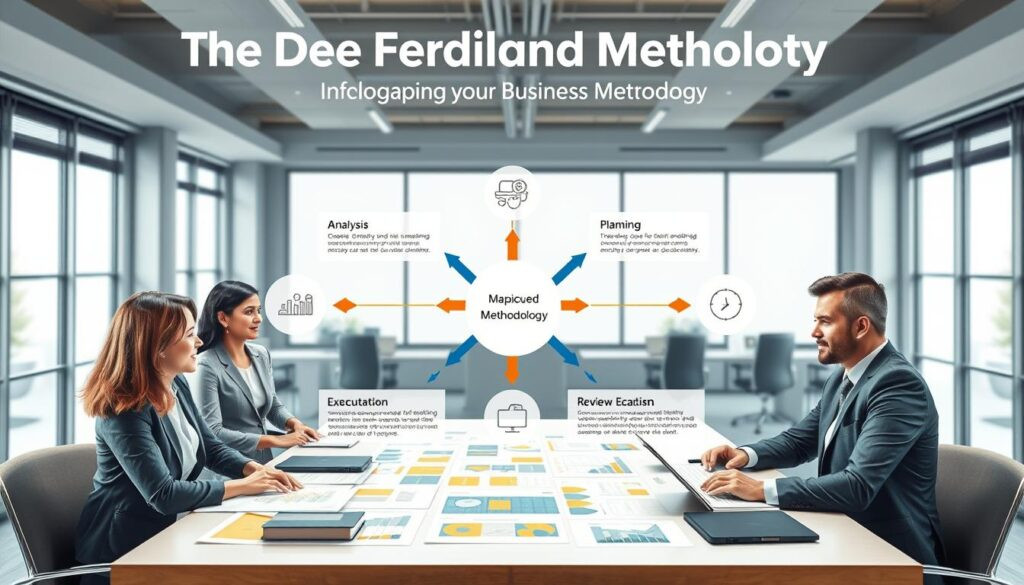
Implementing intelligent systems successfully requires more than just buying software—it demands a systematic approach built on proven principles. Years of practical experience have refined a three-step process that transforms confusion into clarity. This methodology provides a roadmap from initial assessment to full implementation.
The framework balances ambitious goals with real-world constraints. It connects technical possibilities directly to business outcomes. You get a clear path forward instead of scattered experiments.
Step 1: Comprehensive Business and AI Landscape Audit
The journey begins with a thorough examination of your current position. This audit looks at both internal operations and external technological options. You gain complete visibility into what’s working and what’s not.
This process identifies your existing capabilities and skill gaps. It reveals where automation could have the biggest immediate impact. The audit also examines available tools in the market.
You’ll understand which solutions match your specific needs. More importantly, you’ll see which don’t fit your business model. This prevents costly investments in mismatched technology.
The audit creates an honest baseline for your digital readiness. It separates hype from practical opportunity. This foundation ensures all subsequent decisions are data-driven.
Step 2: Strategic Opportunity Mapping
Next comes connecting possibilities to purposeful goals. This mapping phase aligns intelligent tools with your core business objectives. Every recommendation ties directly to growth targets.
The process identifies where automation can enhance customer experiences. It shows how data analysis can improve decision-making. You’ll see clear connections between tools and outcomes.
This stage incorporates essential marketing principles. It ensures implementations drive engagement and conversion. The focus stays on creating value for your audience.
Strategic mapping transforms abstract concepts into concrete plans. You’ll visualize exactly how tools will work within your operations. This creates buy-in across your organization.
Your team understands the “why” behind each recommendation. They see how changes support their daily work. This alignment is crucial for successful adoption.
Step 3: Phased, Practical Implementation Roadmap
The final step breaks adoption into manageable stages. This roadmap prioritizes quick wins while building toward larger transformations. You avoid overwhelming your team with too much change at once.
Each phase has clear deliverables and success metrics. You’ll know exactly what to expect at every milestone. This structure maintains momentum throughout the journey.
The approach balances innovation with stability. New tools integrate gradually with existing systems. This minimizes disruption to your daily operations.
Your roadmap includes training and support components. Team members develop skills alongside technology deployment. This ensures capabilities grow together.
Flexibility is built into every stage. The plan adapts as your business needs evolve. You’re never locked into rigid solutions that no longer serve you.
This methodology has been refined through diverse client experience. It works across industries and business sizes. The structured approach provides consistency while allowing customization.
You benefit from lessons learned in real-world implementations. Common pitfalls are avoided before they become problems. Best practices are embedded throughout the process.
The framework represents professional consulting at its most effective. It turns complex technological adoption into a straightforward progression. You move confidently from planning to execution to results.
Marketing success depends on connecting with audiences meaningfully. This methodology ensures tools enhance rather than replace human connection. Technology serves your strategic marketing goals.
Ultimately, you gain more than just new software. You acquire a sustainable approach to digital evolution. This creates lasting competitive advantage in your market.
A Case Study in AI Education: The N.A.I.F.E. Program
The best way to understand an expert’s approach is to examine a project they’ve brought to life. This case study looks at a pioneering educational program. It shows how strategic insight can be translated into a powerful learning experience.
Naik Freelance Academy, in collaboration with Dee Ferdinand A.I Digital Strategy Consulting, launched a groundbreaking course. The program is called “Naik AI Freelance Elevate” or N.A.I.F.E. It represents a state-of-the-art digital class built for today’s independent professionals.
Collaboration with Naik Freelance Academy
This initiative was born from a partnership between two specialized entities. Naik Freelance Academy brought its deep educational framework to the table. Founded in Jakarta in 2015, the Academy has served over 200 clients worldwide.
Their mission is to set the gold standard in freelance education. The consulting firm contributed its strategic vision for applying intelligent tools. Together, they aimed to build more than just another online course.
The goal was to create a dynamic, adaptive learning environment. This collaboration highlights how industry leaders can work together. They merge educational excellence with cutting-edge technology to serve a growing market.
Key Features of the AI Digital Class
The N.A.I.F.E. program is tailored specifically for modern freelancers. It moves beyond static video lectures and PDFs. The curriculum is built on three core pillars that create a transformative experience.
1. Personalized Learning Paths
The system adapts in real-time to each student’s progress. If a learner masters a concept quickly, the path advances. If someone struggles, it provides additional resources and practice.
This adaptive approach is powered by advanced technology. It ensures no student is left behind or held back. The learning journey feels custom-made for individual needs and pace.
2. Practical, Project-Based Application
Students don’t just learn theory; they apply it immediately. The course includes hands-on projects that mirror real freelance work. Simulations and exercises build confidence with actual tools.
This focus on doing ensures skills are transferable to the marketplace. Graduates finish with a portfolio of completed work. They gain tangible experience that clients value.
3. Guidance from Industry Leaders
Key modules within the program were curated by the strategic consulting firm. This provides direct access to insights from seasoned experts. Mentorship is woven into the learning fabric.
Students benefit from proven frameworks and strategies. They learn not just how to use tools, but *when* and *why* to use them. This expert layer elevates the entire educational value.
This program is a concrete example of translating complex concepts into accessible training. It demonstrates thought leadership with immediate practical impact. The development process itself required deep curriculum design knowledge.
The N.A.I.F.E. initiative connects to broader trends in workforce development. As the freelance economy grows, so does the need for relevant, modern skills. Educational technology is crucial for scaling quality instruction.
The approach here is informed by many years of practical observation. It understands that effective training must be engaging, applicable, and guided. This case study stands as evidence of a philosophy in action.
| Feature | N.A.I.F.E. AI Digital Class | Traditional Online Course |
|---|---|---|
| Learning Path | Dynamic, adjusts to individual pace & proficiency | Static, same sequence for all students |
| Skill Application | Hands-on projects & real-world simulations | Mostly theoretical knowledge & quizzes |
| Expert Involvement | Integrated mentorship & curated strategic modules | Limited to pre-recorded lectures or forums |
| Outcome for Freelancers | Portfolio of practical work & actionable strategies | Certificate of completion & theoretical understanding |
| Technology Integration | Core to the personalization and delivery method | Primarily a platform for hosting content |
In a Sea of Experts, What Makes Dee Different?
With countless voices claiming to have the answers, how do you identify the guide who can actually deliver results? The field of digital consulting has become crowded with specialists who offer theoretical knowledge. What sets apart the truly valuable partner is their ability to translate concepts into concrete business outcomes.
Beyond Theoretical Knowledge: A Focus on Real-World Application
Many advisors can explain how intelligent systems work in theory. Far fewer understand how to make them work within your specific business context. This practical focus transforms abstract concepts into tools your team can actually use.
The difference lies in hands-on experience. Years of implementing solutions across industries provides insight no textbook can offer. This background reveals what works when theory meets the messy reality of daily operations.
Consider a common challenge: automating customer service. A theoretical approach might recommend the latest chatbot platform. A practical approach examines your actual customer inquiries, team capacity, and brand voice first.
The practical method delivers a solution that fits seamlessly into existing workflows. It considers training needs and change management. This ensures adoption and actual usage by your team.
Real-world application means prioritizing business impact over technical novelty. The goal isn’t to use the most advanced tool available. It’s to use the right tool that solves your specific problem effectively.
This approach has solved complex challenges for diverse clients. A manufacturing client needed to reduce equipment downtime. The solution combined predictive analytics with existing maintenance schedules.
A retail business wanted to personalize customer experiences. The implementation used existing purchase data to create tailored recommendations. Each solution started with the business need, not the technological capability.
The Integrator of Technology, Marketing, and Human Insight
True differentiation comes from connecting domains that usually operate in isolation. Most specialists excel in one area: either technical implementation, marketing strategy, or organizational psychology. The rare expert weaves these threads into a cohesive strategy.
This integration creates more value than any single-domain approach. Technology implementation alone often fails because it ignores human factors. Marketing strategy without technical understanding misses efficiency opportunities.
Human insight without practical tools remains theoretical. Bringing these three domains together addresses the complete business picture.
How does this integrated approach work in practice?
- Marketing strategy identifies where automation can enhance customer engagement
- Technical knowledge selects the right platforms to execute that strategy
- Human insight ensures solutions work with your team’s capabilities and culture
This holistic perspective transforms how businesses adopt new technology. Instead of forcing tools onto existing processes, it redesigns processes around both human and technological strengths.
The integrator serves as a translator between different business functions. They explain technical possibilities to marketing teams in terms of customer impact. They translate marketing goals to technical teams as clear implementation requirements.
This bridging role is crucial for successful digital transformation. Too many initiatives fail because technical and business teams speak different languages. The integrator creates a shared vocabulary focused on outcomes.
Consider how this approach differs from purely technical consulting:
| Integrated Approach | Purely Technical Consulting |
|---|---|
| Starts with business objectives and customer needs | Starts with technological capabilities and features |
| Balances automation with human oversight and creativity | Focuses on maximum automation and efficiency |
| Considers organizational change management from day one | Addresses adoption challenges only after implementation |
| Measures success through business metrics (revenue, satisfaction) | Measures success through technical metrics (uptime, speed) |
| Creates solutions that evolve with business growth | Delivers fixed solutions that may become obsolete |
The marketing background informs every technological recommendation. It ensures tools drive growth rather than just efficiency. This perspective asks: “Will this implementation help attract, engage, and retain customers?”
Human insight maintains the balance between capability and practicality. It recognizes that the most advanced solution fails if your team won’t use it. This understanding comes from observing many implementations across different organizational cultures.
Ultimately, this integrative approach delivers what businesses actually need: solutions that work in the real world. They combine strategic vision with practical execution. The result is sustainable growth built on a foundation that understands both technology and people.
The most valuable guidance doesn’t just show you what’s possible technologically—it shows you what’s practical for your specific business context, team, and goals.
This holistic perspective represents the true differentiator in a crowded field. It’s the reason some partnerships transform businesses while others deliver disappointing results. The focus remains on creating value that lasts beyond the initial implementation.
Your Personal Navigator in the AI World
When every direction seems promising but only one leads to real growth, you need more than a map. You need a guide who knows the terrain.
The digital world changes faster than any map can be printed. New tools emerge weekly. This creates exciting possibilities and genuine confusion. Having a personal navigator transforms this uncertainty into a clear path forward.
Think of advanced technology adoption like exploring a new city without street signs. You might eventually find your destination. Or you might waste hours going down dead-end streets. A navigator saves you time, money, and frustration.
This guidance helps you avoid common pitfalls. Many businesses invest in solutions that don’t fit their operations. Others get stuck analyzing options without ever taking action. Your navigator steers you clear of these expensive mistakes.
Personalized guidance is especially valuable today. The market is flooded with tools claiming to solve every problem. A navigator cuts through the noise. They match solutions to your specific business needs and goals.
The navigation analogy works on three levels:
- Understanding your current location: Where is your business right now in terms of digital readiness?
- Defining your destination: Where do you want to go with intelligent tools?
- Plotting the best route: What’s the most efficient path between these two points?
Dee approaches this as a true journey partner. The role extends far beyond an initial consultation. It includes ongoing guidance and regular course corrections as your business evolves.
This navigator approach directly reduces the overwhelm leaders feel. Facing dozens of technology decisions can paralyze progress. With a trusted guide, choices become clearer and more manageable.
The value translates to tangible business outcomes:
- Clearer direction for your entire team
- Faster progress toward implementation goals
- Better results from your technology investments
In our current business environment, this kind of partnership isn’t optional. It’s a competitive necessity. Companies moving ahead have strategic guidance. Those going alone often wander in circles.
The right navigator does more than recommend tools. They become a committed partner in your growth journey. They help you build capabilities that last. This creates sustainable advantage in a crowded marketplace.
Your path through complex technology shouldn’t be a solo expedition. The landscape is too vast and changes too quickly. With expert navigation, you move forward with confidence instead of hesitation.
The greatest explorers didn’t succeed because they had better maps. They succeeded because they had better guides who understood both the destination and the journey.
This partnership approach ensures your investments in intelligent systems deliver real returns. You avoid the common cycle of excitement, implementation, and disappointment. Instead, you build momentum that compounds over time.
Consider how different this is from simply buying software. A tool is a static object. A navigator is a dynamic resource that adapts to your changing needs. This flexibility is priceless in today’s fast-moving digital environment.
The final benefit is peace of mind. Knowing you have experienced guidance reduces stress. You can focus on running your business while your navigator handles the complexity of technology integration.
What is an AI Mapping Consultation?
Every successful journey begins with understanding exactly where you stand before plotting your course. An AI Mapping Consultation serves as that crucial starting point for your business. It’s a dedicated session designed to cut through the noise and create a clear, customized blueprint for your intelligent tool adoption.
This isn’t a sales pitch or a generic lecture. It’s a collaborative discovery process tailored specifically to your operations, goals, and challenges. You’ll walk away with actionable insights you can use immediately, plus a strategic vision for sustainable growth.
Defining Your “AI Readiness”
The consultation begins with an honest assessment of your current capabilities and gaps. Think of this as a digital health check for your organization. We evaluate how your team currently works, what tools you already use, and where the biggest opportunities for improvement exist.
This “readiness” evaluation looks at several key areas. We examine your team’s technical skills and their openness to new ways of working. We review your existing data infrastructure and how information flows through your company.
The process also considers your strategic goals. What are you trying to achieve in the next quarter, year, and beyond? This holistic view ensures recommendations align with your business direction, not just technological trends.
Drawing on many years of practical experience with diverse companies, this assessment identifies both strengths and blind spots. You’ll gain clarity on what you’re doing well and where you might be missing easy wins. This foundation is essential for building a realistic adoption plan.
Identifying Low-Hanging Fruit and Long-Term Goals
One of the most valuable outcomes is the clear separation between quick wins and strategic transformations. We systematically identify “low-hanging fruit”—areas where simple implementations can deliver significant value with minimal disruption.
These immediate opportunities might include automating repetitive administrative tasks. They could involve setting up basic data analysis for better decision-making. The goal is to create momentum and demonstrate value quickly to your team.
Simultaneously, we map out your long-term strategic goals. Where do you want intelligent systems to take your business in the coming years? This might involve transforming customer service, revolutionizing product development, or creating entirely new revenue streams.
The consultation creates a bridge between these timeframes. It shows how today’s small steps build toward tomorrow’s big vision. This dual focus ensures you don’t get stuck in either endless planning or shortsighted implementations.
You’ll discover where this technology can deliver the most value for your specific business. The mapping process reveals connections you might have missed between different parts of your operations. It highlights how tools can enhance human creativity rather than replace it.
“The most effective plans balance immediate impact with visionary direction—they give you wins to celebrate today while building toward a transformative future.”
Businesses typically learn surprising things about themselves during these sessions. Many discover they’re closer to readiness than they thought. Others find simple process changes that create more value than any new software could.
The collaborative nature means you’re actively involved throughout. We ask questions, listen to your challenges, and tailor recommendations to your unique context. This partnership approach ensures the final map reflects your business reality, not theoretical ideals.
The consultation addresses both immediate opportunities and future technology roadmaps. You’ll see how different tools might fit together over time. This prevents investing in solutions that won’t scale or integrate with your evolving needs.
Ultimately, this mapping creates a clear picture of your path forward. It turns overwhelming possibilities into a prioritized action plan. You’ll know exactly what to do first, what to plan for later, and what to avoid entirely.
This essential first step transforms uncertainty into confidence. Instead of guessing which tools to adopt, you’ll have a data-driven strategy based on your actual business needs. That’s the power of starting with a map rather than wandering in the dark.
Who is the AI Mapping Consultation For?
Not every business needs the same approach to intelligent systems—your industry, size, and goals determine the perfect path forward. The mapping session serves distinct audiences who share a common desire: to harness modern tools effectively for growth.
Business Owners Feeling Left Behind
Do you watch competitors adopt new solutions while you struggle to keep up? Many leaders feel this pressure daily. Rapid advancements in business technology create genuine anxiety about falling behind.
The consultation addresses this concern directly. It provides a clear assessment of where your operations stand today. You’ll discover practical steps to integrate automation without disrupting your core business.
Owners gain understanding of how these tools can transform efficiency. They learn which investments deliver the fastest returns. This knowledge turns uncertainty into a confident strategy for staying competitive.
Marketing Leaders Seeking an Edge
Marketing professionals face constant pressure to deliver better results with limited resources. Intelligent systems offer powerful advantages for campaign optimization and audience targeting.
The mapping session shows how to leverage technology for personalized customer experiences. You’ll identify opportunities to automate repetitive tasks like data analysis and reporting. This frees your team to focus on creative strategy and big ideas.
Leaders learn to use predictive analytics for smarter decision-making. They discover tools for content creation that maintain brand voice while saving time. The consultation bridges the gap between marketing goals and technical implementation.
Startups Building on a Modern Foundation
New ventures have a unique opportunity to build smart systems from day one. Starting with the right foundation prevents costly rework later. The consultation helps founders avoid legacy thinking traps.
Startups learn how to embed automation into their business model. They identify which processes should be human-led versus technology-enhanced. This creates scalable operations that grow efficiently with the company.
The guidance focuses on practical applications with immediate impact. Founders gain clarity on which tools deserve early investment. They build a technology stack designed for future expansion rather than quick fixes.
Each group receives tailored advice matching their specific context. The consultation meets you where you are in your digital journey. Whether you’re exploring basics or optimizing existing systems, personalized mapping creates your roadmap to success.
What to Expect When You Schedule Your Consultation

When you book your mapping session, you’re not just reserving time—you’re initiating a collaborative discovery process tailored to your unique needs. This conversation serves as the foundation for your entire strategic journey. You’ll gain immediate clarity on your current position and a practical path forward.
The session transforms abstract concepts into concrete action steps. It’s designed to be highly interactive and focused entirely on your business context. You’ll participate in a dialogue that balances deep analysis with straightforward recommendations.
A Deep Dive into Your Current Operations
Your consultation begins with a thorough examination of how your business actually works today. We explore your existing workflows, team capabilities, and current tools. This isn’t a superficial review—it’s a detailed look at your operational reality.
We analyze your complete technology stack, from software platforms to data systems. The goal is to understand what’s working well and where gaps exist. This assessment identifies both strengths to build upon and weaknesses to address.
Your business processes receive special attention. We map how tasks flow between departments and team members. This reveals bottlenecks that slow progress and opportunities for smart automation.
The deep dive extends to your strategic objectives. What are you trying to achieve in the coming months and years? Understanding your goals ensures recommendations align with your vision, not just technological trends.
Drawing on extensive practical experience, this analysis quickly identifies high-impact opportunities. Years of working with diverse companies provide valuable perspective. You benefit from lessons learned across multiple industries and business stages.
The process is conversational, not interrogative. You’ll share insights about your challenges and aspirations. This collaborative approach ensures the final assessment reflects your actual business reality.
Honest, No-Jargon Assessment and Recommendations
You’ll receive straightforward feedback free from confusing technical language. The focus remains on business outcomes you can understand and act upon. Complex technology concepts get translated into clear, practical terms.
Honesty forms the core of every recommendation. We identify what’s truly feasible versus what sounds impressive but delivers little value. This realistic approach prevents wasted investments in mismatched solutions.
Recommendations prioritize immediate impact alongside long-term strategy. You’ll learn which quick wins can deliver value within weeks. Simultaneously, we outline a sustainable framework for ongoing growth and adaptation.
The assessment balances big-picture thinking with specific, actionable insights. You’ll see how individual tools connect to broader business objectives. Each suggestion includes clear implementation steps and expected outcomes.
Practical experience informs every piece of advice. Recommendations stem from real-world implementations, not theoretical possibilities. This grounded perspective ensures solutions work in actual business environments.
You’ll leave with a clearer understanding of your position regarding intelligent tools. More importantly, you’ll have concrete next actions to begin your journey. The consultation delivers both immediate clarity and long-term direction.
| Element | Your Mapping Consultation | Standard Business Meeting |
|---|---|---|
| Primary Focus | Deep discovery & collaborative problem-solving | Status updates or one-way presentations |
| Communication Style | Interactive dialogue with equal participation | Often dominated by one speaker or agenda |
| Technical Language | Translated into clear business terminology | May rely on industry jargon or acronyms |
| Outcome | Customized action plan with prioritized steps | General discussion points or follow-up tasks |
| Follow-up Value | Strategic roadmap for immediate & long-term implementation | Meeting notes or delegated action items |
| Expertise Applied | Years of cross-industry practical experience | Internal team knowledge or vendor sales pitches |
The consultation follows a natural yet structured flow. We begin with discovery questions that uncover your core challenges. Next comes analysis of your operations against current technological possibilities.
Opportunity identification forms the heart of the session. We pinpoint where new tools can create the most value for your specific business. Finally, we define clear next steps that move you from planning to action.
This investment of time delivers both immediate and long-term value. You gain insights you can apply right away, plus a strategic framework for future decisions. The session positions your business for smarter technology adoption and sustainable growth.
“The most valuable consultations don’t just tell you what’s possible—they show you what’s practical, profitable, and perfectly suited to your unique business context.”
Your mapping session represents the starting point of a productive partnership. It establishes mutual understanding and creates alignment around shared objectives. This foundation ensures subsequent work proceeds efficiently and effectively.
You’ll discover how to leverage technology as a true strategic partner. The focus remains on enhancing human capability rather than replacing it. This balanced approach creates solutions that your team will embrace and use successfully.
The Tangible Outcomes of a Strategic AI Map
A well-crafted strategic map delivers more than just ideas—it creates measurable improvements across your organization. This process transforms confusion about technology into a clear blueprint for action. You move from feeling overwhelmed by options to having confidence in your next steps.
The mapping exercise produces concrete results you can see and measure. These outcomes go beyond documents to change how your team thinks and works. You gain both a plan for today and a framework for tomorrow.
Clarity and a Defined Path Forward
Confusion about intelligent tools disappears when you have a strategic map. The process cuts through marketing hype and technical jargon. You see exactly which solutions match your business needs.
A defined path emerges with specific milestones and decision points. You know what to implement first, what to test next, and what to avoid entirely. This clarity reduces anxiety and builds team confidence.
The map shows how different pieces of technology fit together over time. You understand dependencies and integration requirements. This prevents investing in systems that won’t work well together.
Prioritized Actions for Immediate Impact
Your strategic map includes a prioritized action list. Quick wins get identified for fast implementation. These deliver visible value within weeks, not months.
Immediate impact areas often include automating repetitive administrative tasks. Simple data analysis setups can also provide quick insights. These early successes build momentum for larger changes.
Longer-term initiatives get planned alongside immediate actions. You see how today’s work builds toward tomorrow’s vision. This balanced approach prevents getting stuck in either endless planning or shortsighted doing.
The action list considers your team’s current capabilities. It matches technology complexity with available skills. This ensures successful adoption rather than frustration.
A Framework for Sustainable Growth
The strategic map creates more than a one-time project plan. It establishes a framework for ongoing growth and adaptation. This helps you make consistent decisions about technology investments over time.
Your framework balances ambitious future goals with practical implementation steps. It connects visionary thinking with daily operations. This alignment ensures progress continues even as markets change.
Sustainable growth comes from building capabilities that compound. Each new tool integration makes the next one easier. Your organization develops digital maturity systematically.
The framework helps your team understand the “why” behind each initiative. People see how their work contributes to larger objectives. This creates buy-in and engagement across departments.
| Business Area | Before Strategic Mapping | After Strategic Mapping |
|---|---|---|
| Decision-Making | Reactive, based on vendor claims or competitor moves | Proactive, guided by a documented strategy aligned with business goals |
| Technology Investments | Scattered, often mismatched to actual operational needs | Focused, with clear ROI expectations and integration plans |
| Team Understanding | Confusion about tools and their purpose | Clarity on how systems enhance specific workflows and roles |
| Implementation Pace | Either too slow (analysis paralysis) or too fast (rushed decisions) | Balanced, with quick wins building momentum for strategic projects |
| Growth Measurement | Vague or focused only on cost reduction | Specific metrics for efficiency, revenue impact, and competitive advantage |
| Adaptability | Rigid systems that become obsolete quickly | Flexible framework that evolves with business and technology changes |
Measurable business results flow naturally from this approach. Efficiency gains appear as automated processes free up human time. Revenue growth follows from better customer insights and personalized experiences.
Competitive advantage develops as you implement tools more effectively than rivals. Your strategic map becomes a living document that evolves with your business. Regular reviews keep it relevant as new technology emerges.
The most valuable outcome isn’t the document itself, but the changed understanding within your team. People develop confidence in using intelligent tools strategically. This cultural shift supports ongoing innovation and adaptation.
“A strategic map turns technological possibility into business reality—it’s the bridge between what tools can do and what your company actually needs to grow.”
Your organization gains both direction and flexibility. You have clear priorities for today while remaining adaptable for tomorrow. This combination creates resilience in fast-changing markets.
The tangible outcomes extend beyond any single project. You build a systematic approach to digital transformation. This foundation supports sustainable success for years to come.
How to Prepare for Your Conversation with Dee
Preparing effectively for your mapping session transforms it from a simple chat into a powerful strategic launchpad. The right groundwork helps you get maximum value from your dedicated time. Think of it as tuning your instrument before a concert.
You want every minute to count toward your business growth. A little preparation ensures the conversation stays focused on your specific needs. This approach turns general advice into targeted insights.
Start by gathering key information about your current operations. Make a simple list of the tools and systems you currently use. Include everything from customer management software to internal communication platforms.
Note what’s working well and what’s causing frustration. Be honest about daily challenges that slow your team down. This clarity helps identify where new solutions could have immediate impact.
Next, think about specific business problems you hope to address. Do you need better customer insights? Are repetitive tasks eating into productive time? Could your team communicate more effectively?
Write down two or three core challenges you’d like to solve. These don’t need to be perfectly framed. Just capture what keeps you up at night regarding business operations.
Reflect on your team’s current capabilities and comfort level. How does your staff respond to new tools? What technical skills already exist within your organization?
This assessment helps match solutions to your actual readiness. It ensures recommendations fit your team’s capacity for change. The goal is enhancement, not overwhelming transformation.
Consider your budget and timeline for new initiatives, even if preliminary. Having rough figures in mind helps frame realistic recommendations. You don’t need exact numbers—just a general sense of investment willingness.
Think about what success would look like in six months or a year. What measurable improvements would make the effort worthwhile? This forward thinking shapes a practical implementation roadmap.
“The most productive consultations happen when clients bring honest challenges rather than polished presentations. Real problems lead to real solutions.”
Your preparation helps Dee provide more targeted insights during your limited time together. With clear information, the conversation can dive straight into strategic opportunities. This efficiency means you walk away with actionable steps.
Remember that honest assessment of your starting point is more valuable than trying to appear perfectly ready. Authenticity allows for recommendations that truly fit your situation. The consultation meets you where you are today.
Dee’s many years of practical experience allow him to work effectively with whatever preparation level you bring. He’s guided businesses through every stage of digital adoption. This depth means he can quickly understand your context.
The session is designed to extract needed information through guided conversation. Dee asks the right questions to uncover opportunities you might not see yourself. This reduces pressure to have everything perfectly prepared beforehand.
Your current technology stack provides important clues about next steps. Existing tools reveal your business’s digital maturity level. They show what types of solutions your team can already manage.
Future technology investments should build upon what already works. They should address clear gaps in your current capabilities. This evolutionary approach prevents disruptive overhauls.
Modern technology offers incredible potential when applied strategically. The right tools can automate routine tasks, analyze complex data, and enhance customer experiences. Your preparation helps identify which applications matter most for your business.
Intelligent technology works best when integrated thoughtfully into existing workflows. Your insights about daily operations guide this integration planning. The result is solutions that feel natural rather than forced.
Don’t worry about having all the answers before your conversation. The consultation process itself helps clarify fuzzy thinking. You’ll gain perspective simply by discussing your challenges aloud.
Come with questions, curiosities, and concerns. These starting points often lead to the most valuable discoveries. The dialogue works best as a collaborative exploration.
Your preparation sets the stage, but Dee guides the performance. With his extensive background, he can quickly identify patterns and opportunities. This partnership approach maximizes your consultation investment.
The goal isn’t perfect preparation—it’s thoughtful engagement. Bring your real business situation, and together you’ll build a path forward. This collaborative foundation creates lasting value beyond a single meeting.
Ready to Map Your AI Future? Here’s Your Next Step

The most powerful business transformations often begin with a single, simple decision to reach out for guidance. You’ve explored the possibilities and understood the methodology. Now it’s time to translate that knowledge into action for your company.
This moment represents the bridge between learning and doing. The insights you’ve gained become valuable when applied to your specific situation. Taking this step forward positions your business for the growth you envision.
Direct Access via WhatsApp
Schedule your AI Mapping Consultation through the most direct channel available. Reach out via WhatsApp at +62 812-8963-3588 or click: https://wa.me/081289633588. This approach eliminates barriers between you and strategic support.
Traditional consultation booking involves forms, waiting periods, and back-and-forth emails. The WhatsApp method provides immediate, personal connection. You communicate directly with the team that handles scheduling and initial questions.
This accessibility reflects modern business practices. It respects your time while ensuring prompt attention to your inquiry. You bypass complex portals and get straight to conversation.
Consider the advantages of this direct approach. Response times are typically within hours, not days. The conversation feels natural rather than formal. You can ask preliminary questions before committing to a full session.
The team has years of experience streamlining this process. They understand that busy leaders need efficient solutions. This system has been refined through practical application with numerous clients.
Taking the First Simple Action
Your initial message sets transformative changes in motion. This simple act connects you with expertise that can reshape your business approach. It represents commitment to progress rather than continued contemplation.
Here’s what happens after you reach out:
- Prompt Response: You’ll receive a reply typically within a few hours during business hours.
- Scheduling Conversation: The team will discuss suitable times for your mapping session.
- Consultation Preparation: You’ll receive simple guidance to maximize your session value.
This process requires no complex forms or lengthy applications. It’s designed for leaders who value their time. The focus remains on your needs rather than administrative procedures.
Reaching out doesn’t commit you beyond an exploratory conversation. The initial discussion helps determine if the approach fits your situation. You maintain complete control throughout the process.
Given the rapid pace of technology change, acting today matters more than ever. Delaying implementation means missing current opportunities. Early movers gain advantages that compound over time.
This step connects directly to the future you want for your business. Intelligent technology implementation requires strategic guidance. The right partnership accelerates your progress toward defined goals.
Your marketing efforts can become more effective with proper tool integration. Operational efficiency improves through smart automation. These benefits start with a single message.
| Feature | Direct WhatsApp Access | Traditional Booking Methods |
|---|---|---|
| Initial Response Time | Typically within hours | Often 24-48 hours or more |
| Communication Style | Conversational, direct messaging | Formal emails or web forms |
| Scheduling Flexibility | Real-time coordination | Back-and-forth email chains |
| Preliminary Questions | Immediate answers in chat format | Delayed responses or call scheduling |
| Accessibility | Available on mobile devices anywhere | Often requires desktop computer access |
| Personal Connection | Direct team interaction from first contact | Automated responses before human contact |
This approach represents the logical next step after learning about the methodology. You’ve seen the structured process and proven results. Now experience how it applies to your specific business challenges.
The consultant brings extensive practical knowledge to your situation. Seventeen-plus years of digital experience informs every recommendation. This depth ensures advice is grounded in reality, not just theory.
Modern technology offers incredible potential when implemented strategically. The mapping session creates your customized blueprint for success. Your message today begins that transformative journey.
The distance between your current position and your desired future closes with each action you take. This simple reach-out represents the most important step—the one that starts all others.
Don’t let uncertainty about perfect timing delay your progress. The consultation itself helps clarify your readiness and next steps. Often, businesses discover they’re more prepared than they realized.
Your competition isn’t waiting, and neither should you. Take this decisive action now to secure your strategic advantage. The team looks forward to helping you map your path to growth.
Conclusion
Your journey toward smarter business growth begins with choosing the right guide for the road ahead.
The right partnership blends deep experience with marketing insight and technical knowledge. This unique combination helps you navigate complex decisions with confidence.
In today’s world, having a strategic partner for intelligent technology isn’t optional. It’s essential for staying competitive and relevant.
The practical next step is clear. Schedule your mapping consultation via WhatsApp to begin. This friendly approach makes expert guidance accessible.
This investment prepares your business for the future. You gain a clear path forward in an evolving digital landscape.
Partnering with seasoned experts transforms possibilities into tangible results. Your growth journey starts with that first conversation.