
What if your clinic could diagnose diseases with unprecedented speed and accuracy, right here in Indonesia? The future of medicine is not a distant dream—it’s happening now. The nation’s healthcare sector is undergoing a powerful digital transformation, reshaping patient care across the archipelago.
According to the Philips Future Health Index 2024, 74% of healthcare leaders in the country plan to adopt generative AI. This surge in adoption far outpaces the global average of 56%. This is a pivotal moment for medical professionals like you.
The Ministry of Health is actively fueling this change. They have forged strategic alliances with international pioneers like Harrison AI and Kakao Healthcare. Furthermore, Google Cloud provides specialized testing environments for generative AI tools designed for local needs.
This guide provides actionable insights for integrating this advanced technology into your clinical practice. For expert consultation tailored to your facility, contact Dee Ferdinand A.I Digital Consulting at +6281289633588 or follow @deeferdinand.
Key Takeaways
- Indonesia’s healthcare system is rapidly embracing artificial intelligence, with adoption rates exceeding global averages.
- The government supports this shift through national frameworks and partnerships with leading tech companies.
- Successful integration depends on understanding local infrastructure, regulations, and clinical workflows.
- Major hospitals are already deploying AI diagnostic tools, offering real-world examples to learn from.
- A robust technological foundation, including secure cloud platforms, is essential for implementation.
- Navigating this transformation requires a strategic approach to partnerships and compliance.
- This guide offers a clear, step-by-step path to adopting these innovations in your practice.
Overview of Indonesia’s Healthcare Digital Transformation
A coordinated national effort is reshaping how healthcare services are delivered throughout the Indonesian archipelago. The Ministry of Health has established comprehensive frameworks to guide this transformation.
Government Initiatives and National Roadmaps
The Digital Transformation Office, led by Chief Setiaji, ensures responsible technology adoption. This office balances innovation with strong ethical standards.
Official press releases highlight significant milestones. The national blueprint establishes clear development goals for healthcare modernization.
| Initiative | Key Focus | Current Status | Impact on Facilities |
|---|---|---|---|
| Satu Sehat Platform | Health data integration | National rollout | Enables seamless information sharing |
| Clinical Research Centre | Research network expansion | 3,000+ institutions connected | Access to AI-enabled trials |
| Digital Transformation Blueprint | Standards and milestones | Active implementation | Guides technology adoption |
Strategic Partnerships and Global Collaborations
The Ministry’s collaboration with international leaders accelerates progress. These partnerships bring world-class expertise to local healthcare settings.
“Our trials are conducted with various technology solutions supporting the health digital transformation blueprint mandates.”
Partnerships with Harrison AI and Kakao Healthcare demonstrate practical innovation. These collaborations test diagnostic tools and management platforms in major hospitals.
Understanding this framework is essential for successful technology adoption. Dee Ferdinand A.I Digital Consulting at +6281289633588 (@deeferdinand) can help navigate these regulatory landscapes.
Implementing AI in Indonesian Clinics: Step-by-Step Process
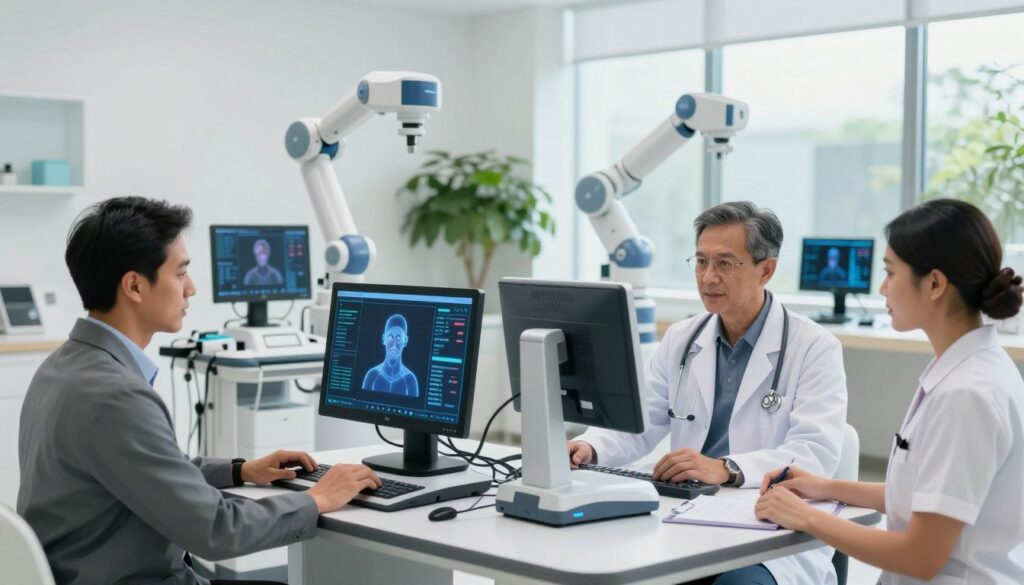
Your facility can accelerate its digital transformation by studying real-world implementations currently operating in national hospitals. These proven deployment models provide valuable insights for your own technology adoption journey.
Pilot Programs and Deployment in Major Hospitals
Major institutions like Dharmais National Cancer Hospital demonstrate successful integration of diagnostic systems. These platforms support clinical decision-making while enhancing research capabilities.
The Harrison AI deployment across three premier facilities offers critical lessons. Hospital directors report improved diagnostic accuracy for cancer detection through these advanced solutions.
Integrating Generative AI and Diagnostic Tools
Secure testing environments allow your medical professionals to evaluate generative models like MedLM. This approach builds confidence before full clinical implementation.
Radiology and pathology departments represent ideal starting points. These specialties generate standardized data that intelligent systems analyze with remarkable precision.
Platforms like Docquity’s Dx provide instant access to peer-reviewed medical research. This integration ensures your doctors base treatment decisions on current scientific evidence.
Expert Insights – Reach Out to Dee Ferdinand A.I Digital Consulting
Successful implementation requires customized roadmaps accounting for your facility’s specific needs. For personalized guidance on integrating these solutions in your clinical context, contact Dee Ferdinand A.I Digital Consulting at +6281289633588 or follow @deeferdinand for ongoing insights.
Participation in decentralized clinical trials validates system performance across diverse populations. These trials contribute to medical research that advances healthcare throughout the region.
Challenges, Benefits, and Data-Driven Impact in Healthcare

Balancing innovation with ethical responsibility becomes paramount when integrating intelligent systems into medical practice. This transformation brings significant improvements alongside important considerations for your facility.
Enhancing Patient Care and Data Integration
Your medical team gains powerful advantages through comprehensive data integration. The SATUSEHAT platform enables doctors to access complete patient histories before consultations.
This comprehensive approach dramatically improves disease detection and treatment planning. Early identification of chronic conditions becomes more reliable across the healthcare network.
Addressing Ethical, Privacy, and Infrastructure Challenges
Significant privacy concerns require robust security measures for sensitive health data. Your facility must implement strong encryption and access controls.
Infrastructure limitations present real challenges, especially in rural areas. Legacy systems may need upgrades to support modern technology platforms effectively.
| Aspect | Key Benefits | Primary Challenges | Recommended Approach |
|---|---|---|---|
| Data Integration | Complete patient history access | Privacy and security concerns | Robust encryption protocols |
| Disease Management | Early detection capabilities | Data accuracy validation | Multi-source verification |
| Treatment Outcomes | Personalized care plans | Algorithmic bias risks | Human oversight integration |
| System Access | Remote patient services | Infrastructure limitations | Phased implementation strategy |
Navigating these complex challenges requires expert guidance. Dee Ferdinand A.I Digital Consulting specializes in balancing innovation with ethical healthcare implementation. Contact +6281289633588 or follow @deeferdinand for personalized support.
Conclusion
The successful integration of advanced technology solutions demonstrates how innovation can enhance patient care while maintaining ethical standards. Your journey represents participation in a historic healthcare transformation.
This digital transformation creates unprecedented opportunities for your facility. The convergence of government support and international collaboration makes cutting-edge solutions accessible.
View these technological developments as tools that amplify your medical team’s expertise. They extend specialized knowledge to underserved areas while democratizing access to quality health services.
The Ministry of Health remains committed to strengthening the healthcare ecosystem. The Digital Transformation Office continues coordinating nationwide efforts while upholding responsible principles.
Take your first step toward success by contacting Dee Ferdinand A.I Digital Consulting at +6281289633588 or following @deeferdinand for expert guidance tailored to your context.