
Artificial intelligence (AI) is not just a futuristic vision – it’s a reality that is transforming every aspect of our lives. According to a PriceWaterhouseCoopers estimate, “artificial intelligence technologies could increase global GDP by $15.7 trillion, a full 14%, by 2030.” This includes significant gains in regions like China, North America, and beyond. AI’s potential to boost productivity and efficiency makes it a revolutionary technology for businesses and industries across the globe.
In this article, we’ll explore the incredible power of AI and how it’s reshaping our world. From understanding the core principles of AI to delving into its diverse applications, you’ll discover why embracing this transformative technology is essential for staying ahead in today’s rapidly evolving landscape.
Key Takeaways
- AI is a powerful tool that is already transforming every sector, from finance to healthcare to transportation.
- Artificial intelligence can significantly boost global GDP, with estimates of a 14% increase by 2030.
- AI’s ability to enhance productivity and efficiency makes it a game-changing technology for businesses and industries worldwide.
- Understanding the fundamentals of AI, including machine learning and adaptability, is crucial for leveraging its full potential.
- Exploring the wide-ranging applications of AI across diverse industries can help you unlock new opportunities for growth and innovation.
Understanding Artificial Intelligence
Artificial intelligence (AI) is a rapidly evolving field that is transforming our world in unprecedented ways. At its core, AI refers to the ability of machines to exhibit intelligent behavior, mirroring the cognitive functions of the human mind. This includes the capacity to perceive, learn, reason, and make decisions based on data and information.
Intentionality of AI Algorithms
AI algorithms are designed with intentionality, meaning they are programmed to make specific decisions and take actions based on the information they are given. These algorithms can quickly process large datasets, identify patterns, and generate insights that can be applied to a wide range of real-world problems. By combining data from various sources, AI algorithms can analyze and make decisions in real-time, providing valuable solutions for businesses, governments, and individuals.
Intelligence Through Machine Learning
One of the key components of AI is machine learning, a process that allows AI systems to learn and improve from experience without being explicitly programmed. Through machine learning, AI can discover underlying trends and patterns in data, enabling it to make more accurate predictions and decisions over time. This capacity for continuous learning and adaptation is a fundamental characteristic of AI that sets it apart from traditional software programs.
Adaptability of AI Systems
AI systems are also highly adaptable, with the ability to learn and adjust their behavior based on new information and experiences. This adaptability is particularly valuable in dynamic environments, where conditions are constantly changing. For example, self-driving cars can learn from the experiences of other vehicles on the road, allowing them to navigate more safely and efficiently over time.
Overall, the understanding of AI’s intentionality, machine learning capabilities, and adaptability is crucial in unlocking the full potential of this transformative technology. As AI continues to evolve, it will play an increasingly important role in shaping our future across a wide range of industries and applications.
| AI Characteristic | Description |
|---|---|
| Intentionality | AI algorithms are designed to make specific decisions and take actions based on the information they are given. |
| Machine Learning | AI systems can learn and improve from experience without being explicitly programmed, enabling them to discover underlying trends and patterns in data. |
| Adaptability | AI systems have the ability to learn and adjust their behavior based on new information and experiences, allowing them to function effectively in dynamic environments. |
AI Applications Across Diverse Sectors
The growth of AI applications has revolutionized numerous industries, unlocking tremendous economic opportunities. A recent PwC study estimates that “AI technologies could increase global GDP by $15.7 trillion, a full 14%, by 2030.” Sectors like finance, national security, and healthcare are already witnessing significant AI implementation, with a wide range of AI use cases transforming the way we live and work.
In the financial industry, AI algorithms are powering automated investment portfolios and high-frequency trading, optimizing investment strategies and decision-making. Meanwhile, in the realm of national security, AI adoption is enhancing threat detection, intelligence analysis, and cybersecurity, strengthening our defenses against evolving global challenges.
The healthcare sector has also embraced the AI transformation, with applications ranging from improved disease detection to accelerated drug discovery. By harnessing the power of machine learning and data analysis, medical professionals can now identify health concerns more accurately and expedite the development of life-saving treatments.
The impact of AI applications extends far beyond these industries, with AI implementation revolutionizing transportation, manufacturing, and even education. From autonomous vehicles to personalized learning experiences, the integration of AI technologies is redefining the way we interact with the world around us.
As the AI adoption continues to grow, we can expect to see even more innovative AI use cases emerge, transforming our lives and shaping the future of our society. The possibilities are endless, and the potential for AI impact is truly awe-inspiring.
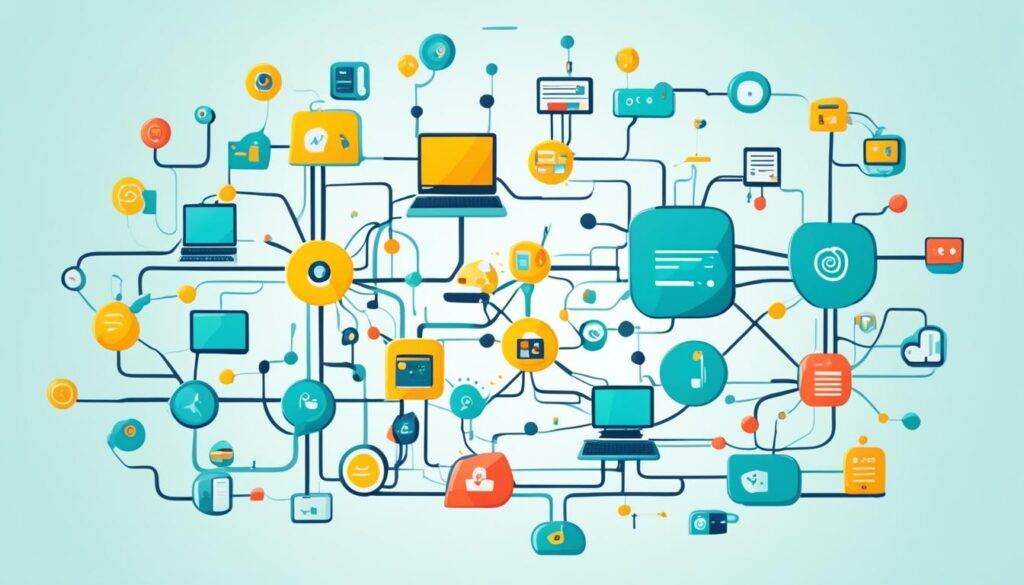
“The growth of AI presents tremendous economic opportunities, with a PwC study estimating that ‘AI technologies could increase global GDP by $15.7 trillion, a full 14%, by 2030.'”
AI in Finance
In the dynamic world of finance, artificial intelligence (AI) is transforming the industry, revolutionizing investment strategies and reshaping the landscape of stock trading. From automated investment portfolios to high-frequency trading, the integration of AI in finance is redefining the way we manage our money and make investment decisions.
Automated Investment Portfolios
One of the most significant applications of AI in finance is the rise of “robo-advisors.” These intelligent software programs leverage machine learning algorithms to create personalized investment portfolios, tailored to an individual’s risk tolerance, financial goals, and investment timeline. By analyzing vast amounts of data, robo-advisors can make investment decisions with lightning-fast speed and unparalleled precision, eliminating the need for traditional stockbrokers and financial advisors.
High-Frequency Trading
Another revolutionary application of AI in finance is high-frequency trading (HFT). In this realm, AI-powered algorithms make split-second trades, matching buy and sell orders in the blink of an eye. These intelligent systems can process and respond to market data at lightning-fast speeds, outpacing human traders and capitalizing on fleeting market opportunities. The rise of HFT has transformed the stock market, with machines now dominating the majority of trading activity.
The integration of AI in finance has not only streamlined investment processes but also opened up new opportunities for financial institutions and individual investors alike. As the adoption of AI continues to grow, the industry is poised to witness even more profound changes in the years to come, transforming the way we manage our financial futures.

| AI Application | Impact | Key Benefits |
|---|---|---|
| Automated Investment Portfolios | Personalized investment strategies, reduced human involvement | Increased efficiency, faster decision-making, cost savings |
| High-Frequency Trading | Rapid, automated trading decisions based on market data | Ability to capitalize on fleeting market opportunities, increased trading volume |
“The integration of AI in finance has not only streamlined investment processes but also opened up new opportunities for financial institutions and individual investors alike.”
AI in National Security
In the ever-evolving landscape of national defense, AI has emerged as a transformative force, reshaping the way governments and militaries approach security challenges. From sifting through vast troves of surveillance data to enhancing cybersecurity measures, AI for defense is revolutionizing the way we protect our nations.
One of the most prominent applications of military AI is its use in intelligence analysis. AI-powered systems are capable of rapidly processing and synthesizing massive amounts of data from various sources, including satellite imagery, drone footage, and intelligence reports. This allows for more accurate and timely identification of potential threats, enabling decision-makers to respond swiftly and effectively.
Beyond intelligence gathering, AI in national security is also being leveraged to strengthen cybersecurity efforts. AI-driven algorithms can detect and respond to cyber threats in real-time, outpacing traditional security measures and safeguarding critical infrastructure from malicious attacks.
However, the integration of AI for national defense has also raised important ethical and legal questions. The use of autonomous weapons systems and the potential for bias in AI-driven decision-making have sparked global debates on the responsible and ethical deployment of these technologies.
As the world continues to grapple with evolving security challenges, the role of AI in national security will only continue to grow. By harnessing the power of this transformative technology, governments and militaries can enhance their capabilities and better protect their citizens in an increasingly complex and interconnected world.

“The integration of AI in national security is a double-edged sword, offering immense potential but also raising crucial ethical and legal concerns that must be addressed with utmost care and foresight.”
why use AI
As we navigate the ever-evolving landscape of technology, one revolutionary force stands out: Artificial Intelligence (AI). This transformative technology is rapidly shaping the way we live, work, and interact with the world around us. From streamlining workflows to enhancing operational efficiency, the reasons to embrace AI are numerous and compelling.
One of the primary benefits of AI is its ability to analyze vast datasets and identify patterns at a pace far exceeding human capabilities. This allows businesses to make informed decisions quickly, optimize time, and increase overall productivity. AI-powered tools and applications are revolutionizing industries, from finance and healthcare to transportation and manufacturing, by automating repetitive tasks and driving innovation.
The economic advantages of AI are also undeniable. Experts estimate that the widespread adoption of AI could potentially increase global GDP by trillions of dollars in the coming years. This surge in productivity and efficiency translates to tangible cost savings and competitive advantages for businesses that integrate AI into their operations.
Moreover, AI offers unparalleled opportunities for innovation and personalization. By harnessing the power of machine learning and natural language processing, AI-driven systems can adapt to user preferences, delivering tailored experiences and solutions that cater to the unique needs of individuals and organizations.
In a world where speed, accuracy, and adaptability are the keys to success, AI stands as a transformative force that can help businesses and individuals alike unlock a future filled with endless possibilities. As the adoption of AI continues to grow, the reasons to embrace this technology become increasingly compelling, making it an essential component of any forward-thinking strategy.
“Artificial Intelligence is the future, not the past.” – Dentsu Aegis Network
| Reasons to Use AI | Benefits of AI | Advantages of AI |
|---|---|---|
|
|
|
As the world continues to evolve, the opportunities presented by AI are truly limitless. By embracing this transformative technology, businesses and individuals can unlock a future filled with endless possibilities and reap the rewards of increased efficiency, productivity, and innovation.
AI in Healthcare
The healthcare industry is at the forefront of AI-powered advancements, revolutionizing the way medical professionals detect diseases and accelerate drug discovery. AI algorithms are transforming patient care by analyzing vast amounts of data to identify patterns and anomalies that can indicate the presence of various illnesses.
Improved Disease Detection
AI-powered tools are revolutionizing disease detection by analyzing medical images, such as X-rays, MRIs, and CT scans, with unprecedented accuracy. These advanced algorithms can identify subtle differences that human experts may overlook, leading to earlier and more accurate diagnoses. This not only improves patient outcomes but also reduces the burden on healthcare systems by enabling timely interventions.
Accelerated Drug Discovery
AI is also playing a crucial role in accelerating the drug discovery process. By automating and streamlining the identification and testing of potential drug compounds, AI-powered systems can significantly reduce the time and cost associated with bringing new medications to market. This is particularly important in the face of pressing global health challenges, where rapid development of effective treatments is paramount.
Beyond disease detection and drug discovery, AI-powered chatbots and virtual nursing assistants are enhancing patient interactions and monitoring, leading to more personalized and efficient healthcare delivery. These advancements in AI in healthcare are poised to transform the future of medical care, benefiting both healthcare professionals and the patients they serve.
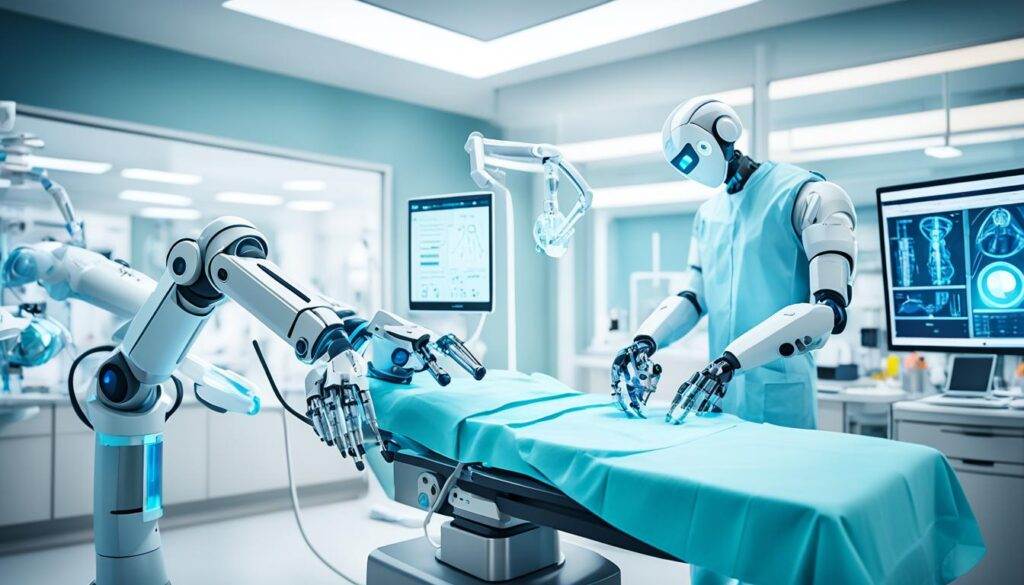
“AI is revolutionizing the healthcare industry, enabling doctors and hospitals to provide better care to more patients, faster.”
As the integration of AI for disease detection and AI for drug discovery continues to expand, the healthcare industry is witnessing a new era of AI-powered medical advancements that are improving outcomes and enhancing the overall efficiency of healthcare AI applications.
AI in Transportation
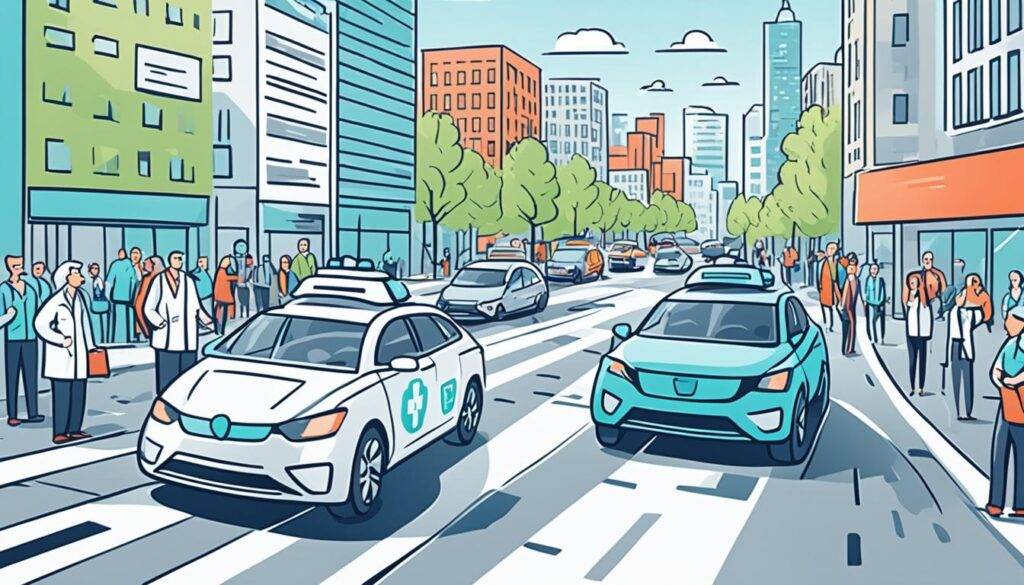
The transportation industry is undergoing a transformative shift, thanks to the revolutionary advancements in artificial intelligence (AI) technology. As self-driving cars and AI-powered transportation systems become a reality, the future of mobility is being redefined. From semi-autonomous vehicles equipped with advanced algorithms, sensors, and cameras to the development of fully autonomous vehicles that can control the car and make all navigational decisions, AI is paving the way for safer and more efficient transportation systems.
The integration of AI in transportation allows vehicles to learn from the experience of other cars on the road, making real-time decisions to navigate traffic, avoid obstacles, and optimize routes. This not only enhances the overall driving experience but also contributes to a significant reduction in accidents, traffic congestion, and carbon emissions, making our cities more livable and sustainable.
One of the most promising applications of AI in transportation is the emergence of autonomous vehicles. These self-driving cars are equipped with a range of sensors, including cameras, radar, and lidar, which work in conjunction with AI-powered algorithms to perceive the environment, make decisions, and control the vehicle’s movements. As the technology continues to evolve, the potential for fully autonomous vehicles to revolutionize the way we commute and transport goods is immense.
In addition to self-driving cars, AI-powered transportation systems are also transforming the way we plan and manage our journeys. Intelligent route planning and traffic management systems can analyze real-time data, such as weather conditions, road closures, and congestion levels, to provide personalized and optimized travel recommendations, ensuring a seamless and efficient transportation experience.
As the adoption of AI in transportation continues to accelerate, we can expect to see even more innovative applications that will shape the future of mobility. From improved safety and reduced environmental impact to enhanced accessibility and personalized travel experiences, the integration of AI in transportation is a game-changer that is revolutionizing the way we move.
| AI-Powered Transportation Features | Benefits |
|---|---|
| Self-Driving Vehicles | Improved safety, reduced accidents, and optimized traffic flow |
| Intelligent Route Planning | Personalized travel recommendations, reduced travel time, and efficient resource utilization |
| Real-Time Traffic Management | Improved traffic flow, reduced congestion, and lower carbon emissions |
| Predictive Maintenance | Enhanced vehicle reliability, reduced downtime, and lower maintenance costs |
As we continue to witness the transformative power of AI in transportation, the future of mobility looks brighter than ever. By harnessing the capabilities of this revolutionary technology, we can create a more efficient, sustainable, and accessible transportation ecosystem that improves the quality of life for people around the world.

“The integration of AI in transportation is not just about the technology itself, but about the profound impact it can have on the way we live, work, and move around our cities.”
AI in Manufacturing
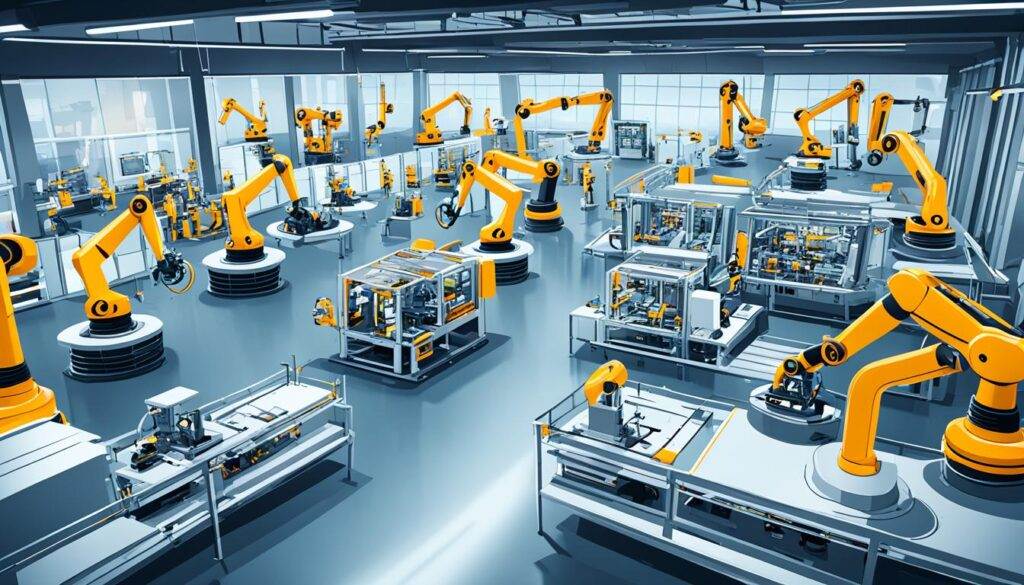
In the world of manufacturing, AI is transforming the industry by serving as the “brain” of production units. AI algorithms are ensuring the highest quality of products coming out of the manufacturing process while also increasing productivity by streamlining operations. AI-powered manufacturing is revolutionizing the way we approach industrial production.
One of the key benefits of AI in manufacturing is its ability to monitor machine wear and tear, predict maintenance needs, and adjust production processes accordingly. This leads to increased efficiency and cost savings, as manufacturers can proactively address issues before they cause major disruptions. AI-powered manufacturing also enables enhanced quality control, as AI-enabled systems can detect defects and anomalies with greater accuracy than traditional methods.
Moreover, industrial AI is improving worker safety and reducing the risk of errors or accidents in the manufacturing environment. AI-enabled robotics and automation are taking on the more hazardous or repetitive tasks, freeing up human workers to focus on higher-level, strategic activities. This not only enhances the overall safety of the manufacturing process but also boosts productivity and efficiency.
When it comes to AI for production optimization, manufacturers are harnessing the power of machine learning algorithms to fine-tune their processes and maximize output. By analyzing vast amounts of data from the production line, AI systems can identify bottlenecks, optimize energy consumption, and make real-time adjustments to ensure optimal performance.
Similarly, AI for quality control is revolutionizing the way manufacturers ensure the integrity of their products. AI-powered vision systems can detect defects, inconsistencies, and other quality issues with unprecedented accuracy, allowing for quick interventions and reducing the risk of costly product recalls.
“AI is transforming the manufacturing industry, making it more efficient, productive, and safer than ever before.”
As the adoption of AI in manufacturing continues to grow, we can expect to see even more advancements in the way we approach industrial production. From optimizing operations to enhancing quality control, AI is poised to be the driving force behind the next generation of manufacturing excellence.
AI in Education
In the dynamic landscape of modern education, the integration of AI is transforming the way students learn and achieve their full potential. By harnessing the power of AI and machine learning, education systems are now able to offer personalized learning experiences tailored to the unique needs and preferences of each student.
One of the key benefits of AI-powered education is its ability to identify a student’s strengths, weaknesses, and learning styles. Through adaptive learning platforms, AI algorithms analyze student performance, engagement, and progress, then dynamically adjust the content, pace, and teaching methods to optimize the learning experience. This personalized approach ensures that every student receives the support they need to thrive, regardless of their individual challenges or learning styles.
Personalized Tutoring and Adaptive Content
Intelligent virtual tutors powered by AI can provide personalized guidance and feedback to students, addressing their specific areas of difficulty and helping them to master concepts at their own pace. These AI-powered tutors can also recommend personalized content, learning activities, and practice exercises to reinforce the student’s understanding and help them progress through the curriculum.
Moreover, AI-enabled adaptive learning platforms can analyze a student’s progress and dynamically adjust the difficulty level of the content, ensuring that they are continuously challenged but not overwhelmed. This adaptive approach not only enhances the student’s engagement and motivation but also helps them develop a deeper understanding of the subject matter.
| Key Benefits of AI in Education | Description |
|---|---|
| Personalized Learning | AI algorithms analyze student performance and adjust content, pace, and teaching methods to cater to individual learning styles and needs. |
| Adaptive Content Delivery | Intelligent platforms dynamically adjust the difficulty level of content to ensure continuous challenge and engagement. |
| Intelligent Tutoring Systems | AI-powered virtual tutors provide personalized guidance, feedback, and recommended resources to support student learning. |
| Predictive Analytics | AI can identify patterns and trends in student data to predict academic performance and provide early intervention support. |
As the integration of AI in education continues to evolve, the potential for transformative change in the way students learn and succeed is truly remarkable. By harnessing the power of personalized, adaptive, and intelligent education technologies, we can unlock new frontiers of academic achievement and empower learners to reach their full potential.
Ethical Considerations and Challenges
The rapid advancement of AI technology has raised important AI ethics and AI regulation concerns that must be addressed. Issues such as AI bias, data privacy, intellectual property rights, and the societal impact of AI-driven automation and job disruption have sparked debates and calls for increased oversight and regulation.
Governments and policymakers are grappling with how to balance the benefits of AI with the need to protect individual rights and ensure the responsible development and deployment of these powerful technologies. Maintaining AI transparency and AI safety through accountable AI systems, as well as mechanisms for human oversight and control, will be crucial in navigating the ethical challenges posed by the widespread adoption of AI.
Some of the key AI ethics and AI societal impact considerations include:
- Algorithmic bias and fairness: Ensuring that AI systems do not perpetuate or amplify societal biases based on factors such as race, gender, or socioeconomic status.
- Privacy and data rights: Protecting individual privacy and establishing clear guidelines for the collection, use, and storage of personal data by AI-powered applications.
- Transparency and explainability: Developing AI systems that are transparent in their decision-making processes, allowing for human understanding and accountability.
- AI safety and security: Mitigating the risks of AI systems being used for malicious purposes, such as cyberattacks, surveillance, or the creation of deepfakes.
- Job displacement and economic disruption: Addressing the potential for AI-driven automation to disrupt traditional job markets and industries, and developing strategies to support affected workers and communities.
As the adoption of AI continues to accelerate, it will be crucial for policymakers, technologists, and the public to collaborate in establishing robust AI regulations and ethical frameworks to ensure the responsible development and deployment of these transformative technologies.
| Ethical Principle | Description |
|---|---|
| Fairness and Non-Discrimination | AI systems should be designed to avoid perpetuating or exacerbating societal biases and discrimination. |
| Transparency and Explainability | AI decision-making processes should be transparent and explainable to users and stakeholders. |
| Privacy and Data Rights | AI systems should respect individual privacy and data rights, with clear guidelines for data collection, use, and storage. |
| Human Oversight and Control | There should be mechanisms in place for human oversight and control over critical AI-driven decisions and actions. |
| Accountability and Responsible Development | AI developers and deployers should be held accountable for the societal impact of their technologies, and AI should be developed and deployed responsibly. |
“The development of full artificial intelligence could spell the end of the human race. It would take off on its own, and re-design itself at an ever-increasing rate. Humans, who are limited by slow biological evolution, couldn’t compete, and would be superseded.” – Stephen Hawking
As the world continues to grapple with the rapidly evolving landscape of AI, it is crucial that we remain vigilant in addressing the ethical considerations and challenges that arise. By fostering collaboration between policymakers, technologists, and the public, we can work towards the responsible development and deployment of AI that ultimately benefits humanity as a whole.
Conclusion
As we’ve explored, artificial intelligence has already transformed numerous industries, and its impact is only set to grow. The future holds vast opportunities for AI to revolutionize the way we live, work, and interact with technology. From streamlining financial processes to enhancing healthcare outcomes, the potential of AI is limitless.
The widespread adoption of AI technologies will continue to unlock new possibilities, driving innovation and boosting productivity across diverse sectors. As the capabilities of AI systems expand, it will be essential to address the ethical considerations and regulatory frameworks to ensure the responsible development and deployment of these powerful tools.
By embracing the transformative power of AI, you can position yourself and your organization to thrive in the digital age. Whether you’re looking to optimize your investment portfolio, improve disease detection, or create personalized learning experiences, AI holds the key to unlocking a future filled with possibilities. As you navigate this exciting landscape, stay informed, adaptable, and attuned to the ever-evolving world of artificial intelligence.
FAQ
What are the benefits of using AI?
How is AI being integrated and deployed across different industries?
How is AI transforming the finance industry?
What is the role of AI in national security?
How is AI transforming the healthcare industry?
What are the advancements of AI in the transportation industry?
How is AI enhancing the manufacturing industry?
How is AI transforming the education sector?
What are the ethical and regulatory concerns surrounding AI?
Source Links
- The Future of AI: How AI Is Changing the World | Built In – https://builtin.com/artificial-intelligence/artificial-intelligence-future
- How artificial intelligence is transforming the world | Brookings – https://www.brookings.edu/articles/how-artificial-intelligence-is-transforming-the-world/
- How is Artificial Intelligence Revolutionizing the World? – https://www.cgc.edu.in/blog/how-is-artificial-intelligence-revolutionizing-the-world